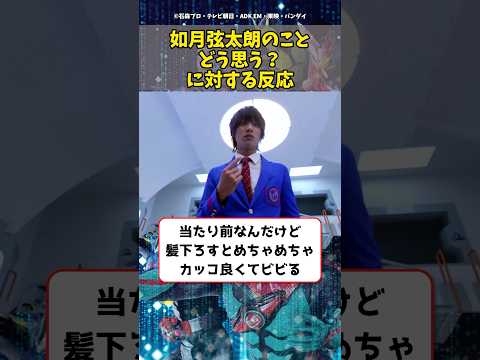
▶ Watch the original YouTube video
After 15 years of anime and tokusatsu fandom, one character continues to spark debate: Gentaro Kisaragi from Kamen Rider Fourze. His deceptively simple goal of making 100 friends masks a complex exploration of human connection that divides viewers—some see profound sincerity, others view it as shallow idealism. This analysis examines why fan reactions remain so polarized and what his character reveals about audience expectations.
What Happened
When Kamen Rider Fourze premiered in 2011, it introduced Gentaro Kisaragi, a high school transfer student with an unusual goal: to make 100 friends. Over more than a decade, this character has generated remarkably diverse reactions within anime and tokusatsu fan communities. Rather than a simple binary of “love” or “hate,” viewer responses reveal complex, layered interpretations shaped by personal experience, media literacy, and changing cultural values.
Why It Matters
Gentaro Kisaragi represents a critical moment in tokusatsu and anime history—the convergence of children’s entertainment and adult-oriented storytelling. His character challenges modern fan expectations by prioritizing sincere emotional connection over irony and complexity. As social media and digital communication reshape how audiences form relationships, Gentaro’s straightforward approach to friendship offers unexpected relevance. Understanding why this character divides viewers reveals deeper truths about how audiences interpret character motivation and what they value in storytelling.
Background
Kamen Rider Fourze was the 40th installment in the long-running Kamen Rider tokusatsu series. The show aired during a pivotal period in anime history—2011—when late-night anime programming had become mainstream, audiences demanded greater narrative complexity, and the tokusatsu industry sought to balance child-friendly content with adult viewership. Screenwriter Shoji Yonemura, drawing on previous Kamen Rider experience, crafted Gentaro as a character embodying both accessibility and depth.
Gentaro’s position as a transfer student was deliberately designed to allow viewers to experience the psychological reality of building relationships in a new environment. This narrative structure mirrors similar works from the same period, including Nichijou (2011) and K-On!! (2010), which also emphasized human connection within everyday contexts. However, Gentaro’s distinction lies in his explicit numerical goal—100 friends—which quantifies an inherently qualitative human experience.
Key Points
- Diverse Interpretation: Fan reactions to Gentaro range from viewing his goal as profoundly sincere to dismissing it as shallow and childish, with no consensus emerging across communities.
- Viewer Life Stage Matters: Reception of Gentaro’s character varies dramatically depending on whether audiences encounter him as teenagers or adults, suggesting character evaluation evolves with personal experience.
- Media Format Differences: Interpretations differ between the tokusatsu original and anime adaptation, indicating how medium shapes character perception.
- Turning Point Recognition: Many fans report initial skepticism that transforms into appreciation as Gentaro’s goal shifts from quantitative to qualitative—from “100 friends” to “protecting our bonds.”
- Purity vs. Complexity: Modern audiences often prefer ironic, psychologically complex characters; Gentaro’s earnest sincerity reads as either refreshingly authentic or uncomfortably naive depending on viewer perspective.
- Thematic Universality: The friendship-building theme resonates across demographics, generating passionate responses from viewers whose own lives were influenced by the narrative.
Timeline
- 2011: Kamen Rider Fourze premieres; Gentaro Kisaragi introduced as protagonist with stated goal of making 100 friends.
- 2011-2012: Initial fan reactions emerge; viewers divided between those embracing the character and those finding the premise simplistic.
- 2015: Retrospective analysis begins; some original viewers report changed perspectives on Gentaro following personal life experiences.
- 2016-Present: Ongoing fan discourse continues; Gentaro’s character receives renewed appreciation as themes of authentic human connection gain cultural relevance.
Perspectives
The Appreciation View: Supporters argue that Gentaro represents a rare character willing to prioritize human connection as a primary narrative theme. In an era dominated by action-focused plots and mystery-box storytelling, his straightforward sincerity becomes radical. These viewers note that his growth arc—from pursuing quantity to valuing quality in friendships—demonstrates genuine character development. They also recognize that the “100 friends” goal, while numerically expressed, fundamentally represents a search for existential validation through meaningful relationships.
The Critical View: Detractors contend that quantifying friendship reduces a complex human experience to a simplistic metric. They argue the character lacks the psychological depth modern audiences expect, and his unwavering optimism feels dated in contemporary storytelling. Some interpret his pure motivation as naive rather than sincere, particularly when compared to morally ambiguous protagonists popular in modern anime. This perspective suggests that Gentaro’s character design reflects 2010s sensibilities that have aged poorly.
The Contextual View: A third interpretation acknowledges both strengths and limitations while emphasizing that Gentaro’s reception depends entirely on viewer context. This perspective recognizes that a high school student encountering the character may dismiss it, while an adult reflecting on loneliness and disconnection may find profound meaning. It suggests that character evaluation is not fixed but evolves with audience maturity and life experience.
Character Analysis: The Complexity of Simplicity
Gentaro Kisaragi’s character operates on multiple interpretive levels. Superficially, his goal appears straightforward: make 100 friends through social engagement. However, deeper analysis reveals that this quantified objective masks a fundamental psychological need—the desire to confirm one’s existence through relational validation. In tokusatsu tradition, heroes are inherently “other-directed” beings; they exist to protect and serve. Gentaro’s friendship goal represents an inversion: he seeks to be needed by others, to confirm that his presence matters.
This interpretation gains support from narrative moments where Gentaro experiences genuine crisis when friendships are threatened. These scenes function not as simple interpersonal conflicts but as existential challenges to his sense of self-worth. The character’s growth occurs precisely when he recognizes that friendship quality supersedes quantity—a realization that transforms his motivation from external validation to internal authenticity.
When evaluated against comparable characters—Chopper from One Piece (whose medical ambition stems from gratitude), Gintoki from Gintama (whose relationships develop without explicit goals), or Rikka from SSSS.GRIDMAN (whose arc involves identity recovery)—Gentaro stands unique in explicitly quantifying social connection. This distinction creates interpretive friction: some view it as honest acknowledgment of human need, others as reductive oversimplification.
Industry Context and Trends
The 2011 release of Kamen Rider Fourze occurred at a critical juncture in Japanese entertainment. The anime industry was consolidating late-night programming as a legitimate market segment, demanding narratives that could satisfy both adolescent and adult audiences. Simultaneously, tokusatsu faced pressure to modernize while maintaining brand identity. Gentaro represents the industry’s attempt to bridge these demands—a character whose surface simplicity appeals to children while his underlying psychology engages adults.
This hybrid approach influenced subsequent tokusatsu and anime productions. The emphasis on interpersonal relationships as primary narrative content, rather than secondary to action sequences, became increasingly common. However, Gentaro’s particular approach—explicit quantification of friendship—remained largely unique, suggesting both its boldness and its potential liability as a narrative choice.
Internet Reception and Fan Communities
Online fan discourse reveals the character’s polarizing nature. Twitter communities maintain active hashtags celebrating Gentaro fandom, with fans sharing how the character inspired their own social courage. Conversely, discussion forums document sustained criticism of his perceived naivety and character shallowness. YouTube comments frequently feature testimonials from viewers whose lives were meaningfully affected by Gentaro’s narrative arc, suggesting real-world impact beyond entertainment consumption.
Particularly revealing are discussions comparing tokusatsu and anime versions of the character, indicating that medium-specific storytelling choices significantly influence interpretation. Fans note that animation allows for different pacing and emphasis than live-action tokusatsu, potentially affecting how Gentaro’s emotional journey registers with audiences.
Evaluation Framework
Assessing Gentaro Kisaragi requires a multidimensional evaluation framework:
- Consistency: Does character behavior align with internal motivation? Gentaro scores highly—his actions consistently reflect his stated goal and underlying psychological needs.
- Growth: Does the character develop meaningfully? Yes—his arc from quantitative to qualitative friendship understanding represents substantial evolution.
- Complexity: Does the character resist simple categorization? Here evaluation divides; supporters see nuanced psychology, critics see oversimplification.
- Historical Relevance: Does the character reflect its era’s values and concerns? Absolutely—Gentaro embodies 2010s anxieties about authentic connection amid social fragmentation.
- Universality: Does the character transcend its historical moment? Increasingly yes—as digital communication reshapes human relationships, Gentaro’s themes gain contemporary resonance.
Insights
The sustained debate surrounding Gentaro Kisaragi reveals fundamental truths about how audiences evaluate fictional characters. Rather than objective quality metrics, character appreciation depends on viewer life stage, cultural values, and personal relationship history. A teenager experiencing social anxiety may find Gentaro’s goal intimidating; an adult grappling with loneliness may find it profoundly moving.
Gentaro’s character also demonstrates that sincerity and complexity are not mutually exclusive. His apparent simplicity masks genuine psychological depth—the desire for existential validation through relational connection. Modern audiences, trained by ironic media to distrust earnestness, may initially miss this depth. However, as social media-induced isolation becomes increasingly recognized as a cultural crisis, Gentaro’s straightforward advocacy for direct, authentic friendship gains unexpected relevance.
The character’s enduring divisiveness suggests that Kamen Rider Fourze successfully achieved its goal: creating a protagonist accessible to children while offering sufficient depth for adult analysis. That this achievement generates debate rather than consensus may indicate not failure but success—the character provokes genuine reflection about values, authenticity, and human connection.
Looking forward, Gentaro’s reputation may improve as cultural attitudes shift. In an era increasingly critical of social media’s atomizing effects, his commitment to direct, sincere friendship-building may transform from “naive” to “prescient.” The character’s legacy may ultimately depend not on resolving current disagreements but on how future audiences, facing their own relational challenges, interpret his journey.