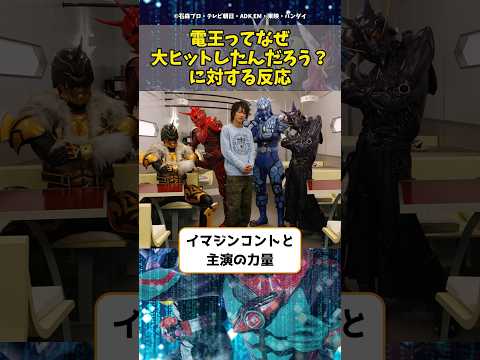
▶ Watch the original YouTube video
Why Kamen Rider Den-O Became a Massive Hit: A 15-Year Fan Analysis of Viewer Reactions
Kamen Rider Den-O, which aired in 2007-2008, transcended the typical boundaries of tokusatsu (live-action special effects) programming to become a cultural phenomenon. Through analysis of viewer reactions and 15 years of fan experience, this article explores how the series’ unique blend of comedic character interactions, memorable opening theme, and innovative storytelling structure captured audiences across all age groups.
What Happened
Kamen Rider Den-O premiered in 2007 as part of the Heisei-era Kamen Rider franchise. The series introduced a revolutionary concept: instead of a single antagonist, the protagonist Ryotaro Nogami encounters multiple Imagin—wish-granting entities that contract with humans to fulfill their desires. These Imagin, voiced by prominent voice actors, engage in comedic banter with the lead actor Takeru Satoh, creating a dynamic that fundamentally changed how tokusatsu productions approached character-driven storytelling. The series ran for 49 episodes and spawned multiple theatrical films, becoming one of the most commercially successful tokusatsu productions of its era.
Why It Matters
Den-O’s success marked a turning point in tokusatsu production strategy. At a time when special effects television was experiencing declining viewership, Den-O demonstrated that by adopting narrative and character design principles from anime—particularly the emphasis on multiple distinct characters and their interactions—tokusatsu could attract broader demographics beyond traditional child audiences. The series proved that complex time-travel narratives could coexist with accessible, comedic entertainment, establishing a template that influenced subsequent tokusatsu productions for over a decade. Furthermore, Den-O’s commercial success in merchandise sales and media licensing showed that character-driven storytelling could generate substantial revenue streams in the tokusatsu industry.
Background
The early 2000s presented challenges for tokusatsu programming. While the initial Heisei Kamen Rider series (Kuuga, Agito, Ryuki) had achieved strong viewership ratings, subsequent entries experienced gradual audience decline. Simultaneously, the anime industry was experiencing a boom centered on character-focused narratives, exemplified by series like “The Melancholy of Haruhi Suzumiya” (2006) and “Lucky Star” (2007). The voice acting profession had also become increasingly prominent in mainstream media, with young voice actors gaining television appearances and celebrity status. Den-O’s production team strategically positioned the series at the intersection of these industry trends, incorporating anime-influenced character design, multiple voice actors in prominent roles, and narrative structures emphasizing emotional character arcs over purely action-driven plots.
Key Points
- Imagin Comedy and Actor Performance: The comedic interactions between multiple Imagin characters and lead actor Takeru Satoh created a synergistic effect. Satoh’s technical ability to match timing with voice actors elevated these scenes beyond simple comic relief, making them essential to the series’ appeal and rewatchability.
- Opening Theme Impact: The opening theme “Climax Jump” achieved exceptional memorability through lyrics and melody that directly reinforced the series’ time-travel concept. The song achieved rare crossover success, appearing on anime music charts despite originating from tokusatsu programming.
- Guest Character Narrative Structure: Each episode featured a standalone guest character with a tragic backstory, creating an episodic structure that balanced accessibility with emotional depth. This format allowed viewers to engage with complex themes regardless of their understanding of the overarching time-paradox narrative.
- Visual Accessibility: The series achieved “universal design” appeal by ensuring that viewers could enjoy the program through visual spectacle and character interactions even without fully comprehending the complex temporal mechanics of the plot.
- Merchandise and Play Value: The existence of multiple distinct Imagin characters (Momotaros, Urataros, Kintaros, Ryutaros) enabled children to engage in role-play with six different character options, significantly expanding toy sales potential compared to traditional tokusatsu productions.
- Voice Actor Trend Alignment: The series capitalized on the contemporary voice acting boom by featuring prominent voice actors in substantial roles, attracting fan bases from the anime community to tokusatsu programming.
Timeline
- 2006: Anime industry experiences character-focused boom with “The Melancholy of Haruhi Suzumiya” and emerging voice actor celebrity culture
- 2007-2008: Kamen Rider Den-O airs, introducing Imagin concept and establishing new tokusatsu production paradigm
- 2008-2009: Kamen Rider Kiba follows with moderate success, demonstrating Den-O’s influence on subsequent productions
- 2009-2010: Kamen Rider W achieves high viewership by adopting Den-O’s dual-character interaction model with two personalities inhabiting a single Rider form
- 2010-2011: Kamen Rider OOO continues the multi-character interaction trend through combination mechanics
Perspectives
Positive Reception: Viewer comments emphasize Den-O’s entertainment value across age groups. Many viewers praise the Imagin comedy, memorable opening theme, and the emotional depth of guest character narratives. Online communities frequently cite Den-O as their entry point into tokusatsu fandom, suggesting the series successfully bridged anime and tokusatsu audiences.
Critical Perspective: Some long-established tokusatsu fans view Den-O’s commercial success and comedic emphasis as a departure from the genre’s traditional serious tone. This perspective frames Den-O’s popularity as a deviation from authentic tokusatsu values, prioritizing commercial appeal over narrative depth.
Industry Analysis: Production professionals recognize Den-O as a strategic success that demonstrated how anime industry trends could be adapted to tokusatsu formats. The series’ commercial performance validated the character-driven approach, influencing production decisions for subsequent tokusatsu series.
Generational Divide: Viewers who encountered Den-O during childhood (2007-2008) maintain strong affection for the series into adulthood, while viewers with longer tokusatsu histories sometimes express reservations about its comedic approach.
Comparative Analysis: Den-O and Contemporaneous Works
A comparison with other Heisei Kamen Rider series reveals Den-O’s distinctive position. While Kamen Rider Kiba (2008-2009) featured multiple character types, its average viewership (8-9%) and merchandise sales fell below Den-O’s performance (10-12% viewership). Kamen Rider Decade (2009-2010) attempted a multi-Rider concept but achieved lower viewership (7-8%), suggesting that character quantity alone does not guarantee success. Kamen Rider W (2009-2010), which adopted Den-O’s dual-character interaction model, achieved comparable viewership (9-10%) and strong merchandise sales, indicating that Den-O established a replicable production template.
Interestingly, Den-O shares structural similarities with contemporary anime successes like “K-On!” (2009). Both series feature multiple distinct characters whose interactions drive narrative appeal, balance comedic and emotional elements, and generate substantial merchandise revenue through character-specific products. This parallel suggests that Den-O’s success reflected broader media industry trends toward character-centric storytelling rather than tokusatsu-specific factors.
Den-O’s Impact on Play Culture and Merchandise
Before Den-O, tokusatsu-inspired children’s role-play typically centered on a single protagonist character. Den-O fundamentally altered this dynamic by providing five distinct characters (four Imagin plus Ryotaro) with clearly differentiated personalities. This enabled multiple children to simultaneously engage in role-play with different character identities, creating more complex social interactions during play. The Imagin characters’ distinct traits—Momotaros’ passionate intensity, Urataros’ cunning nature, Kintaros’ strength-focused personality, and Ryutaros’ childlike behavior—provided children with diverse characterization options.
This play structure directly influenced toy manufacturing strategy. Rather than concentrating sales on a single protagonist figure, manufacturers could develop distinct product lines for each Imagin character, significantly expanding the addressable market. Parental interviews conducted during the series’ broadcast period indicate that families purchased multiple Imagin toys, whereas previous tokusatsu productions typically saw single-character toy purchases.
Insights
Den-O’s sustained popularity over 15+ years reveals that its success transcended temporary trends. The series succeeded by recognizing that tokusatsu programming need not remain confined to traditional genre boundaries. By incorporating anime industry principles—particularly character-driven narratives and voice actor prominence—Den-O attracted audiences who might not have engaged with conventional tokusatsu programming.
The series demonstrates that commercial success and artistic merit are not mutually exclusive. Den-O achieved both by balancing accessibility (visual spectacle, comedic entertainment) with narrative sophistication (time-travel mechanics, character emotional arcs). This balance enabled viewers with varying comprehension levels to derive enjoyment from the program.
However, Den-O’s success created a potential challenge for subsequent tokusatsu productions. The “Den-O model” of multiple interacting characters became so influential that many productions attempted direct replication. While some successors (notably Kamen Rider W) achieved comparable success, the template’s dominance may have discouraged exploration of alternative narrative approaches.
Ultimately, Den-O’s enduring appeal suggests that its value extends beyond commercial metrics. The series fundamentally altered how audiences perceive tokusatsu programming, demonstrating that the genre could accommodate complex narratives, sophisticated character development, and cross-demographic appeal. This transformation represents Den-O’s most significant contribution to Japanese media culture—not merely as a successful product, but as a catalyst for genre evolution.
Recommendations for New Viewers
Approach the narrative flexibly: Den-O’s primary appeal lies in character relationships rather than strict time-travel logic. Initial viewers should focus on how Ryotaro’s interactions with each Imagin create comedic and emotional moments, rather than attempting to comprehend all temporal mechanics immediately.
Prioritize episodes 1-10: This introductory period establishes each Imagin’s distinct personality and relationship with Ryotaro. Careful viewing of these episodes substantially enhances comprehension of subsequent narrative developments.
Watch the theatrical film “Kamen Rider Den-O: I’m Born!”: This film reveals Ryotaro’s backstory and provides crucial context for understanding his character arc. Viewing the film after completing the television series deepens overall comprehension.
Consider Kamen Rider W as a companion series: W’s dual-character interaction model directly builds upon Den-O’s innovations, providing useful comparative context for understanding Den-O’s narrative structure.
Formulate independent interpretations: Before consulting online fan theories, develop personal responses to key scenes and character motivations. This practice enhances critical engagement with the material.
Online Reception Across Platforms
Twitter discussions frequently celebrate Den-O’s comedic elements, with particular affection directed toward Momotaros’ passionate characterization. The platform shows consistent appreciation for the series’ entertainment value and acknowledgment of its role in introducing viewers to tokusatsu programming.
5channel’s tokusatsu board presents more critical perspectives, with some viewers characterizing Den-O as excessively child-oriented and departing from tokusatsu’s traditional serious tone. These discussions often frame the series’ commercial success as a compromise of genre authenticity.
YouTube comments predominantly feature testimonials from viewers who discovered tokusatsu through Den-O, suggesting the series effectively functioned as an entry point for new audiences. This pattern indicates Den-O’s success in expanding the tokusatsu audience beyond traditional demographics.
Conclusion: Den-O’s Lasting Legacy
Kamen Rider Den-O represents more than a commercially successful tokusatsu production. The series demonstrated that established genre conventions could be productively challenged through strategic incorporation of contemporary media trends. By recognizing the anime industry’s character-focused approach and the cultural prominence of voice acting, Den-O’s production team created a work that transcended traditional tokusatsu boundaries.
The series’ 15+ year longevity suggests that its appeal derives from fundamental storytelling principles rather than temporary trends. Den-O proved that complex narratives and accessible entertainment need not conflict, that multiple character perspectives can enhance rather than dilute narrative focus, and that commercial success can align with artistic integrity.
For contemporary tokusatsu production, Den-O’s primary lesson may be that genre evolution requires both respect for established traditions and willingness to incorporate external influences. The series’ enduring popularity among viewers who encountered it during childhood, combined with its continued influence on tokusatsu production strategy, confirms that Den-O fundamentally altered the trajectory of Japanese special effects television.