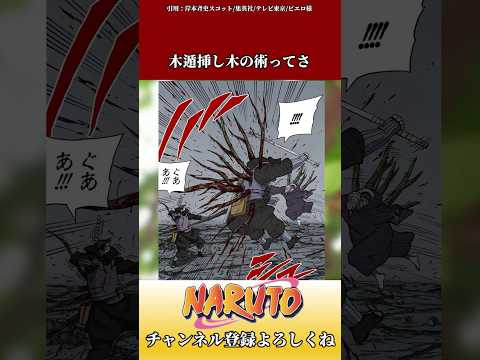
▶ Watch the original YouTube video
Why Naruto Fans Are Obsessed With Hashirama’s Humble Wood Clone Technique
The Wood Release: Cutting Technique, a seemingly mundane jutsu used by Naruto’s most powerful character Hashirama, has sparked widespread internet discussion about what true strength means in anime. A 15-year Naruto fan breaks down why this unassuming technique reveals deeper truths about the series’ philosophy and modern anime storytelling.
What Happened
The Wood Release: Cutting Technique, a relatively modest jutsu attributed to Hashirama Senju—one of Naruto’s most powerful characters—has become a focal point of fan discussion online. The technique, which involves growing small branches and roots to create obstacles or defensive structures, stands in stark contrast to Hashirama’s other abilities, such as the Forest of Creation or the True Thousand-Handed Statue. This juxtaposition has sparked widespread debate about the technique’s actual utility, its place within the broader jutsu hierarchy, and what it reveals about character design in the series.
Why It Matters
The internet’s reaction to this seemingly minor technique illuminates how modern anime audiences engage with storytelling. Rather than passively consuming content, fans are actively analyzing narrative logic, questioning power scaling, and seeking deeper meaning in character choices. This discussion also reflects a broader shift in anime industry trends: the growing appreciation for subtle, strategically sound abilities over flashy, high-impact techniques. Understanding why fans gravitate toward analyzing such details reveals how contemporary viewers have become more sophisticated in their critical consumption of anime.
Background
Naruto, which premiered in 2005, established itself as a landmark series through its intricate jutsu system—a framework that goes beyond simple combat mechanics to express character personality, strategic thinking, and thematic depth. Hashirama Senju, the First Hokage, is consistently portrayed as one of the series’ most formidable warriors, capable of generating massive wooden structures and controlling entire forests. The Wood Release: Cutting Technique first appears in the series’ second arc and represents a stark departure from the scale and spectacle associated with Hashirama’s other abilities. This contrast between expectation and reality has made the technique a subject of fascination for long-time fans and newcomers alike.
Key Points
- The Wood Release: Cutting Technique is a modest jutsu that appears underwhelming compared to Hashirama’s other abilities, creating a gap between fan expectations and actual presentation
- Online discussions reveal that fans view the technique as either comedically underwhelming or strategically valuable, depending on their analytical perspective
- The jutsu’s true value lies in its tactical applications: defensive positioning, movement restriction, and energy efficiency rather than raw destructive power
- The technique exemplifies a broader anime industry trend toward valuing subtle, strategically sound abilities over visually spectacular ones
- The gap between creator intent and audience interpretation suggests that series creator Kishimoto Masashi may be deliberately challenging viewers’ assumptions about what constitutes strength
- Fan reactions span three categories: comedic dismissal, tactical analysis, and comparative evaluation against other Wood Release techniques
Understanding the Jutsu Hierarchy
Within the Wood Release arsenal, techniques can be categorized into three distinct tiers. Large-scale offensive jutsu like the Forest of Creation and True Thousand-Handed Statue demand enormous chakra reserves but deliver overwhelming destructive force. Mid-tier techniques such as the Wood Dragon Technique and Wood Spear Technique offer balanced offense and defense with moderate energy consumption. The Cutting Technique occupies the tactical support category—low chakra cost, high strategic value, and practical applications in real combat scenarios. This classification reveals that the Cutting Technique is not weak, but rather efficient. Its modest appearance masks genuine utility in battlefield control, obstacle creation, and defensive positioning.
The Psychology Behind Fan Reactions
Three psychological layers explain why this technique generates such robust online discussion. First, expectation mismatch: viewers anticipate spectacular abilities from the series’ strongest character, and the Cutting Technique’s mundane appearance creates cognitive dissonance. Second, practical debate: fans genuinely question the technique’s combat effectiveness and real-world applications, demonstrating serious engagement with the series’ internal logic. Third, character interpretation: the technique prompts viewers to reconsider what Hashirama’s choice to employ such modest abilities reveals about his character, strategic philosophy, and approach to conflict.
This phenomenon mirrors patterns observed in other acclaimed series. In Demon Slayer, basic breathing techniques prove more powerful than flashy alternatives. In Code Geass, protagonist Lelouch prioritizes strategy over spectacle. These narrative choices reflect a deliberate authorial philosophy: true strength transcends visual impact and resides in efficiency, knowledge, and tactical acumen.
Industry Trends and Audience Evolution
The valorization of subtle, powerful abilities represents a significant shift in anime industry trends over the past decade. Series like Overlord, That Time I Got Reincarnated as a Slime, and Jujutsu Kaisen feature abilities that appear unremarkable but prove devastatingly effective. This trend reflects audience maturation. Early anime fans gravitated toward explosive action sequences and visual spectacle. Contemporary audiences demand logical consistency, strategic depth, and thematic coherence. The Wood Release: Cutting Technique benefits from this evolved critical perspective—viewers now recognize that effectiveness and elegance often manifest through restraint rather than excess.
Creator Intent vs. Audience Reception
Series creator Kishimoto Masashi has consistently emphasized in interviews that true strength encompasses strategy, wisdom, experience, and spiritual fortitude—not merely raw power. By assigning a modest technique to his series’ most powerful character, Kishimoto poses a fundamental question: What constitutes genuine strength? Many viewers, however, unconsciously equate visual spectacle with power, leading them to initially dismiss the Cutting Technique as weak. This interpretive gap generates the diverse reactions visible across fan communities. The technique becomes a vehicle for exploring the series’ central philosophical inquiry rather than a simple combat ability.
Fan Response Patterns
Online reactions cluster into three distinct patterns. Comedic responses dominate initial reactions—”Is this really Hashirama’s jutsu?” and “This is so underwhelming” reflect the humor generated by expectation subversion. Analytical responses follow, with engaged fans proposing that the technique possesses hidden tactical value and strategic importance. Comparative responses emerge as fans evaluate the Cutting Technique against other Wood Release abilities and Hashirama’s broader arsenal. These varied reactions demonstrate that Naruto’s fanbase actively interprets rather than passively consumes content, engaging in genuine critical discourse about narrative meaning and character design.
Practical Viewing Recommendations
For viewers interested in deeper engagement with this technique and similar narrative elements, several approaches enhance understanding. First, evaluate jutsu based on tactical value rather than visual impact—observe how the Cutting Technique constrains opponent movement and creates defensive advantages. Second, compare Hashirama’s modest techniques against his large-scale abilities to understand his strategic layering and combat philosophy. Third, study parallel examples in other acclaimed series: basic breathing techniques in Demon Slayer, simple abilities in Hunter x Hunter, and foundational magic in Puella Magi Madoka Magica. Fourth, revisit the original manga, which may present the technique’s applications with greater clarity than the anime adaptation.
Broader Implications
The Wood Release: Cutting Technique ultimately represents more than a single jutsu—it embodies Naruto’s fundamental thematic inquiry into the nature of strength. The internet’s sustained engagement with this modest ability reflects viewers’ sophisticated understanding that true power often operates beneath surface appearances. The technique demonstrates that effectiveness and elegance frequently manifest through restraint, efficiency, and strategic precision rather than spectacle and scale. As audiences continue evolving toward more critical consumption patterns, the appreciation for such subtly powerful elements will likely intensify. The Cutting Technique thus serves as a microcosm for understanding contemporary anime storytelling: layered, philosophically coherent, and rewarding of active interpretation. In discussing this single jutsu, fans engage with universal questions about value, strength, and the relationship between appearance and reality.