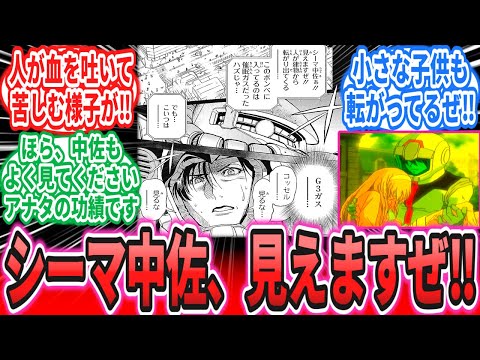
▶ Watch the original YouTube video
Why Seima Garahau Keeps Getting Hurt: A Deep Analysis of Mobile Suit Gundam 0083’s Most Complex Character
Fifteen years of fandom has revealed a troubling pattern: Seima Garahau, the brilliant female commander of the Delaz Fleet in Mobile Suit Gundam 0083: Stardust Memory, is systematically undermined by nearly every male character around her. Internet communities have even coined the term “Team Seima-Sama Clouding” to describe the phenomenon—and it reveals something profound about 1990s anime and gender representation in storytelling.
What Happened
Mobile Suit Gundam 0083: Stardust Memory, released in 1991, introduced Seima Garahau as a complex female military officer serving under Delaz Fleet commander Eggieu Delaz. Over the past decade, fan communities—particularly on Twitter, 5channel, and YouTube—have developed an extensive critical discourse around her character, coining the phrase “Team Seima-Sama Clouding” to describe how the narrative systematically undermines her judgment, confidence, and agency through interactions with male characters including Anabel Gato, Eggieu Delaz, and protagonist Kou Uraki.
The phenomenon has grown into a substantial body of fan analysis, with thousands of posts expressing sympathy for Seima’s predicament and questioning why her rational military judgments are consistently dismissed or overridden by the men around her.
Why It Matters
Seima Garahau represents a watershed moment in anime character design—a woman written with genuine complexity, strategic intelligence, and emotional depth at a time when female characters were typically portrayed as either beautiful or obedient, rarely both. Yet the narrative structure of 0083 systematically diminishes her agency, making her a case study in how even progressive character writing can be undermined by structural storytelling choices.
The internet’s response to Seima reveals how audiences recognize and critique gender dynamics in media. The “Team Seima-Sama Clouding” meme transcends simple character appreciation; it functions as social commentary on how capable women in hierarchical organizations are marginalized, their expertise dismissed, and their emotional labor exploited—themes that resonate far beyond anime fandom.
Background
Mobile Suit Gundam 0083: Stardust Memory is set in the post-One Year War period, focusing on the psychological aftermath of conflict rather than combat itself. Seima Garahau serves as the female commanding officer of the Delaz Fleet, a military faction attempting to revive Zeon ideology. Unlike typical “beautiful enemy” archetypes, Seima is portrayed as a seasoned military strategist who combines tactical knowledge with emotional intelligence.
The series aired during a transitional period in anime production. While contemporary works like Darwin’s Game and Gyrozetter still relied on binary female character archetypes, 0083 attempted to present a woman who wielded her beauty strategically without depending on it—a relatively progressive approach for 1991.
However, this complexity came with a cost. Seima’s relationships with three key male characters—Anabel Gato (her superior officer), Eggieu Delaz (her commander), and Kou Uraki (the protagonist and enemy pilot)—consistently place her in reactive rather than proactive positions, undermining her agency despite her demonstrated competence.
Key Points
- Seima Garahau is a rare 1991 anime character: She combines strategic intelligence, emotional complexity, and genuine agency—qualities that were exceptional for female characters in that era.
- “Team Seima-Sama Clouding” is a real phenomenon: Internet communities have identified a pattern where nearly every male character around her undermines her judgment, confidence, or emotional stability.
- Anabel Gato represents institutional distrust: Despite working together, Gato consistently dismisses Seima’s rational military advice, viewing her pragmatism as emotional resistance rather than strategic wisdom.
- Eggieu Delaz exploits rather than respects her: The Delaz Fleet commander treats Seima as a means to his ideological ends, maintaining high expectations while refusing to honor her personhood or emotional needs.
- Kou Uraki complicates her judgment: The protagonist’s emotional connection to Seima creates additional psychological conflict, transforming her from a clear-headed strategist into someone torn between duty and feeling.
- Narrative structure prioritizes male agency: Seima’s ultimate fate is determined by male characters’ choices, not her own, revealing the limitations of 1990s anime in depicting female autonomy.
The Three Architects of Seima’s Suffering
Anabel Gato: The Distrustful Superior
Gato’s relationship with Seima represents the most complex dynamic in 0083. While maintaining the formal respect due to a fellow officer, Gato harbors deep institutional distrust. This is not because Seima is a woman, but because she represents pragmatism—a threat to his ideological commitment to Delaz’s mission.
Gato consistently rejects Seima’s strategically sound advice, interpreting her rational judgments as emotional resistance. This pattern of dismissal forces Seima into a psychological bind: her expertise is simultaneously recognized and invalidated, leaving her unable to influence outcomes despite her clear competence.
Eggieu Delaz: The Exploitative Commander
Delaz’s treatment of Seima is more insidious. He values her abilities while refusing to respect her as a person. He maintains high expectations for her performance while showing no regard for her emotional or psychological wellbeing. This creates a dynamic where Seima experiences constant disappointment—her efforts never satisfy the impossible standards imposed upon her.
The commander’s approach mirrors patterns found in strategic simulation games, where treating subordinates as tools rather than people inevitably produces tragic outcomes. Seima becomes trapped in a cycle of expectation and disappointment, her sense of self eroding with each unmet hope.
Kou Uraki: The Complicating Enemy
The protagonist’s emotional connection to Seima transcends the typical enemy-versus-ally binary. Rather than offering her support or escape, this connection deepens her internal conflict. Across the Gundam franchise—from Mobile Suit Gundam SEED to Gundam 00—emotional bonds between enemies consistently produce tragic outcomes. Seima is no exception; her connection to Kou transforms her from a strategist into someone paralyzed by competing loyalties.
The Structural Problem: Female Characters in 1990s Anime
0083 reveals a fundamental limitation in 1990s anime production: even when female characters are written with genuine complexity, the narrative structure often remains male-centric. Seima’s characterization is consistently reactive rather than proactive. She responds to male characters’ decisions rather than driving the plot herself. Her emotional expression remains restrained, confined within the boundaries of “professional decorum.” Most critically, her ultimate fate is determined entirely by male characters’ choices.
This pattern was not unique to 0083. Comparable strong female characters from the same era—Rei Ayanami in Neon Genesis Evangelion, Motoko Kusanagi in Ghost in the Shell: Stand Alone Complex—all experience systematic undermining despite their demonstrated power. This represents a universal pattern in 1990s-2000s anime: strong women must be “clouded” to prevent them from threatening male narrative dominance.
However, Seima’s case is particularly severe because she operates in a military context where emotional clarity is literally a matter of life and death. The narrative deliberately clouds her judgment in an environment where such clouding carries fatal consequences.
Internet Response and the Birth of “Team Seima-Sama Clouding”
The emergence of “Team Seima-Sama Clouding” as internet slang indicates Seima’s special status within fan communities. Thousands of Twitter posts express sentiments like “I want to protect Seima’s smile,” “Why does she suffer so much?”, and “Gato and Delaz owe Seima an apology.”
These responses transcend typical character appreciation. They represent recognition that Seima embodies a universal tragedy: the capable woman in a male-dominated hierarchy, her expertise dismissed, her emotional labor exploited, her agency systematically eroded. Fans see in Seima a reflection of real-world gender dynamics.
5channel’s Gundam discussion threads contain more analytical responses, with users repeatedly asking: “Why is Seima’s judgment consistently the most rational, yet her opinions are never adopted?” This question extends beyond narrative criticism into commentary on real organizational structures and female marginalization.
YouTube comments reveal more emotional engagement, with viewers expressing they cannot bear to watch Seima’s suffering and believing she deserves happiness. These responses confirm that Seima functions not merely as an “enemy character” but as a genuine object of emotional investment and identification.
Insights: The Tragedy as Thematic Purpose
Upon extended analysis, a paradox emerges: Seima is “clouded” not because she is weak, but because she is strong. Strong female characters inherently threaten male-centered narratives, forcing those narratives to diminish them through emotional and psychological undermining.
0083 is distinguished within the Gundam franchise by its focus on post-war trauma rather than combat itself. In this context, Seima’s systematic undermining may function as intentional thematic expression. Her suffering embodies the broader message that war damages human judgment, destabilizes human emotion, and erodes human confidence. She becomes not a victim of poor writing, but a vessel for the series’ central thesis about warfare’s psychological aftermath.
Her one-by-one interactions with Gato, Delaz, and Uraki each represent different dimensions of how conflict corrupts judgment and relationships. Gato’s institutional distrust, Delaz’s ideological exploitation, and Uraki’s emotional complication collectively illustrate how war creates impossible psychological positions for everyone involved—but especially for those, like Seima, whose competence makes them indispensable yet whose gender makes them expendable.
In this reading, Seima Garahau becomes 0083’s most essential character. Her struggles, her conflicts, and her tragedy most eloquently articulate what the series attempts to communicate about the human cost of warfare and the particular vulnerability of capable women within militarized hierarchies.
Future viewings of 0083 should center on Seima’s character—each gesture, expression, and word carries the weight of the series’ thematic concerns about how institutions cloud judgment, how hierarchies exploit capability, and how war damages those most equipped to navigate it.