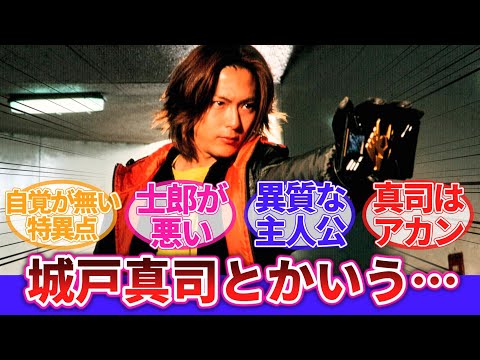
▶ Watch the original YouTube video
Why Kamen Rider Ryuki’s Protagonist Is Called a ‘Bug Character’—And Why That’s Actually Genius
Shoji Shinji, the protagonist of Kamen Rider Ryuki, has become infamous online as a “bug character” for repeating the same failures across multiple parallel timelines without growth or learning. A deep analysis of 15 years of tokusatsu criticism reveals this “unchanging protagonist” is not a flaw—but an intentional design that challenges the entire genre’s conventions.
What Happened
Kamen Rider Ryuki’s main character, Shoji Shinji, has become the subject of intense debate within anime and tokusatsu fan communities. Online discussions across Twitter, 5channel, and YouTube reveal a sharp divide: some viewers dismiss him as an incompetent protagonist, while others have come to view him as a tragic figure whose inability to change reflects a deeper truth about human nature. The core criticism centers on his failure to learn from repeated mistakes, even across alternate timeline scenarios presented in the series.
Why It Matters
Shoji Shinji represents a radical departure from the standard tokusatsu protagonist archetype. Unlike previous Kamen Rider heroes who experience clear character growth and transformation, Ryuki’s lead character remains fundamentally unchanged throughout the narrative. This challenges a foundational assumption in storytelling: that protagonists must grow. Understanding this character design reveals how Ryuki deliberately subverts genre conventions to explore themes of human limitation and the cyclical nature of failure. For viewers and critics, this raises important questions about what makes a protagonist compelling and whether growth is truly necessary for meaningful character development.
Background
Kamen Rider Ryuki, which aired in 2002, introduced a battle royale format where multiple Kamen Riders fight for supremacy. The series was structured around parallel worlds and alternate timelines, allowing the narrative to explore different outcomes and scenarios. Shoji Shinji, the primary protagonist, is caught in this system despite understanding its fundamental flaw: that the Rider system itself generates human conflict. However, unlike other characters in the series—such as Kanzaki Shirou and Suga Takamatsu—who adapt and evolve their strategies, Shinji consistently makes the same critical errors regardless of circumstance or timeline.
The character has been analyzed extensively by tokusatsu scholars and fan communities since the 2010s, when the series experienced a resurgence in viewership through reruns and streaming platforms. This renewed attention has led to a significant reevaluation of Shinji’s character, with many viewers discovering depth in what they initially dismissed as poor writing.
Key Points
- Shoji Shinji is the only Kamen Rider protagonist who fails to demonstrate meaningful character growth across multiple narrative iterations
- Unlike Kanzaki Shirou and Suga Takamatsu, who adapt and evolve their strategies, Shinji repeats identical failure patterns in every timeline
- Online communities remain divided: some view him as a “bug character” representing poor writing, while others see him as intentionally designed to explore human limitation
- The series deliberately inverts the tokusatsu genre convention that protagonists must grow and overcome challenges
- Viewer interpretation of Shinji’s character has shifted significantly over time, with older audiences finding tragic depth in what younger viewers initially found frustrating
- Ryuki’s parallel world structure serves as the perfect narrative device to emphasize Shinji’s unchanging nature and the cyclical inevitability of his failures
Timeline
- 2002: Kamen Rider Ryuki airs; contemporary audiences largely criticize Shoji Shinji as an incompetent protagonist
- 2010s: Series experiences resurgence through reruns and streaming; critical reevaluation begins
- 2015 onwards: Increased scholarly analysis and fan discourse reframe Shinji as a deliberately designed tragic character
- Present day: Online communities remain divided but show growing appreciation for Shinji’s thematic significance
Perspectives
The “Bug Character” Interpretation: Critics argue that Shoji Shinji’s inability to learn from failure represents a fundamental flaw in the narrative. They point to his repeated logical contradictions—understanding that the Rider system generates conflict while simultaneously perpetuating that conflict—as evidence of poor character writing. This perspective dominated initial reception and remains prevalent in certain fan communities.
The “Tragic Protagonist” Interpretation: Scholars and experienced viewers argue that Shinji’s unchanging nature is intentional and thematically significant. They contend that he represents the gap between ideals and reality—a character who holds noble aspirations but lacks the capacity to realize them. This interpretation draws parallels to Shinji Ikari from Neon Genesis Evangelion, another protagonist defined by his inability to change despite understanding his circumstances.
The Comparative Analysis: When examined alongside other Kamen Rider protagonists, Shinji’s static nature becomes even more pronounced. Hongo Takeshi (original Kamen Rider) experiences rapid growth from victim to warrior. Minami Kotaro (Kamen Rider BLACK) undergoes staged development and forms resolve. Kido Taishi (Kamen Rider 555) transitions from passive to active agency. Only Shinji remains fundamentally unchanged, suggesting this was a deliberate design choice rather than narrative oversight.
Insights
The debate surrounding Shoji Shinji reveals a critical evolution in how audiences interpret tokusatsu narratives. His character challenges the assumption that protagonists must grow to be meaningful. Instead, Ryuki proposes that unchanging characters can embody profound truths about human nature—specifically, humanity’s tendency to repeat mistakes despite understanding their consequences.
The parallel world structure of Ryuki serves as more than a narrative gimmick; it functions as a philosophical statement. Unlike Higurashi: When They Cry, where characters make different choices across timelines and reach different outcomes, Ryuki’s Shinji makes essentially identical choices regardless of circumstance. This suggests that his failures stem not from ignorance but from something more fundamental: the human condition itself.
The shift in viewer perception over time—from dismissing Shinji as incompetent to recognizing his tragic dimension—indicates that character appreciation is not static. As audiences mature and accumulate life experience, they recognize in Shinji’s inability to bridge the gap between ideals and reality a reflection of their own struggles. This suggests the character was designed to reward deeper, more experienced viewing.
Ultimately, Shoji Shinji represents a pivotal moment in tokusatsu history where the genre questioned its own foundational assumptions. By presenting a protagonist who does not grow, Ryuki expanded the possibilities of what a hero could be—not a figure of triumph, but a mirror reflecting human limitation and the cyclical nature of failure. Whether this was intentional design or fortunate accident remains debatable, but the result is undeniable: a character who has become more relevant and meaningful with time, challenging viewers to reconsider what makes a protagonist truly compelling.