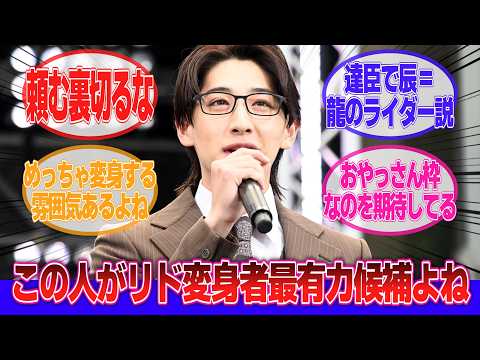
▶ Watch the original YouTube video
Is Teacher Tatsumi Actually Suspicious? Fan Theories and Online Reactions to Kamen Rider Maou’s Most Mysterious Character
Asao Tatsumi, a seemingly benevolent teacher in Kamen Rider Maou, has become the subject of intense speculation among fans who believe he may be the series’ true villain. With voice actor Ataka Hayato delivering deliberately ambiguous performances and suspicious narrative patterns, online communities are debating whether the character represents a masterful misdirection or genuine foreshadowing of a major plot twist.
What Happened
Asao Tatsumi, a character who transitioned from Kamen Rider Rid to Kamen Rider Maou, has become the focal point of intense fan speculation regarding his true role in the series. Despite his surface-level portrayal as a conscientious teacher, viewers have identified consistent patterns of suspicious behavior: timely interventions in critical moments, unexplained knowledge about Kamen Rider Maou, and deliberate ambiguity in his motivations. Voice actor Ataka Hayato’s performance—marked by meaningful pauses, suggestive eye contact, and an ominous tone—has amplified these suspicions, leading to widespread theories that he may be the series’ hidden antagonist or the creator of the Kamen Rider Maou technology itself.
Why It Matters
The character of Asao Tatsumi represents a significant evolution in how contemporary hero series engage with their audiences. Rather than presenting clear moral distinctions, modern Kamen Rider productions increasingly employ complex, morally ambiguous characters designed to encourage viewer speculation and online discourse. Tatsumi’s characterization reflects a broader industry trend toward sophisticated storytelling that prioritizes audience engagement through mystery and interpretation. This approach has proven effective in extending viewer investment across multiple episodes and generating sustained community discussion on social media platforms and forums.
Background
The Kamen Rider franchise, which began in 2009 with Kamen Rider Decade, has evolved significantly over 15 years. The series has progressively introduced more complex antagonists and morally gray characters, moving away from simple good-versus-evil narratives. Previous entries such as Kamen Rider Agito, Kamen Rider Double, Kamen Rider Wizard, and Kamen Rider Saber all featured characters whose true allegiances remained unclear for extended periods. Kamen Rider Maou continues this tradition but with heightened intensity, making Tatsumi’s suspicious nature more deliberate and prolonged than comparable characters in the franchise’s history. The character serves as a narrative bridge between Kamen Rider Rid and Kamen Rider Maou while simultaneously functioning as a source of mystery within the new series.
Key Points
- Rapid Spread of Villain Theory: The hypothesis that Tatsumi is the true antagonist or creator of Kamen Rider Maou has gained significant traction across Twitter, 5channel forums, and YouTube comment sections, with hundreds of posts weekly analyzing his behavior patterns.
- Suspicious Behavioral Patterns: Tatsumi consistently appears at critical moments in ways that seem too convenient, and possesses knowledge about Kamen Rider Maou that exceeds what a typical teacher should know.
- Voice Acting as Evidence: Ataka Hayato’s deliberately ambiguous performance—contrasting sharply with his brighter portrayal in Kamen Rider Saber—is cited by fans as intentional signaling of hidden motives.
- Timeline Inconsistencies: Detailed fan analysis suggests that Tatsumi’s presence and Kamen Rider Maou’s activities do not overlap temporally, supporting theories that he may be the rider himself.
- Intentional Misdirection Debate: Fans remain divided on whether the production team is deliberately misleading audiences or genuinely building toward a major revelation about Tatsumi’s character.
- Comparison to Franchise History: Unlike previous ambiguous characters in the Kamen Rider series, Tatsumi’s suspicious nature is sustained more consistently and with greater narrative emphasis.
Timeline
- Kamen Rider Rid Era: Tatsumi introduced as supporting character; initial suspicious behavior noted by attentive viewers but not widely discussed.
- Transition to Kamen Rider Maou: Tatsumi’s role expands; suspicious patterns become more pronounced and deliberate.
- Early Maou Episodes: Fan speculation intensifies; online communities begin systematic analysis of his behavior and dialogue.
- Ongoing Series: Weekly episodes generate sustained discussion; theories evolve as new evidence emerges from each installment.
Perspectives
The Villain Theory Proponents: This faction argues that Tatsumi’s consistent suspicious behavior, unexplained knowledge, convenient appearances, and Ataka Hayato’s deliberate performance choices constitute clear evidence of hidden antagonism. They cite detailed timeline analysis showing non-overlapping presence with Kamen Rider Maou’s activities and point to his possession of information that should be unavailable to a regular teacher.
The Misdirection Advocates: This group contends that the production team is intentionally misleading audiences as a narrative strategy to deepen engagement and discussion. They argue that Tatsumi will ultimately be revealed as a genuinely well-intentioned character, and that the current suspicious portrayal serves as a commentary on viewer expectations and assumptions.
The Moderate Interpretation: Some viewers propose that Tatsumi occupies a morally complex position—neither purely villainous nor entirely benevolent. They suggest he may be a victim of circumstances, a reluctant participant in events beyond his control, or someone with knowledge that compels him to act in ways that appear suspicious but are ultimately justified.
Comparable Characters in Kamen Rider History
The Kamen Rider franchise has featured several characters with similar narrative functions. Toru Hojo from Kamen Rider Agito initially appeared suspicious but was eventually revealed to be the protagonist. Shotaro Hidari from Kamen Rider Double displayed ambiguous behavior early in the series, though his true nature was clarified relatively quickly. The white wizard from Kamen Rider Wizard maintained mystery throughout much of the series before his identity was gradually disclosed. Compared to these precedents, Tatsumi’s suspicious characterization is more sustained, more deliberately performed, and more extensively analyzed by the fanbase.
Industry Trends
The prominence of morally ambiguous adult characters in recent Kamen Rider productions reflects broader industry trends. Kamen Rider Zero-One featured AI technologist Ryo Fuwa in a suspicious role that extended across multiple episodes. Kamen Rider Saber introduced multiple ambiguous adult characters simultaneously, creating layered mystery. This evolution corresponds with audience demographic shifts toward older viewers and the maturation of fan analysis culture. Contemporary hero series increasingly prioritize complex character development and encourage viewer speculation as a primary engagement mechanism, moving away from straightforward moral narratives.
Possible Future Directions
Theory One—Tatsumi as Creator: If Tatsumi is revealed as the creator or manufacturer of Kamen Rider Maou technology, his suspicious knowledge and convenient appearances would be explained by his scientific expertise. This scenario parallels Shintaro Goto’s role in Kamen Rider OOZ as a knowledgeable adult figure with hidden expertise.
Theory Two—Tatsumi as Victim: Tatsumi’s suspicious behavior could stem from trauma or hidden victimization by Kamen Rider Maou or related forces. This would reframe his apparent suspicion as psychological defense mechanisms, generating audience sympathy in later episodes.
Theory Three—Intentional Misdirection: Tatsumi may ultimately be revealed as genuinely benevolent, with the production team having deliberately cultivated false suspicion. This approach mirrors the revelation of the Eyema’s true nature in Kamen Rider Ghost, where extended mystery resolved into unexpected clarity.
How to Engage More Deeply With the Series
Revisit Kamen Rider Rid Episodes: Rewatching Tatsumi’s initial appearances and scenes where he provides crucial information often reveals previously unnoticed foreshadowing and narrative details that gain new significance in the context of Maou’s developments.
Analyze Ataka Hayato’s Performance: Close attention to the actor’s eye movements, vocal inflections, and physical positioning reveals subtle character psychology that informs interpretation of his motivations and trustworthiness.
Engage With Online Communities: Reading fan analysis on Twitter and 5channel forums exposes interpretations and evidence that individual viewers might overlook, though caution regarding spoilers is advised.
Study Related Franchise Entries: Viewing Kamen Rider Agito, Kamen Rider Saber, and Kamen Rider Zero-One provides context for understanding how the franchise develops ambiguous characters and constructs narrative mysteries.
Insights
Asao Tatsumi represents a sophisticated evolution in how contemporary hero series construct character mystery and audience engagement. His characterization transcends simple narrative function; it has become a focal point for community discourse, collaborative analysis, and speculative interpretation. The sustained ambiguity surrounding his true nature—whether intentional misdirection or genuine foreshadowing—demonstrates the effectiveness of complex character design in extending viewer investment and generating organic social media engagement.
The character’s success lies in the alignment between narrative construction and performance. Ataka Hayato’s deliberate tonal shift from his previous Kamen Rider appearance, combined with suspicious behavioral patterns and convenient narrative positioning, creates a coherent impression of hidden motives. This coherence—whether ultimately justified or deliberately misleading—validates fan speculation and encourages continued analysis.
From a broader perspective, Tatsumi exemplifies a franchise-wide shift toward sophisticated storytelling that respects audience intelligence and encourages active interpretation rather than passive consumption. The character’s “suspiciousness” functions not merely as plot device but as aesthetic principle—a celebration of narrative ambiguity as a legitimate form of dramatic expression. Whether Tatsumi ultimately proves villainous, victimized, or virtuous, his characterization has already succeeded in elevating audience engagement and demonstrating the enduring appeal of mystery within the hero genre.