▶ Watch the original YouTube video
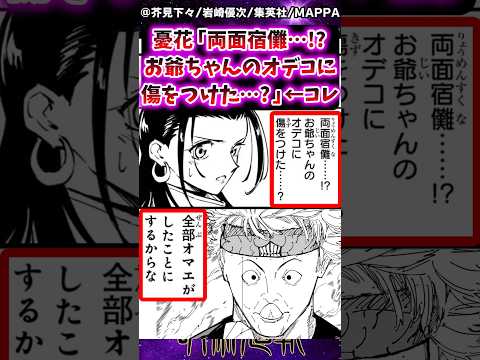
A viral video has uncovered the true origin of Gojo Satoru’s distinctive forehead scar in Jujutsu Kaisen, revealing it was caused by Yuji Itadori’s surgical procedure rather than combat—and exposing a deeper pattern of information manipulation within the jujutsu world’s power structure.
- What Happened
- Why It Matters
- Background
- Key Points
- The Mechanism of Information Distortion
- Yuji Itadori’s Role and Institutional Accountability
- Comparison with Other Works Exploring Information Manipulation
- Implications for Future Narrative Development
- Fan Reception and Community Response
- Insights: What This Reveals About Jujutsu Kaisen’s Deeper Themes
What Happened
According to analysis presented in a recent YouTube video, Gojo Satoru’s forehead scar was not inflicted during a battle with Sukuna, as commonly believed within the jujutsu community. Instead, the scar originated from a surgical incision made by Yuji Itadori when transplanting Sukuna’s brain into Gojo’s body. This medical procedure left a permanent mark that has been misrepresented throughout jujutsu society for nearly seven decades.
Why It Matters
This revelation exposes a critical flaw in how information is preserved and transmitted within the jujutsu world. The scar represents more than a physical mark—it symbolizes how historical narratives become distorted over time, either through deliberate concealment or the natural degradation of memory and record-keeping. Understanding this pattern is essential for comprehending the deeper themes of power, accountability, and institutional control that underpin the entire Jujutsu Kaisen narrative.
Background
Gojo Satoru’s forehead scar has been a distinctive visual element throughout the series, yet its origin has remained ambiguous. The prevailing explanation within jujutsu circles attributes it to direct combat with Sukuna, a narrative that aligns with Gojo’s legendary status as the strongest sorcerer. However, the true origin—a surgical procedure conducted 68 years prior to the main timeline—suggests that the jujutsu establishment has either intentionally obscured or gradually forgotten the actual circumstances. This discrepancy raises questions about what other historical “facts” within the jujutsu world may be similarly distorted.
The procedure itself raises ethical concerns. Transplanting Sukuna’s brain into another person without explicit consent constitutes a serious violation of bodily autonomy. By allowing the false narrative to persist, the jujutsu hierarchy effectively shields those responsible from accountability while simultaneously building a more dramatic and heroic version of events.
Key Points
- Gojo’s forehead scar originated from surgical incision during Yuji Itadori’s brain transplant procedure, not from combat with Sukuna
- The jujutsu world has perpetuated a false narrative attributing the scar to direct battle, either through deliberate information control or natural historical distortion
- This misrepresentation may serve to conceal the ethical violations involved in the non-consensual procedure
- The 68-year time gap has allowed inconsistencies to become established as accepted truth, as eyewitnesses’ accounts have become unreliable
- This pattern reflects broader institutional problems within the jujutsu hierarchy regarding transparency and accountability
- The narrative distortion mirrors real-world historical processes where inconvenient truths are gradually replaced by more convenient interpretations
The Mechanism of Information Distortion
The scar’s misattribution likely resulted from a combination of intentional concealment and passive historical degradation. Initially, those involved in the procedure may have deliberately obscured the truth to avoid accountability for the ethically questionable transplant. Over decades, as direct witnesses aged and died, institutional memory faded. Oral transmission of information became increasingly unreliable, and the more dramatic narrative—a scar earned in legendary combat—gradually replaced the mundane medical reality.
This mechanism parallels patterns observed in real historical scholarship. Historical narratives are not always deliberately falsified; rather, they naturally evolve toward interpretations that are more memorable, more morally satisfying, or more convenient for those in power. The jujutsu world’s information structure, lacking centralized written records and relying instead on oral tradition within a secretive organization, is particularly vulnerable to this type of distortion.
Yuji Itadori’s Role and Institutional Accountability
The revelation places Yuji Itadori in a morally complex position. He performed a procedure that, while potentially necessary within the jujutsu world’s logic, violated fundamental principles of consent and bodily autonomy. Yet the institutional narrative has effectively absolved him of responsibility by erasing his role from the official history. Simultaneously, this erasure has allowed the jujutsu hierarchy to avoid addressing the systemic ethical failures that permitted such a procedure to occur in the first place.
This pattern—where a single individual becomes the scapegoat for broader institutional failures—represents a recurring problem in hierarchical organizations. By focusing blame on one person’s actions, the system avoids examining the structural conditions that enabled those actions.
Comparison with Other Works Exploring Information Manipulation
Jujutsu Kaisen’s treatment of historical distortion shares thematic territory with other contemporary anime and manga that explore how information becomes corrupted within closed systems. Attack on Titan presents large-scale, systematic historical concealment designed to maintain a power structure. The Promised Neverland depicts direct, purposeful suppression of inconvenient truths. By contrast, Jujutsu Kaisen portrays a more subtle and realistic form of historical degradation—one where intentional obscuration and passive forgetting become indistinguishable over time.
This nuanced approach mirrors actual historical processes more closely than the more overtly conspiratorial narratives found in other works. Real institutions rarely maintain perfect secrecy; instead, inconvenient truths gradually fade as institutional memory decays and new interpretations become normalized.
Implications for Future Narrative Development
The revelation of the scar’s true origin suggests that future story arcs may explore Yuji Itadori’s perspective on the procedure and his psychological state at the time of the transplant. Such an exploration could fundamentally alter fan understanding of his character and motivations. Additionally, as more historical “facts” within the jujutsu world are scrutinized, readers may discover additional layers of institutional deception and historical revision.
The series appears deliberately structured to encourage this critical examination. By leaving certain details ambiguous and allowing false narratives to circulate among fans, the creators replicate the actual process by which historical distortion occurs. This meta-textual approach—where the audience experiences the same information degradation that characters within the story experience—represents a sophisticated narrative technique.
Fan Reception and Community Response
Online communities have responded to this revelation with a mixture of surprise and vindication. Many fans report having sensed inconsistencies in the official narrative without being able to articulate them precisely. The video’s analysis provided a framework for understanding their intuitive doubts. Comments on social media reflect recognition that a 68-year gap naturally produces unreliable information, while simultaneously acknowledging that institutional actors may have deliberately exploited this degradation to obscure uncomfortable truths.
Some viewers have expressed sympathy for Yuji Itadori, recognizing that he has been effectively scapegoated by a system unwilling to examine its own ethical failures. Others have questioned whether the procedure was justified under any circumstances, highlighting the work’s engagement with genuine moral complexity rather than simple heroic narratives.
Insights: What This Reveals About Jujutsu Kaisen’s Deeper Themes
Gojo’s forehead scar functions as a microcosm of the series’ broader exploration of institutional power, historical reliability, and moral accountability. The scar itself is unremarkable—a surgical mark with no inherent dramatic significance. Yet its misrepresentation within jujutsu society reveals how institutions construct narratives that serve their interests, whether consciously or through passive neglect.
The work suggests that readers should approach all institutional claims with skepticism, particularly regarding historical events. When powerful organizations control information flow and when direct witnesses are no longer available to contradict official narratives, convenient interpretations naturally prevail. This theme resonates with contemporary concerns about institutional transparency and the reliability of historical records in our own world.
Ultimately, Jujutsu Kaisen transcends its classification as a battle shonen to engage with questions about how societies construct and maintain historical narratives, how power structures protect themselves through information control, and how individual moral failures become absorbed into institutional systems. The scar represents not just a physical mark, but the visible evidence of these deeper systemic problems—a reminder that even the most obvious facts can be systematically misrepresented when institutional interests align with historical amnesia.