▶ Watch the original YouTube video
Kamen Rider Gacha’s Gabu Buckle Design Explained: Why the Belt’s Jaw Detaches So Easily
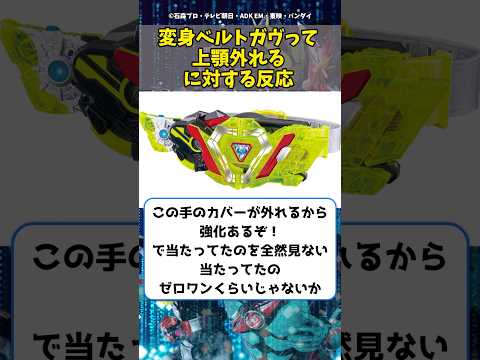
The transformation belt in Kamen Rider Gacha, known as the Gabu Buckle, features an unusual design where its upper jaw detaches easily. Initially believed to be a setup for a power-up form, the true reason behind this design choice reveals a deeper commitment to child safety that challenges industry conventions.
What Happened
When Kamen Rider Gacha premiered in September 2023, viewers immediately noticed that the Gabu Buckle’s upper jaw—the “gab” portion—detaches with surprising ease. This design choice sparked widespread speculation among fans who predicted it would lead to a new enhanced form, following patterns established in previous Kamen Rider series. However, the production team later revealed that the detachable jaw serves a single, critical purpose: preventing children from pinching their fingers when operating the belt.
Why It Matters
This design decision represents a significant shift in toy manufacturing philosophy. Rather than prioritizing play mechanics or narrative potential, the toy makers and production team chose to prioritize child safety above all else. This choice challenges the implicit industry convention that movable components in transformation toys always serve gameplay or story purposes. The decision also demonstrates how manufacturers balance safety requirements with maintaining the appeal and functionality of collectible toys.
Background
The Kamen Rider franchise has a long history of transformation belts with various mechanical features. Previous series like Kamen Rider Ooz featured the O-Medal Driver, where medal insertion directly enabled form changes. Kamen Rider Wizard introduced the Wizard Driver with ring attachments for power-ups, and Kamen Rider Saber used Wonder Ride Books to unlock new forms. Each of these designs prioritized gameplay mechanics and narrative progression.
The Gabu Buckle breaks this tradition by adopting a different naming convention—it is called a “buckle” rather than a “driver,” a choice that signals its simpler, more straightforward design philosophy. Additionally, the series establishes that the Gabu Buckle functions as part of the wearer’s body, a narrative element that paradoxically supports rather than contradicts its safety-focused detachable design.
Key Points
- The Gabu Buckle’s easily detachable upper jaw is a deliberate safety feature designed to prevent children from pinching their fingers during operation.
- Initial fan theories predicted the detachable jaw would enable enhanced forms or new gameplay mechanics, but these expectations were not realized in the series.
- The belt’s designation as “Gabu Buckle” rather than “driver” reflects its simpler, safety-focused design philosophy compared to previous transformation belts.
- The series establishes that the Gabu Buckle functions as part of the wearer’s body, providing narrative justification for its safety-oriented design.
- This design choice represents a departure from industry conventions where movable toy components typically signal gameplay or story significance.
- The decision prioritizes child safety over narrative potential, demonstrating a commitment to manufacturing ethics that some fans appreciate while others view as a missed opportunity.
Timeline
- September 2023: Kamen Rider Gacha premieres; viewers notice the Gabu Buckle’s easily detachable upper jaw.
- Early broadcast period: Fan communities speculate about enhanced forms and gameplay mechanics tied to the detachable jaw.
- Production revelation: The development team discloses that the detachable design serves a child safety function.
- Ongoing series: The Gabu Buckle continues to function as designed, with no enhanced forms or mechanical upgrades introduced.
Perspectives
Fan and Industry Response: Online reactions have been mixed. Parents and safety-conscious viewers praised the design as responsible toy manufacturing, with comments like “Thank you for prioritizing child safety.” Toy safety experts noted that the design exceeds standard industry safety benchmarks. However, some longtime Kamen Rider fans expressed disappointment, having anticipated enhanced forms or additional gameplay features. This divergence reflects different priorities: some viewers value safety and manufacturing ethics, while others prioritize narrative potential and toy mechanics.
Manufacturing Philosophy: The Gabu Buckle design demonstrates how toy makers navigate competing demands. Transformation belts worn around the neck present inherent pinching hazards, especially for young children who lack fine motor control. By making the upper jaw detachable, designers created a mechanism where excessive force causes the component to separate rather than trapping a child’s finger. This approach maintains the belt’s structural integrity while eliminating a critical safety risk.
Narrative Implications: While the detachable jaw currently serves no story function, future episodes could introduce narrative significance. The design could enable temporary transformation disruptions during combat, facilitate equipment sharing among multiple characters, or support thematic elements about protection and safety that may underlie the series.
Insights
The Gabu Buckle represents a meaningful evolution in toy design philosophy. For 15 years, the Kamen Rider franchise established an implicit rule: movable components signal gameplay or narrative significance. The Gabu Buckle breaks this convention deliberately, prioritizing an abstract value—child safety—over concrete gameplay features or story potential.
This decision carries both risks and rewards. Toy manufacturers risk disappointing fans who expect traditional mechanics, as evidenced by online comments expressing disappointment about the absence of enhanced forms. However, they gain credibility with parents, safety advocates, and viewers who recognize that manufacturing ethics matter. The choice reflects a company willing to accept criticism from some consumers to serve a higher principle.
The broader implication extends beyond Kamen Rider. As toy manufacturers face increasingly stringent safety regulations and growing consumer awareness of child welfare, the Gabu Buckle exemplifies how safety and appeal need not be mutually exclusive. The design proves that a toy can be both safe and engaging, both responsible and fun. Whether future story developments add narrative meaning to the detachable jaw remains unknown, but the design already succeeds in its primary mission: protecting children while maintaining the joy of play.
Ultimately, the Gabu Buckle invites viewers to reconsider what makes a toy “good.” Is it the complexity of its mechanics, the narrative potential it enables, or the safety it provides? The answer, the design suggests, should prioritize the last—because a toy’s true purpose is not to tell stories or showcase engineering, but to bring joy to children safely.