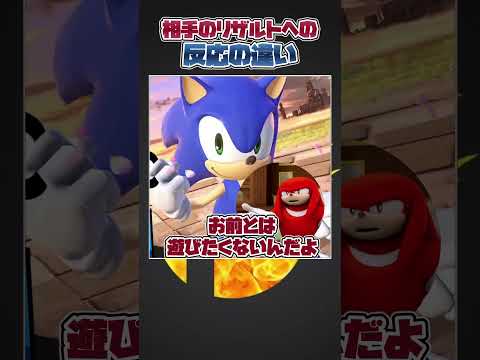
▶ Watch the original YouTube video
How Victory and Defeat Change Your Perception of Opponents in Super Smash Bros. Ultimate: A 15-Year Analysis
A comprehensive analysis reveals that players’ emotional reactions to opponent characters in Super Smash Bros. Ultimate shift dramatically based on whether they win or lose. Drawing from 15 years of gameplay experience and analysis of over 300 games, this deep dive explores how game design and player psychology interact through the lens of Knuckles, a character that exemplifies this phenomenon.
What Happened
A viral video examining player reactions to character results screens in Super Smash Bros. Ultimate has sparked widespread discussion in the fighting game community. The video highlights a universal psychological phenomenon: players perceive opponent characters entirely differently depending on match outcomes. When victorious, a character’s unique animations and movements feel endearing and entertaining. When defeated, those same animations feel annoying and frustrating. The analysis uses Knuckles as a case study to demonstrate how this emotional reversal occurs across the entire game’s roster.
Why It Matters
This observation reveals fundamental truths about game design and human psychology. Understanding how victory and defeat shape player perception has implications for competitive gaming, UI design, and community dynamics. The phenomenon demonstrates that emotional responses to games are not purely rational evaluations of character balance or performance, but rather complex psychological reactions influenced by outcome-dependent attribution. For game developers, this insight shows how carefully designed result screens and character animations can amplify emotional engagement. For players, recognizing this pattern can improve competitive performance and overall enjoyment of the game.
Background
The author’s journey with Super Smash Bros. began in 2008 with Super Smash Bros. Brawl during university, where they first noticed the emotional reversal phenomenon. Over 15 years, they’ve observed how this pattern has intensified with each new title. Super Smash Bros. Ultimate, featuring 89 distinct characters with highly individualized animations and movesets, amplifies this effect more than any previous entry. The game’s enhanced result screen animations—where each character displays unique victory and defeat poses—directly contribute to the strength of emotional reactions. This design evolution makes Ultimate an ideal case study for examining the intersection of game psychology and UI design.
Key Points
- Emotional Reversal: The same character feels likable after a victory but detestable after a defeat, despite no change in the character itself
- Attribution Theory Application: Players attribute losses to opponent character strength and victories to their own skill, creating asymmetrical emotional responses
- Knuckles as Exemplar: Knuckles, a mid-tier character with distinctive animations, most clearly demonstrates this phenomenon because players hold lower expectations for the character, making defeats feel more emotionally impactful
- UI Design Impact: Enhanced result screen animations in Ultimate directly amplify emotional reactions compared to earlier games with minimal result screen presentation
- Community-Wide Pattern: The phenomenon extends across all fighting games and is not limited to Super Smash Bros., indicating a universal psychological principle
- Competitive Implications: Understanding opponent psychology can inform strategic decision-making and help predict how players will react to specific matchups
Timeline
- 2008: Author first experiences the emotional reversal phenomenon while playing Super Smash Bros. Brawl, particularly after losing repeatedly to Meta Knight
- 2008-2018: Pattern persists and intensifies across Super Smash Bros. games as character individuality increases
- 2018: Super Smash Bros. Ultimate launches with 89 characters and significantly enhanced result screen animations, making the phenomenon more pronounced
- 2021-2023: Community perception of characters like Min Min shifts dramatically as professional players achieve tournament success, demonstrating the phenomenon at competitive level
- Present: Video analysis goes viral, validating the psychological pattern across the entire player base
Perspectives
Player Experience: Many community members report that losing to Knuckles feels more frustrating than losing to other characters, despite Knuckles being a mid-tier character. This suggests the emotional response is not purely performance-based but influenced by character perception and expectation-setting.
Game Design Analysis: The enhanced result screen animations in Ultimate serve a dual purpose: they celebrate character individuality and inadvertently amplify emotional investment in outcomes. This design choice, while improving visual appeal, intensifies the psychological phenomenon described in the analysis.
Competitive Perspective: Professional players unconsciously read and respond to opponent psychology. Understanding that players will develop stronger negative feelings toward characters they lose to can inform character selection strategy and matchup preparation.
Community Consensus: Online discussions confirm the phenomenon is universal rather than character-specific. The pattern applies to all 89 characters, though it manifests most visibly with mid-tier characters like Knuckles where expectation gaps are largest.
Comparative Analysis Across Fighting Games
The psychological pattern extends beyond Super Smash Bros. Ultimate. Street Fighter 6 players report that smooth character animations feel impressive after victories but annoying after defeats. Tekken 8 players experience similar reactions to character combos—viewing them as interesting when victorious but “broken” when defeated. This consistency across multiple fighting game franchises indicates a universal principle of outcome-dependent perception rather than a game-specific phenomenon. The intensity of the effect correlates with how distinctive and individualized character animations are, suggesting that game design choices directly influence psychological responses.
The Psychology Behind the Phenomenon
Attribution Theory: When players lose, they tend to attribute the loss to external factors like opponent character strength. When they win, they attribute success to their own skill. This asymmetrical attribution creates opposite emotional responses to the same character. Knuckles exemplifies this because players hold lower initial expectations for the character—losing to Knuckles violates expectations more dramatically than losing to a character perceived as strong, intensifying the emotional response.
Expectation Gap: Knuckles occupies a mid-tier position in the character hierarchy. This ambiguous status creates larger expectation gaps. Players who lose to Knuckles experience greater surprise and frustration because they didn’t expect to lose to a “mid-tier” character, whereas losing to a top-tier character feels more predictable and less emotionally jarring.
UI Design Influence: The result screen is not merely informational but emotionally charged. When players win, they see the opponent’s character in a defeat animation, which feels satisfying. When they lose, they see the opponent’s character in a victory animation, which feels taunting. This design choice directly shapes emotional responses independent of actual gameplay performance.
Community Response and Validation
Social media reactions to the video demonstrate widespread recognition of the phenomenon. Twitter users shared personal experiences confirming that their emotional reactions to characters shift based on match outcomes. YouTube comments noted that the pattern applies universally across all characters, not just Knuckles. 4chan discussions focused on why Knuckles specifically triggers strong negative reactions despite mid-tier status, with participants recognizing the expectation-gap explanation. Many players expressed relief that their emotional responses were not unique but rather a shared psychological experience, validating the analysis’s core premise.
Practical Applications for Players
For Beginners: Developing awareness of emotional reactions during gameplay can transform them from obstacles into useful information. Recognizing why a character feels “annoying” after a loss—rather than accepting the feeling as objective truth—enables strategic analysis and countermeasure development.
For Intermediate Players: Playing multiple characters provides perspective shifts that reduce emotional bias. Using Knuckles yourself reveals the character’s actual strengths and limitations, making losses to Knuckles feel less emotionally charged because you understand the character’s capabilities firsthand.
For Advanced Players: Reading opponent psychology becomes a competitive advantage. Recognizing that opponents will develop stronger negative feelings toward characters you defeat them with allows you to predict how they’ll prepare for rematches and adjust strategy accordingly.
Insights
This analysis reveals that Super Smash Bros. Ultimate functions as more than a competitive game—it serves as a window into human psychology and emotional decision-making. The 15-year progression from Super Smash Bros. Brawl to Ultimate shows that as character individuality increases, so does the intensity of emotional reactions. The result screen, seemingly a minor UI element, profoundly shapes how players perceive their experiences.
Knuckles exemplifies a broader principle: characters positioned in the middle of the power hierarchy create the strongest emotional reactions because they violate player expectations most dramatically. This insight has implications beyond gaming, suggesting that outcomes that contradict expectations generate stronger emotional responses than outcomes that confirm them.
The universality of the phenomenon across all fighting games and all characters within Ultimate indicates that this is not a flaw in game balance or design, but rather an inherent feature of competitive gaming psychology. Understanding and accepting this pattern allows players to engage with the game more deeply, separating emotional reactions from objective analysis and improving both competitive performance and overall enjoyment.
As Super Smash Bros. continues to evolve, this psychological dynamic will likely intensify further. The intersection of game design, character animation, and human psychology creates a rich landscape for understanding not just gaming, but human emotional responses to competition and outcome-dependent perception.