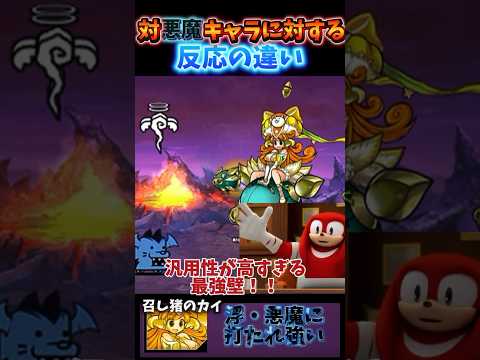
▶ Watch the original YouTube video
How Battle Cats Masters Different Demon Enemy Types: A Deep Dive into Game Design Psychology
Battle Cats, the popular tower defense mobile game, employs a sophisticated multi-layered approach to demon enemy encounters that reveals deeper psychological game design principles. After 300+ hours of gameplay analysis, this examination explores how the game’s attribute system creates diverse tactical responses and maintains long-term player engagement through strategic complexity rather than simple difficulty scaling.
What Happened
Battle Cats, developed by Ponos and released in 2012, has evolved from a simple tower defense game into a complex strategic experience featuring multiple enemy attributes. The demon attribute represents one of the game’s most intricate design challenges, requiring players to employ fundamentally different tactical approaches compared to other enemy types. Unlike straightforward difficulty increases, the demon attribute system forces players to make meaningful strategic decisions about character selection, team composition, and ability utilization.
Why It Matters
The demon attribute system in Battle Cats demonstrates how modern mobile games maintain player engagement through strategic depth rather than raw difficulty. This design philosophy has broader implications for the gaming industry, particularly for developers seeking to balance accessibility with long-term player retention. The success of Battle Cats’ attribute system—now encompassing over 10 distinct enemy types—suggests that complexity, when properly structured, enhances rather than diminishes player satisfaction. Understanding these mechanics provides insight into why certain games achieve sustained popularity while others fade quickly.
Background
Battle Cats launched in 2012 with only three basic enemy attributes: red, black, and white. Over the past decade, Ponos has systematically expanded the attribute roster to include demon, angel, zombie, floating, and numerous other types. This expansion reflects an intentional design philosophy aimed at encouraging players to develop diverse character rosters and experiment with varied tactical approaches.
The game’s development team has publicly stated their goal: to provide players with “the joy of developing and switching between various characters.” This philosophy directly shaped the complexity of demon enemy encounters, which cannot be solved through a single optimal strategy but instead reward creative team composition and tactical flexibility.
Demon enemies present particular challenges because anti-demon characters vary significantly in effectiveness depending on their individual stats—attack power, movement speed, range, and special abilities. This creates a fundamentally different experience from games like Pokémon, where type matchups are clearly quantified (e.g., water deals 1.5x damage to fire).
Key Points
- Three-Layer Defense System: Demon encounters operate on three distinct levels—attribute matching (basic damage boost), individual character traits (speed, range, power variations), and team composition strategy (support character synergies)—allowing both casual and hardcore players to find viable approaches.
- Tactical Diversity Over Optimization: Unlike games with clearly defined optimal solutions, Battle Cats’ demon encounters reward experimentation and personal problem-solving, with multiple viable team compositions capable of clearing the same stage.
- Staged Achievement Psychology: The game creates multiple satisfaction points—obtaining an anti-demon character, leveling it up, and finally clearing a stage—maintaining motivation across extended play sessions rather than delivering single achievement moments.
- Community-Driven Strategy Evolution: The complexity of demon encounters generates active community discussion on platforms like Twitter, YouTube, and forums, where players share and debate different tactical approaches, extending the game’s engagement value beyond solo play.
- Skill Differentiation Through Strategy: Player progression is determined not by character strength alone but by tactical depth—the ability to understand character synergies, predict enemy patterns, and adapt team composition to specific stage conditions.
- Industry Trend Indicator: Battle Cats’ success with complex attribute systems has influenced broader mobile gaming trends, with titles like Granblue Fantasy, Final Fantasy XV, and Another Eden adopting similar multi-layered attribute mechanics.
Timeline
- 2012: Battle Cats launches with three basic enemy attributes (red, black, white).
- 2015: Game gains recognition beyond Japan; initial player base begins exploring deeper mechanics.
- 2018: Expanded attribute system becomes standard; demon enemies introduced as particularly complex challenge type.
- Present: Game features 10+ distinct enemy attributes with ongoing updates introducing new tactical variations.
Perspectives
Developer Perspective: Ponos designed the demon attribute system to encourage long-term engagement through strategic exploration rather than linear progression. By creating enemies that cannot be defeated through raw character strength alone, the developers force players to think critically about team composition and tactical execution.
Casual Player Perspective: Demon stages can feel overwhelming due to the learning curve required to understand attribute matchups and team synergies. However, the existence of multiple viable solutions means that persistence and experimentation eventually lead to success without requiring specific rare characters.
Competitive/Hardcore Player Perspective: The complexity of demon encounters provides endless optimization opportunities. Advanced players appreciate the depth of tactical possibilities and the ongoing discovery of new viable strategies, which keeps the game engaging even after hundreds of hours of play.
Industry Analysis Perspective: Battle Cats represents a successful model for attribute system design that balances accessibility with depth. The game demonstrates that complexity, when properly scaffolded and supported by community knowledge-sharing, enhances rather than diminishes player satisfaction and retention.
Comparative Analysis: Attribute Systems Across Games
| Game Title | Number of Attributes | Tactical Complexity | Player Freedom |
|---|---|---|---|
| Pokémon | 18 types | High (numerically defined) | High |
| Battle Cats | 10+ types | Very High (multi-layered) | Very High |
| Fire Emblem | Weapon matchups only | Medium (limited scope) | Medium |
| Monster Strike | 5 attributes | Medium | Medium |
Battle Cats distinguishes itself through the combination of multiple attributes with non-standardized effectiveness values. While Pokémon offers more attribute types, its numerical system creates predictable optimal solutions. Battle Cats’ approach—where anti-demon characters vary significantly in effectiveness based on individual stats—creates a more open-ended tactical landscape that rewards experimentation and personal discovery.
Psychological Design Elements
Staged Achievement Progression: The demon encounter system creates multiple satisfaction milestones—acquiring an anti-demon character, investing resources into its development, and finally clearing a challenging stage. This staged approach maintains motivation across extended play sessions, preventing the rapid satisfaction-to-boredom cycle that affects simpler games.
Valorization of Trial-and-Error: Rather than punishing experimentation, the game’s design celebrates it. Players who try different character combinations discover new viable strategies, creating a sense of personal discovery that exceeds the satisfaction of following a predetermined optimal path.
Community Knowledge Sharing: The existence of multiple viable strategies generates active community discussion. Unlike games with single optimal solutions, Battle Cats’ complexity creates ongoing conversation about comparative strategy effectiveness, extending engagement beyond individual play sessions.
Multi-Dimensional Skill Expression: Success against demon enemies requires more than character strength. Players must understand attribute matchups, predict enemy behavior patterns, manage resource timing, and optimize team synergies. This multi-dimensional skill requirement allows players of different strengths to find viable approaches.
Practical Guidance for Players
Priority Character Development: New players should prioritize obtaining and developing at least one anti-demon character early in their progression. This single decision significantly impacts subsequent gameplay difficulty and pacing.
Roster Diversification: Experienced players maintain development of multiple anti-demon characters (minimum three) to adapt to different stage conditions. Each character’s unique stat distribution creates different tactical possibilities.
Support Character Integration: Anti-demon characters function most effectively when paired with support characters that provide attack boosts, defensive buffs, or crowd control effects. This team composition approach opens tactical possibilities unavailable through single-character strategies.
Community Resource Utilization: YouTube strategy videos provide valuable tactical insights, but optimal learning occurs when players understand the reasoning behind character selections rather than simply replicating demonstrated strategies.
Graduated Difficulty Progression: Battle Cats offers three difficulty levels for most stages (Normal, Hard, Extreme). Progressing through these levels sequentially allows players to develop stage-specific strategies and understand enemy patterns before facing maximum difficulty.
Community Reception and Industry Impact
Online communities demonstrate strong engagement with Battle Cats’ demon attribute system. Twitter discussions under #BattleCats regularly feature players sharing stage clears using diverse character combinations, indicating that multiple viable strategies genuinely exist rather than representing theoretical possibilities.
YouTube comment sections reveal players actively discussing tactical variations—”I didn’t know this strategy existed” and “Can this work with a different character?” comments indicate that players value strategic exploration over optimization toward a single solution.
Broader gaming forums acknowledge the difficulty of demon stages while maintaining positive overall assessment of the game’s design. Critical comments about excessive difficulty receive constructive responses offering alternative tactical approaches, suggesting community consensus that challenges are surmountable through strategic thinking rather than requiring specific rare characters.
The success of Battle Cats’ attribute system has influenced industry trends, with multiple recent mobile titles adopting similar multi-layered attribute mechanics. Granblue Fantasy, Final Fantasy XV, and Another Eden all implement comparable systems, suggesting that Battle Cats’ design philosophy has become an industry standard for games targeting sustained player engagement.
Insights and Future Implications
Battle Cats demonstrates that strategic complexity, when properly structured and supported by accessible learning resources, enhances rather than diminishes player satisfaction. The game’s success suggests that modern players value meaningful decision-making and personal discovery over simplified optimization paths.
The demon attribute system’s effectiveness reveals important principles about long-term game engagement: players remain invested when they perceive multiple viable approaches to challenges, when progression includes multiple satisfaction milestones, and when community knowledge-sharing creates social value beyond individual achievement.
One potential concern for future development involves accessibility as attribute systems continue expanding. With 10+ attributes already established, new players face significant learning curves. Ponos may need to implement structured learning systems—beginner-focused modes, progressive attribute introduction, or guided tutorials—to maintain accessibility while preserving strategic depth.
The trajectory of Battle Cats’ design evolution suggests that future updates will likely introduce even greater complexity, possibly through composite attributes (enemies possessing multiple attribute types simultaneously) or attribute interactions that create emergent tactical possibilities. This progression aligns with broader industry trends toward systems-based game design that rewards deep understanding and creative problem-solving.
Ultimately, Battle Cats’ approach to enemy design—creating challenges that demand strategic thinking rather than character strength alone—represents a significant contribution to mobile gaming design philosophy. As the industry increasingly prioritizes long-term player retention over rapid monetization, the principles demonstrated by Battle Cats’ demon attribute system will likely become increasingly influential in shaping how future games approach difficulty scaling and player progression.