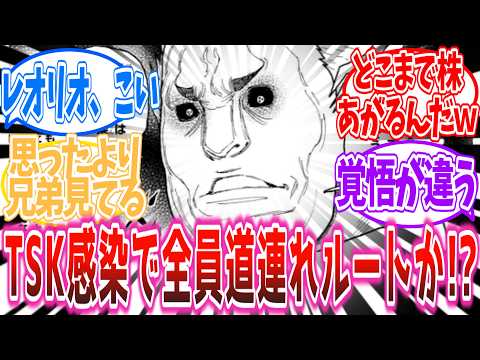
▶ Watch the original YouTube video
Hunter x Hunter Episode 417 Sparks Divided Fan Reactions Over Sudden Plot Twist
Hunter x Hunter’s episode 417, titled “We Are the Kakkin Royal Army First Division,” has generated sharply divided reactions from the fanbase, with some praising the unexpected development while others criticize its abruptness and lack of narrative preparation. The episode marks a significant turning point in the ongoing succession arc, introducing new forces that fundamentally alter the story’s power dynamics.
What Happened
Episode 417 of Hunter x Hunter introduces the Kakkin Royal Army First Division, a previously unknown military faction that dramatically reshapes the succession war narrative. The episode presents an unexpected plot development that contradicts many fan theories and established story patterns. The introduction of this new force creates a complex web of conflicting character motivations and unclear allegiances, leaving viewers uncertain about the direction of the arc.
Why It Matters
This episode represents a critical juncture in the succession arc, one of the series’ most ambitious narrative experiments. The sudden introduction of new antagonistic forces raises questions about narrative structure, character consistency, and the author’s creative direction. For a series that has maintained careful foreshadowing and logical progression for nearly two decades, this abrupt shift has prompted serious discussion about whether the story maintains its established quality standards. The episode’s reception also reflects broader concerns about the series’ publication schedule, with the author’s frequent hiatuses potentially affecting narrative coherence.
Background
Hunter x Hunter began serialization in 2001 and has developed a reputation for complex, multi-layered storytelling with intricate character psychology and careful foreshadowing. The succession arc, which began in 2016, represents one of the series’ most ambitious attempts to juggle multiple character perspectives and competing factions. The arc has been marked by extended hiatuses, with the author taking significant breaks between chapters. Episode 417 arrives during a period of resumed publication after another extended pause, making the sudden narrative shift particularly noticeable to longtime readers who have tracked the series’ patterns over 15+ years.
Key Points
- The Kakkin Royal Army First Division’s true identity is revealed, contradicting previous fan predictions about the succession war’s structure
- A new power dynamic emerges, forcing existing characters to reassess their positions and strategies within the conflict
- Character motivations become increasingly opaque, creating unpredictability that some fans view as exciting and others see as inconsistent
- The episode’s development diverges significantly from established narrative patterns in the series, breaking expectations built over decades of storytelling
- Fan discourse splits between those celebrating the unexpected direction and those questioning narrative coherence and foreshadowing
- The episode may signal an acceleration of the succession arc’s conclusion, potentially leading to a faster transition to the next story phase
Timeline
- 2001: Hunter x Hunter serialization begins; establishes pattern of careful foreshadowing and logical character progression
- 2006-2011: Greed Island and Chimera Ant arcs demonstrate the author’s mastery of complex, multi-perspective storytelling
- 2016: Succession arc begins; marks the series’ most ambitious attempt to balance multiple factions and character objectives
- 2016-2024: Series experiences extended publication hiatuses; actual serialization comprises approximately 2 years of content across 8 calendar years
- Episode 417: Kakkin Royal Army First Division introduction creates unexpected narrative shift and divides fanbase
Perspectives
Positive Reception: Younger fans and those seeking fresh developments praise episode 417 for finally breaking the succession arc’s perceived stagnation. These viewers appreciate the shock value and see the unexpected turn as a sign that the narrative is accelerating toward resolution. They argue that the series needed this jolt to maintain reader engagement after years of hiatuses.
Critical Reception: Analytical fans and long-term series observers express concern about narrative structure and character consistency. These viewers note that the episode lacks sufficient foreshadowing compared to previous major plot turns in the series. They point out that character motivations appear inconsistent with established psychological patterns, suggesting either rushed writing or a departure from the author’s traditional narrative approach. Some speculate that the abruptness reflects the author’s struggle to maintain coherence after extended breaks from writing.
Cautiously Optimistic View: Some experienced fans adopt a “wait and see” approach, noting that previous episodes initially criticized as confusing or poorly structured (such as the Yorknew arc’s Neon kidnapping subplot) were later revealed to contain careful foreshadowing that only became apparent in retrospect. These viewers suggest that episode 417’s apparent abruptness may resolve into logical narrative progression in subsequent chapters.
Insights
Episode 417 reveals a fundamental tension in long-running serialized narratives: the challenge of maintaining narrative coherence across extended publication gaps. The episode’s reception reflects not merely disagreement about quality, but deeper concerns about whether the series’ traditional narrative structure—characterized by careful foreshadowing, psychological consistency, and logical progression—remains intact.
The divided fan response suggests that the episode succeeds in generating engagement and discussion, which may be its primary function given the series’ publication constraints. However, the specific nature of criticism from analytical fans indicates that the episode may represent a genuine shift in narrative approach rather than a temporary aberration.
The comparison to previous unexpected plot developments in the series (Greed Island’s ability mechanics, the Chimera Ant arc’s character repositioning, and the Yorknew arc’s hidden motivations) demonstrates that Hunter x Hunter has successfully executed surprising narrative turns before. The key difference with episode 417 appears to be insufficient narrative scaffolding—the absence of the gradual foreshadowing that typically prepares readers for major developments.
Whether episode 417 ultimately represents a creative misstep or a deliberate acceleration of the narrative arc will likely depend on how subsequent episodes develop these introduced elements. The episode’s legacy may ultimately be determined not by its immediate reception, but by whether the author successfully integrates the Kakkin Royal Army First Division into a coherent larger narrative structure in the chapters that follow.