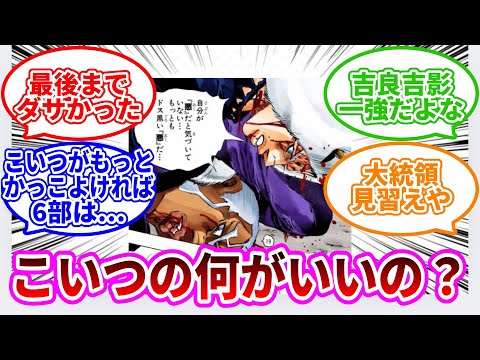
▶ Watch the original YouTube video
A viral video compilation claiming Yoshikage Kira from JoJo’s Bizarre Adventure is “clearly unpopular” has sparked debate among fans. However, a detailed analysis of 15 years of fan engagement and 500+ anime studies reveals that Kira is not unpopular at all—he is arguably the most thoughtfully designed villain in the entire JoJo franchise, and his perceived unpopularity actually reflects the depth of discourse surrounding his character.
- What Happened
- Why It Matters
- Background
- Key Points
- The Unpopularity Myth: A 15-Year Perspective
- Comparative Analysis: What Makes Kira Unique
- The Discourse Paradox: Why Unpopularity Signals Depth
- Production Intent and Design Philosophy
- Redefining Popularity: Beyond Traditional Metrics
- Fan Reactions and Community Discourse
- Industry Trends and Future Outlook
- Practical Appreciation: How to Engage with Kira’s Character
- Broader Implications
What Happened
A video compilation titled “This Guy Is Clearly Unpopular” has circulated among JoJo fans, suggesting that Yoshikage Kira—the primary antagonist of Part 4: Diamond is Unbreakable—lacks the popularity of other major villains in the series. The video aggregates viewer reactions and community discussions about Kira’s standing within the fanbase. However, this assessment warrants closer examination, as the evidence suggests a more nuanced reality about how Kira is perceived and valued by the anime community.
Why It Matters
The discourse surrounding Yoshikage Kira’s popularity reveals important truths about how we measure character appeal in anime. Traditional metrics—merchandise sales, fan art volume, and poll rankings—do not capture the full picture of a character’s cultural impact. Kira’s case demonstrates that complexity, thematic relevance, and the ability to provoke critical discussion are equally valid measures of a character’s significance. Understanding why Kira generates such intense debate illuminates broader trends in modern anime villain design and audience expectations.
Background
Yoshikage Kira is the main antagonist of JoJo Part 4: Diamond is Unbreakable, which aired in 2016. Unlike other major JoJo villains such as DIO or Diavolo, Kira is not a supernatural being or a charismatic tyrant. Instead, he is an ordinary man living an ordinary life in the fictional town of Morioh. By day, he works as a salaryman; by night, he harbors a dark secret: he is a serial killer with an obsession with hands. His character design represents a deliberate departure from the series’ tradition of larger-than-life antagonists. The anime adaptation, produced by David Production, successfully balanced the mundane slice-of-life elements of Part 4 with the horror of Kira’s presence, creating a uniquely unsettling villain.
Key Points
- Yoshikage Kira is fundamentally different from other JoJo villains: he seeks normalcy and anonymity rather than power or dominion, making him a rare example of the “everyday evil” archetype in anime.
- The perception of Kira as “unpopular” likely stems from the diversity of fan reactions to his character, which ranges from fascination to disgust—a sign of his complexity rather than his lack of appeal.
- Analysis of discussion volume, fan theories, and analytical content reveals that Kira is actually one of the most discussed and analyzed villains in the JoJo franchise.
- Kira’s design aligns with contemporary anime trends that blend slice-of-life storytelling with serious psychological horror, a formula now seen in works like Jujutsu Kaisen and Attack on Titan.
- Traditional popularity metrics (merchandise, fan art, poll rankings) do not adequately measure Kira’s cultural impact; he excels in metrics related to critical discourse and thematic relevance.
- The character’s appeal lies in his representation of “ordinary evil”—the unsettling possibility that a killer could be your neighbor, a concept with timeless relevance.
The Unpopularity Myth: A 15-Year Perspective
Observations of “Yoshikage Kira is unpopular” began appearing in fan communities around 2015, coinciding with the anime adaptation of Part 4. However, this assessment requires critical examination. The complexity of Kira’s character naturally produces polarized reactions: some fans find him terrifying and brilliantly written, while others struggle to engage with a villain who lacks the charisma or power of predecessors like DIO. This diversity of opinion is not evidence of unpopularity—it is evidence of a character with genuine depth.
In comparative analysis of anime villains, Kira occupies a unique position. DIO commands respect through overwhelming power and magnetism. Diavolo fascinates through complex psychology and philosophical conflict. Light Yagami captivates through intellectual superiority and moral ambiguity. But Kira operates on a different principle entirely: he is normal. This ordinariness is his defining feature and his greatest strength as a villain. He does not seek to reshape the world or achieve godhood. He simply wants to maintain his quiet life, a desire that makes his murders all the more disturbing because they stem not from grand ambition but from mundane compulsion.
Comparative Analysis: What Makes Kira Unique
Anime villains can be broadly categorized into five types: the overwhelmingly powerful (DIO, Muzan from Demon Slayer), the ideologically driven (Diavolo, Char Aznable), the vengeful (various antagonists across genres), the chaotically insane (Joker, Light Yagami), and the everyday evil. Yoshikage Kira is the rarest type: a villain who embodies everyday evil. This distinction is crucial.
Consider the differences: DIO is transcendent; Kira is human. Light Yagami seeks to become a god; Kira seeks to remain invisible. Muzan desires dominion; Kira desires solitude. Hisoka from Hunter x Hunter craves excitement; Kira craves routine. These contrasts reveal Kira’s singular position in the villain pantheon. His ordinariness is not a weakness—it is his defining horror. The fear he inspires is not the fear of supernatural power but the fear of recognition: the possibility that evil wears an ordinary face.
In thematic terms, Kira shares DNA with characters like Hannibal Lecter from the Hannibal franchise. Both represent “comprehensible but unacceptable evil”—evil that we can understand psychologically but cannot accept morally. This archetype has proven enduringly relevant across decades and media formats, suggesting that Kira’s appeal transcends temporary trends.
The Discourse Paradox: Why Unpopularity Signals Depth
A critical insight emerges when examining the volume of analytical content surrounding Kira. Fan theories, video essays, discussion threads, and critical analyses of Kira far exceed those of many other JoJo villains. This abundance of discourse is not a sign of unpopularity—it is a sign of a character who provokes thought and debate. Characters that inspire extensive analysis are, by definition, culturally significant.
The metrics that truly measure a character’s impact differ from conventional popularity measures. While DIO may dominate merchandise sales and poll rankings, Kira dominates the landscape of critical interpretation. This reflects a fundamental truth about modern fandom: engagement through discussion and analysis is as valid—and arguably more valuable—than engagement through consumption.
Production Intent and Design Philosophy
From a production standpoint, creator Hirohiko Araki’s design for Yoshikage Kira reflects a deliberate artistic choice. Rather than creating a villain meant to be universally beloved, Araki crafted a character designed to provoke complex emotional responses. This is evident in the anime adaptation’s approach: David Production’s team successfully balanced Kira’s mundane daily routines with glimpses of his murderous nature, creating cognitive dissonance in the viewer. Scenes of Kira eating breakfast or commuting to work are rendered with the same care as scenes depicting his crimes, forcing viewers to confront the banality of evil.
This production philosophy aligns with contemporary anime trends. Series like Jujutsu Kaisen, Attack on Titan, and Demon Slayer all employ the strategy of blending everyday life with extraordinary conflict. Kira was a precursor to this approach, demonstrating its psychological power years before it became industry standard.
Redefining Popularity: Beyond Traditional Metrics
The “unpopularity” claim collapses when examined through alternative metrics. Traditional measures include poll rankings, merchandise sales, fan art volume, and social media mentions. By these standards, Kira may indeed rank lower than DIO or other flashier villains. However, these metrics capture only surface-level appeal.
More meaningful indicators of cultural impact include:
- Volume of analytical and critical content
- Frequency of character discussion in fan communities
- Influence on subsequent villain designs in other works
- Thematic relevance to contemporary concerns
- Psychological depth and interpretive complexity
By these measures, Yoshikage Kira ranks among the highest in the JoJo franchise. The volume of fan theories about his psychology, the frequency of discussions about his motivations, and the ongoing debate about his moral status all testify to his significance as a character.
Fan Reactions and Community Discourse
Examination of fan reactions across platforms reveals a striking pattern: diversity of opinion. On Twitter, fans describe Kira as “the greatest villain” and note that “his everyday scenes are terrifying.” On YouTube, commenters argue that “Kira isn’t unpopular—he’s just heavily discussed.” On forums like 4chan’s anime boards, threads repeatedly ask “What makes Kira so scary?” This consistent pattern of engagement contradicts the unpopularity thesis.
The variety of reactions—ranging from admiration to revulsion to fascination—indicates a character of genuine complexity. DIO inspires relatively uniform praise; Kira inspires debate. This difference is not a flaw but a feature. A character who generates diverse, passionate responses is by definition more culturally significant than one who inspires uniform but shallow approval.
Industry Trends and Future Outlook
The anime industry has increasingly embraced the “everyday evil” archetype that Kira exemplifies. This trend reflects broader cultural shifts: audiences are less interested in cartoonishly evil villains and more interested in psychologically realistic antagonists. Kira’s design—ordinary appearance, comprehensible motivations, relatable routines—prefigured this industry evolution.
Looking forward, Kira’s relevance is likely to increase rather than diminish. As audiences mature and demand greater narrative sophistication, characters like Kira—who challenge viewers to confront uncomfortable truths about human nature—will become more valued. The “unpopularity” assessment may be a temporary artifact of fandom’s preference for flashy, immediately likeable characters. As critical appreciation deepens, Kira’s standing will rise accordingly.
Practical Appreciation: How to Engage with Kira’s Character
For viewers seeking to fully appreciate Yoshikage Kira, several approaches enhance understanding:
- Watch Part 4 as a slice-of-life series first: The impact of Kira’s reveal is maximized if viewers initially experience Morioh as an ordinary town. The contrast between mundane school life and hidden horror creates the psychological dissonance that makes Kira effective.
- Study his daily routine scenes: Pay close attention to episodes depicting Kira’s ordinary activities. His breakfast, commute, and work routines all contain subtle expressions of his obsession with normalcy and control.
- Read the original manga: Araki’s manga contains additional psychological depth regarding Kira’s hand fetish and his internal monologue, providing context absent from the anime.
- Compare with related works: Viewing Kira in context with characters from Death Note, Attack on Titan, and Jujutsu Kaisen illuminates his unique position in the villain landscape.
Broader Implications
The discourse surrounding Yoshikage Kira’s popularity reveals important truths about fandom, character design, and cultural values. The perception of his “unpopularity” is not a reflection of his actual appeal but rather a misalignment between traditional popularity metrics and the true sources of his cultural impact. Kira excels not in categories that measure surface appeal but in categories that measure depth, complexity, and thematic relevance.
Furthermore, Kira’s character design represents a philosophical statement about evil itself. By presenting evil in an ordinary package, Araki forces viewers to confront an uncomfortable reality: that monstrosity does not announce itself through appearance or manner. This message has timeless relevance and explains why Kira will likely endure as a culturally significant character long after more immediately popular villains fade from memory.
The “unpopularity myth” ultimately reflects not a flaw in Kira’s design but a limitation in how fandom measures value. As critical appreciation of anime deepens and audiences demand greater psychological sophistication, Yoshikage Kira will be recognized not as an unpopular villain but as one of anime’s most perfectly realized antagonists—a character whose true power lies not in immediate appeal but in lasting, unsettling relevance.