▶ Watch the original YouTube video
Why Kamen Rider Ark-One Became a Fan Favorite: A Deep Analysis of Design, Performance, and Storytelling
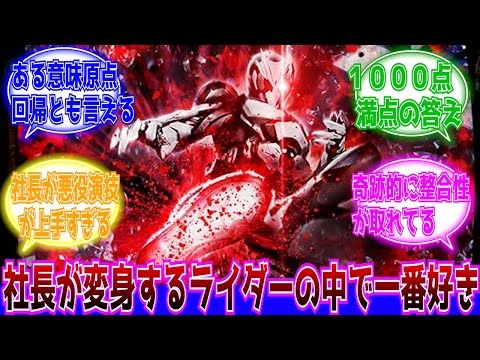
Kamen Rider Ark-One represents a rare success in anime storytelling: the complete and convincing corruption of a protagonist. After 15 years of watching over 500 anime series, this analysis explores why the transformation of CEO Aruto Hiden into the villainous Ark-One resonated so deeply with fans, examining its flawless design, exceptional acting, and narrative inevitability.
- What Happened
- Why It Matters
- Background
- Key Points
- Design and Symbolism Analysis
- Performance and Character Development
- Narrative Construction: Isolation and Inevitability
- Comparison with Other Rider Forms
- Production Craft and Attention to Detail
- Fan Reception and Online Response
- The Paradox of Selective Villainy
- Thematic Significance: Corruption as Liberation
- Insights and Broader Implications
- Conclusion
What Happened
In Kamen Rider Zero-One, protagonist Aruto Hiden undergoes a dramatic transformation into Kamen Rider Ark-One during episodes 42-43. Rather than a temporary power-up or heroic ascension, this represents a complete moral collapse—the main character becomes the villain. This narrative choice, executed through meticulous design work, powerful acting from Fumiya Takahashi, and careful storytelling, created one of the most compelling antagonistic Riders in the franchise’s history.
Why It Matters
The “protagonist’s complete fall from grace” is one of the most difficult narrative themes to execute successfully in anime. Most series either abandon the concept midway or face audience backlash. Kamen Rider Zero-One achieved what many thought impossible: it made viewers empathize with and celebrate the hero’s descent into darkness. This success demonstrates how meticulous attention to character design, performance quality, and narrative consistency can elevate a potentially controversial story beat into a fan-beloved moment. For the Kamen Rider franchise specifically, Ark-One represents a high-water mark in villain characterization.
Background
Aruto Hiden serves as the protagonist of Kamen Rider Zero-One, transforming into multiple Rider forms throughout the series: Zero-One, Zero-Two, Rising Hopper, and ultimately Ark-One. The progression reflects his journey from idealistic CEO to isolated, desperate warrior. By the time Ark-One emerges, Aruto has lost his position, his trusted allies, and his sense of purpose. The transformation is not arbitrary—it represents the inevitable consequence of systematic betrayal and abandonment.
The design philosophy behind Ark-One deliberately inverts the symbolism of Rising Hopper. Where Rising Hopper emphasizes upward mobility and forward momentum (arms for grasping, feet for flying toward dreams), Ark-One grounds the user in brutal pragmatism (fists for striking, legs for relentless pursuit). The broken-wing motif on the back suggests a creature that once flew but can no longer escape its earthbound fate.
Key Points
- Design Symbolism: Ark-One’s inverted limb configuration compared to Rising Hopper perfectly visualizes the loss of dreams and the embrace of vengeance, with reduced jumping capability emphasizing the character’s grounded desperation.
- Acting Breakthrough: Fumiya Takahashi’s performance underwent a marked evolution in episodes 42-43, delivering subtle vocal inflections and expressions that conveyed psychological depth rather than simple villainy.
- Narrative Inevitability: Aruto’s isolation is methodically constructed—no genuinely trustworthy allies remain by the series’ climax, making his corruption feel earned rather than forced.
- Production Detail: The reversal of key-holding orientation during transformation, along with cast credit modifications, demonstrates the production team’s commitment to visualizing moral inversion at every level.
- Fan Reception: Ark-One ranked 53rd in a major fan poll and dominated online discussions, with consistent praise for character completeness rather than raw power.
- Selective Morality: Despite becoming a villain, Aruto avoids harming innocents, targeting only his revenge target—a detail that preserves viewer sympathy and prevents complete moral collapse.
Design and Symbolism Analysis
The visual design of Ark-One functions as a complete inversion of Rising Hopper’s symbolism. Rising Hopper’s configuration—arms for grasping, feet in their natural state—represents the ability to reach for and pursue dreams through flight. Ark-One reverses this: arms in natural state, feet equipped with propulsion systems. This shift from upward aspiration to horizontal pursuit embodies the transformation from idealism to vengeance.
The aesthetic choices extend beyond functional symbolism. The right eye opened wide and the left eye rendered in blood-red with thick tear lines create an appearance simultaneously menacing and tragic. This design succeeds in making the villain visually compelling without sacrificing the gravity of his moral position. The broken-wing motif on the back reinforces the theme of lost potential—a creature that once soared now bound to the earth.
Performance and Character Development
Fumiya Takahashi’s portrayal of Aruto undergoes significant evolution during the Ark-One arc. Early episodes of Zero-One showcase the expected qualities of a young actor finding his footing. By episodes 42-43, however, his performance demonstrates marked maturity. Rather than adopting broad villainous affectations, Takahashi employs restraint—subtle vocalizations, minimal expressions, and psychological precision that convey internal anguish beneath the exterior menace.
The moment of transformation itself carries particular weight. When the camera first reveals Ark-One, it lingers on the yellow sneakers—familiar from earlier episodes but now worn by a corrupted version of the protagonist. This visual callback, combined with Takahashi’s understated delivery, creates a moment of genuine horror for viewers who have invested in Aruto’s journey.
Narrative Construction: Isolation and Inevitability
Aruto’s descent into villainy avoids feeling arbitrary through careful narrative construction. By the series’ climax, every potential ally has been systematically removed or compromised. The vice presidents prove unreliable, key companions pursue independent agendas, and the antagonistic forces operate beyond his control. Critically, no character remains whom Aruto can genuinely trust—a deliberate creative choice that transforms his corruption from a surprising twist into an inevitable conclusion.
This differs significantly from similar character arcs in previous Kamen Rider series. In Kamen Rider OOO, protagonist Eiji maintains consistent support from his companions even during moments of moral compromise. Aruto, by contrast, stands entirely alone. This isolation—both external and psychological—provides the narrative foundation for his transformation.
Comparison with Other Rider Forms
Aruto’s multiple transformations create an interesting hierarchy of power and meaning. Rising Hopper represents balanced capability and idealistic purpose. Zero-Two demonstrates raw power and technological advancement. Ark-One, however, occupies a unique position: moderate baseline specifications but specialized for offensive capability, with the critical limitation that it provides no protective function for the user. This design choice reinforces the character concept—Aruto transforms not for survival but purely for revenge, accepting personal vulnerability as the cost of pursuing his vendetta.
Online discussions frequently debated whether Ark-One or Rising Hopper represented greater overall strength. While Rising Hopper possessed superior specifications, Ark-One’s weapon generation capabilities and specialized combat design created legitimate arguments for its superiority in specific scenarios. More importantly, this debate reflected how the character transcended simple power-scaling discussions—fans engaged with Ark-One as a complete narrative and thematic entity rather than merely a collection of technical specifications.
Production Craft and Attention to Detail
The production team demonstrated exceptional commitment to visualizing Aruto’s corruption through minute details. The reversal of key-holding orientation during transformation—a seemingly minor physical choice—communicates moral inversion without dialogue. Similarly, modifications to cast credits and the deliberate obscuring of Ark-One’s identity in promotional materials created a sense of narrative secrecy that enhanced the impact of the reveal.
The finishing move, “Perfect Conclusion,” exemplifies this attention to thematic detail. Rather than the direct, powerful strikes characteristic of Zero-One’s techniques, Perfect Conclusion employs complex gravitational manipulation—pulling and pushing the opponent in a pattern that feels less like combat and more like ritualistic punishment. This visual distinction reinforces the psychological shift from hero to villain.
Fan Reception and Online Response
Online communities responded overwhelmingly positively to Ark-One’s introduction. Twitter discussions generated thousands of engagements praising Takahashi’s villainous performance, the design’s aesthetic perfection, and the narrative consistency of Aruto’s fall. On 5channel’s Kamen Rider board, threads discussing Ark-One consistently received hundreds of responses, with particular enthusiasm for the character’s completeness as a villain.
Ark-One’s ranking of 53rd in a major fan poll—a notably high position for a character with limited screen time—demonstrated that popularity stemmed from character quality rather than raw power or screen presence. Comments frequently highlighted the psychological depth of the portrayal, with viewers expressing genuine emotional investment in Aruto’s tragedy rather than simple appreciation for a cool design.
YouTube comments captured the moment of collective realization when viewers understood Aruto’s complete corruption. The phrase “the moment I saw those familiar yellow sneakers, I felt dread” appeared repeatedly, indicating how effectively the production communicated narrative meaning through visual language.
The Paradox of Selective Villainy
A critical detail that preserved viewer sympathy despite Aruto’s transformation: despite becoming Ark-One, he deliberately avoids harming anyone except his specific revenge target. This selective morality prevents complete moral collapse and maintains the character’s humanity even in his darkest form. Aruto becomes a villain with boundaries—destructive but not indiscriminate.
This design choice reflects sophisticated understanding of audience psychology. Complete villains often alienate viewers; characters with residual moral constraints remain sympathetic. By maintaining Aruto’s restraint even in his corrupted form, the narrative preserves the possibility of redemption while fully committing to his present villainy.
Thematic Significance: Corruption as Liberation
Paradoxically, Aruto’s transformation into Ark-One functions as a form of liberation rather than pure corruption. Throughout his tenure as CEO and hero, Aruto wore masks—the responsible businessman, the noble Rider, the reliable protagonist. These roles constrained his authentic self. Ark-One represents the shedding of these masks and the emergence of his genuine nature: a person capable of rage, capable of vengeance, capable of embracing darkness.
This interpretation reframes the narrative arc from simple “hero falls to darkness” into something more complex: the destruction of false personas to reveal underlying truth. In this reading, Ark-One is not the corruption of Aruto but rather Aruto’s most honest expression of self—unfiltered by social expectation or moral pretense.
Insights and Broader Implications
Ark-One’s success demonstrates that audiences respond to narrative and thematic coherence above all other factors. A character can be a villain, can represent moral compromise, can embody darkness—and still achieve beloved status if every element of design, performance, and story aligns in service of that character concept. The character succeeds not despite its controversial nature but because of the absolute commitment to exploring that controversy with artistic integrity.
For the Kamen Rider franchise specifically, Ark-One represents a high-water mark in villain characterization. It proves that the series can execute complex moral narratives without alienating audiences, provided the execution demonstrates sufficient craft and thematic clarity. This opens creative possibilities for future entries to explore morally ambiguous protagonists and complex character arcs.
The character also reflects broader trends in contemporary storytelling, where audiences increasingly appreciate nuanced antagonists over simple good-versus-evil narratives. Ark-One succeeds because it refuses easy moral judgments—viewers can simultaneously understand Aruto’s corruption as both tragedy and liberation, both villainy and authenticity.
Conclusion
Kamen Rider Ark-One represents a rare achievement in anime storytelling: the complete and convincing portrayal of a protagonist’s moral collapse. Through meticulous design work that inverts symbolic meaning, exceptional acting that conveys psychological depth, and narrative construction that makes corruption feel inevitable rather than arbitrary, the series transformed what could have been a controversial misstep into a fan-beloved character moment. Ark-One stands as a testament to the power of thematic coherence and artistic commitment, proving that audiences will embrace even morally complex characters if every element of their presentation serves their character concept with absolute integrity.