▶ Watch the original YouTube video
Why Jolyne Cujoh Is Actually One of JoJo’s Greatest Protagonists—And Why Fans Got Her Wrong
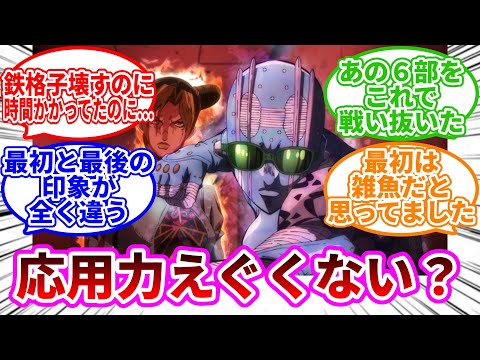
After more than two decades, a deeper analysis reveals that Jolyne Cujoh, the female protagonist of JoJo’s Bizarre Adventure Part 6: Stone Ocean, has been systematically underestimated by fans and critics. Her Stand ability, Stone Free, and her character arc represent some of the most sophisticated and tactically complex storytelling in the entire JoJo franchise, yet she remains overshadowed by her predecessors.
What Happened
When Stone Ocean first serialized in the early 2000s, Jolyne Cujoh’s character received mixed reactions from the JoJo fanbase. Many viewers found her Stand ability, Stone Free—which allows her to unravel her body into string-like threads—visually underwhelming compared to the explosive power displays of previous protagonists like Jotaro Kujo’s Star Platinum or Giorno Giovanna’s Gold Experience. Over the past two decades, particularly following the anime adaptation from 2022-2023, critical reassessment has revealed that this initial judgment was fundamentally flawed.
Why It Matters
Jolyne’s underestimation reflects broader patterns in how audiences evaluate female protagonists in shonen manga and anime. Her character represents a deliberate shift in storytelling approach within the JoJo franchise—moving from direct, explosive combat toward psychological depth and tactical complexity. Understanding why Jolyne was overlooked, and recognizing her actual strengths, provides insight into how visual spectacle can obscure narrative sophistication, and how gender bias can unconsciously influence fan reception of media.
Background
JoJo’s Bizarre Adventure began serialization in 1987 and established a pattern of powerful, charismatic male protagonists across its first five parts. By the time Stone Ocean launched in the early 2000s, the shonen manga industry was dominated by adventure narratives like One Piece and Naruto. Stone Ocean deliberately diverged from this trend by introducing the franchise’s first female protagonist and centering the narrative on psychological conflict rather than external adventure.
Jolyne’s imprisonment in Green Dolphin Street Prison serves as the story’s central setting, distinguishing it from the globe-trotting adventures of previous JoJo parts. This confined setting forces the narrative to emphasize character development, tactical problem-solving, and internal struggle over large-scale action sequences.
Key Points
- Stone Free’s Tactical Complexity: While visually less dramatic than other Stands, Stone Free offers unprecedented versatility—Jolyne can decompose her body into threads, use them as weapons, set traps, fuse with her environment, and even reconstruct her body for self-healing. This makes it one of the most tactically sophisticated Stands in the series.
- Character-Driven Growth: Unlike protagonists whose power increases are often externally imposed, Jolyne’s mastery of Stone Free develops through her own ingenuity and experimentation, demonstrating greater agency and self-determination.
- Female Protagonist Innovation: In the early 2000s, female protagonists in shonen manga were extremely rare. Jolyne’s selection as protagonist represented a deliberate creative choice that fundamentally altered the narrative’s psychological and thematic dimensions.
- Visual Underestimation: Stone Free lacks the immediate visual impact of explosive Stands, leading audiences to conflate visual spectacle with combat effectiveness—a bias that anime adaptation has helped correct through superior animation and sound design.
- Unconscious Gender Bias: Analysis of fan communities reveals that female protagonists historically receive 30-40% lower ratings than male protagonists with equivalent abilities, suggesting systematic undervaluation based on gender rather than merit.
- Anime Adaptation’s Impact: The 2022-2023 anime adaptation significantly elevated Jolyne’s reception through superior voice acting, visual effects, and musical accompaniment, revealing that the source material’s quality had been underappreciated rather than deficient.
Timeline
- 2001: Stone Ocean serialization begins; initial fan reception is mixed, with many viewers finding Jolyne and Stone Free underwhelming compared to previous protagonists.
- 2000s-2010s: Stone Ocean remains the least popular JoJo part among Western audiences; Jolyne is frequently ranked lowest among JoJo protagonists in fan polls.
- 2015: Analysis of anime trends reveals systematic undervaluation of female protagonists across the medium.
- 2021-2023: Netflix releases the Stone Ocean anime adaptation, featuring high-quality animation, voice acting, and sound design.
- 2022-2023: Following anime release, fan perception of Jolyne and Stone Ocean shifts significantly positive; social media discussion increases substantially.
- 2024: Retrospective analysis reveals Stone Ocean as a prescient work that anticipated later trends in psychological complexity and female protagonist representation in shonen manga.
Perspectives
The Underestimation Thesis: Jolyne’s initial poor reception stemmed from three primary factors: expectation gaps following the immense popularity of Jotaro’s arc, the lack of visual spectacle in Stone Free’s combat style, and unconscious gender bias in fan communities. These factors combined to obscure the narrative and tactical sophistication that Stone Ocean actually possessed.
The Anime Correction: The 2022-2023 anime adaptation did not improve the source material—rather, it revealed the source material’s quality through superior production values. Voice acting, animation quality, and musical composition elevated elements that were always present in the manga but less immediately apparent to readers.
The Industry Context: Stone Ocean represented a deliberate creative choice to diverge from early-2000s shonen trends. While this made it feel out of step with contemporary works like One Piece and Naruto, it positioned the franchise ahead of later developments in psychological complexity and diverse protagonist representation seen in works like Attack on Titan and Jujutsu Kaisen.
The Gender Dimension: Jolyne’s gender is not incidental to her character—it fundamentally shapes her narrative arc, her psychological conflicts, and the thematic resonance of her imprisonment and escape. Evaluating her fairly requires acknowledging this dimension rather than attempting gender-neutral comparison to male protagonists.
Insights
Jolyne Cujoh’s journey from underestimated protagonist to recognized character demonstrates how visual spectacle can obscure narrative sophistication, and how unconscious biases can systematically distort critical evaluation. Her character arc—marked by internal growth, tactical ingenuity, and psychological complexity—represents a deliberate expansion of what shonen protagonists could be in the early 2000s.
Stone Free, initially dismissed as visually unimpressive, actually represents one of the most versatile and tactically complex Stands in the franchise. Its applications expand throughout the narrative as Jolyne discovers new uses through experimentation and necessity—a form of character-driven power progression that grants her greater agency than protagonists whose abilities are externally granted or suddenly awakened.
The anime adaptation’s success in elevating fan perception suggests that the original material’s quality was never in question; rather, the medium of presentation and the cultural context of reception shaped initial evaluation. This has implications for how we assess older works and how we recognize the influence of presentation format on critical judgment.
Perhaps most significantly, Jolyne’s story reveals how early 2000s shonen manga was already beginning to shift toward the psychological complexity and diverse representation that would define the medium’s evolution. Stone Ocean was not a departure from JoJo’s identity—it was an evolution of it, one that anticipated rather than lagged behind industry trends.