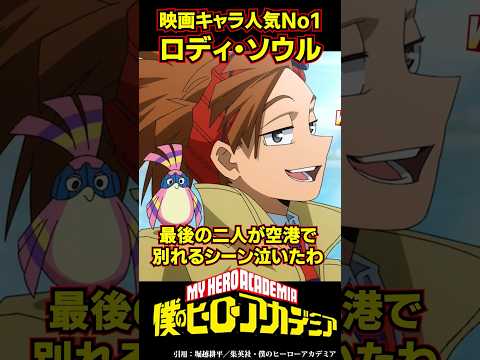
▶ Watch the original YouTube video
Why Rody Soul Divides My Hero Academia Fans: A Deep Analysis of Conflicting Character Interpretations
Rody Soul, a character introduced in My Hero Academia Season 6, has sparked intense debate within the fanbase, with viewers sharply divided over whether to sympathize with or condemn him. This division reflects deeper philosophical questions about individual responsibility versus social circumstances—a tension that the series deliberately maintains through ambiguous storytelling.
- What Happened
- Why It Matters
- Background
- Key Points
- The Three Categories of Fan Response
- Why Interpretations Diverge: Four Key Factors
- Comparative Analysis: Similar Characters Across Anime
- My Hero Academia’s Thematic Framework
- How to Understand Rody Soul More Deeply
- Broader Implications for Anime as a Medium
- Looking Forward
What Happened
Rody Soul emerged as a controversial character in My Hero Academia’s sixth season, triggering polarized reactions across social media platforms and fan communities. The character’s actions and motivations have become the subject of heated discussions on Twitter, YouTube, Reddit, and traditional forums, with viewers unable to reach consensus on his moral standing within the narrative.
Why It Matters
Rody Soul’s divisive reception reveals how modern anime audiences interpret complex moral questions through the lens of their own ethical frameworks. The character serves as a case study in how storytelling choices—particularly the deliberate ambiguity in character motivation—can generate sustained debate about responsibility, poverty, and systemic injustice. This phenomenon reflects broader cultural conversations about how societies should address social inequality and individual agency.
Background
Rody Soul is a young character who appears to be a minor antagonist in My Hero Academia Season 6. He comes from a impoverished background and becomes entangled with the League of Villains. Rather than presenting him as a straightforward villain, creator Kohei Horikoshi depicts him as a socially marginalized youth whose circumstances drive his choices. This nuanced portrayal—showing both his difficult background and his harmful actions—creates interpretive space that different viewers fill differently.
The character’s complexity mirrors similar figures in other acclaimed anime series, such as Reiner Braun from Attack on Titan and Rui from Demon Slayer, who similarly occupy morally ambiguous positions as both victims and perpetrators of harm.
Key Points
- Rody Soul’s character evaluation splits into three distinct categories: sympathetic interpretation (viewing him as a victim of social circumstances), critical interpretation (emphasizing personal responsibility), and nuanced interpretation (acknowledging both dimensions)
- The character’s poverty and social exclusion are explicitly depicted, providing narrative justification for his actions while not absolving him of responsibility
- Creator Kohei Horikoshi deliberately maintains ambiguity rather than guiding viewers toward a single moral judgment
- Fan reactions correlate with viewers’ underlying ethical frameworks regarding individual choice versus systemic constraint
- Social media visibility has intensified and polarized the debate, creating a false binary between “Team Sympathy” and “Team Criticism”
- The character’s reception varies significantly based on viewers’ age, cultural background, and engagement with social justice themes
The Three Categories of Fan Response
Sympathetic Interpretation: Supporters of this view emphasize Rody’s victimization by systemic poverty and social exclusion. They argue that his cooperation with the League of Villains represents a survival strategy rather than moral choice, and that society—not Rody—bears primary responsibility for his circumstances. This perspective prioritizes empathy for socioeconomic disadvantage.
Critical Interpretation: Critics counter that regardless of background, Rody made conscious choices to engage in harmful actions. This perspective emphasizes individual agency and moral accountability, arguing that sympathizing with difficult circumstances should not excuse harmful behavior. Proponents maintain that Rody must answer for his decisions.
Nuanced Interpretation: A substantial portion of viewers resist binary categorization, acknowledging that Rody’s situation contains legitimate elements of both victimization and culpability. This perspective recognizes the complexity that Horikoshi appears to intentionally create.
Why Interpretations Diverge: Four Key Factors
1. Differing Conceptions of Justice
Viewer responses to Rody fundamentally reflect different ethical frameworks. Those prioritizing social justice and structural analysis tend toward sympathy, while those emphasizing individual responsibility and personal choice tend toward criticism. Neither interpretation is objectively correct; they represent different philosophical starting points.
2. Deliberate Narrative Ambiguity
Horikoshi’s storytelling technique deliberately presents both Rody’s suffering and his culpability without resolving the tension between them. The narrative provides sufficient detail about his background to justify sympathy while simultaneously showing the genuine harm his actions cause. This refusal to guide viewers toward a predetermined judgment creates space for interpretive disagreement.
3. Social Media Amplification
Unlike earlier eras of anime fandom, contemporary discussions occur on highly visible platforms where opposing viewpoints appear simultaneously and constantly. This visibility transforms what might have been quiet disagreement into apparent conflict, with algorithms amplifying the most extreme positions on both sides.
4. Cultural and Generational Context
Viewers’ engagement with social issues like poverty, educational inequality, and systemic discrimination influences their interpretation of Rody. Those with stronger interest in social justice themes tend to emphasize structural factors, while those with more individualistic frameworks emphasize personal choice. These differences often correlate with age, cultural background, and political orientation.
Comparative Analysis: Similar Characters Across Anime
Rody Soul’s divisive reception follows a pattern seen in other acclaimed anime featuring morally complex characters from disadvantaged backgrounds:
Reiner Braun (Attack on Titan): A soldier raised as a weapon, Reiner experiences perhaps the highest degree of fan interpretation split (estimated 50-50 sympathy to criticism ratio). His character similarly embodies the tension between victimization and agency.
Rui (Demon Slayer): A demon controlled by his circumstances, Rui generates significant debate about the nature of free will and moral responsibility, though slightly less intensely than Reiner or Rody.
Lelouch (Code Geass): A socially isolated youth who gains supernatural power, Lelouch’s character similarly divides audiences based on whether they prioritize understanding his motivations or condemning his methods.
The pattern suggests that characters explicitly depicted as both victims and perpetrators—those who occupy genuinely ambiguous moral positions—generate the most sustained and passionate debate.
My Hero Academia’s Thematic Framework
My Hero Academia explicitly engages with social justice themes through its hero society framework. The series questions whether a system that produces heroes and villains might itself be unjust. Rody Soul embodies this central tension: he is simultaneously a product of systemic failure and an agent making harmful choices. His character forces viewers to confront whether the series’ hero society is genuinely just or merely appears so.
This thematic engagement explains why Rody’s reception is more polarized than characters in series without explicit social justice frameworks. Viewers cannot separate their interpretation of Rody from their interpretation of the series’ underlying moral questions.
How to Understand Rody Soul More Deeply
Rewatch His Introduction Multiple Times: Initial viewing often creates surface-level judgments. Subsequent viewings reveal details about his family responsibilities and economic desperation that complicate initial impressions.
Consult Original Manga Material: The original manga provides more detailed backstory than the anime adaptation, offering additional context for understanding his circumstances and choices.
Deliberately Adopt Multiple Interpretive Frameworks: Consciously viewing Rody’s actions first as “forced by circumstance” and then as “freely chosen” reveals how interpretive lens shapes moral judgment. This exercise clarifies your own ethical priorities.
Compare with Related Works: Watching Attack on Titan, Code Geass, and Demon Slayer provides comparative context that deepens understanding of how different creators approach morally complex characters.
Broader Implications for Anime as a Medium
Rody Soul’s divisive reception demonstrates anime’s capacity to engage audiences in genuine ethical debate. Rather than presenting predetermined moral conclusions, the medium can pose questions that viewers must answer through their own frameworks. This interpretive openness represents one of anime’s distinctive strengths as a storytelling medium.
The sustained debate around Rody also reveals how social media transforms fandom discourse. Where earlier generations might have quietly disagreed in small forums, contemporary audiences witness their disagreements amplified across platforms, creating the impression of irreconcilable conflict where thoughtful people simply prioritize different values.
Whether Horikoshi’s ambiguity regarding Rody was entirely intentional or partially emergent, the result is a character who generates meaningful conversation about responsibility, justice, and systemic inequality. This outcome—regardless of creative intent—demonstrates anime’s potential to function as a vehicle for ethical exploration rather than mere entertainment.
Looking Forward
Future appearances of Rody Soul in the narrative will likely shift fan interpretation. Character development, narrative consequences, and additional backstory could move audiences toward greater sympathy or criticism. Observing how fan evaluation evolves as the character’s story develops will provide insight into how audiences revise moral judgments when presented with new information.
Ultimately, Rody Soul represents not a flaw in My Hero Academia’s storytelling but rather evidence of its success in engaging audiences with genuinely complex moral questions. The division among fans reflects not poor characterization but rather the series’ achievement in creating a character who resists simple moral categorization.