▶ Watch the original YouTube video
Uma Musume Episode 77 Reveals the Deep Bond of the Violet Sisters Through Watermelon Game Scene
Uma Musume Pretty Derby Episode 77 uses a seemingly simple watermelon-splitting game to unveil the carefully constructed relationship between four main characters—Biwa Hayahide, Mejiro Mcqueen, Nice Nature, and Smart Falcon—suggesting their meeting was not coincidental but strategically planned. The episode demonstrates sophisticated narrative construction that has become increasingly common in modern anime adaptations of game-based franchises.
What Happened
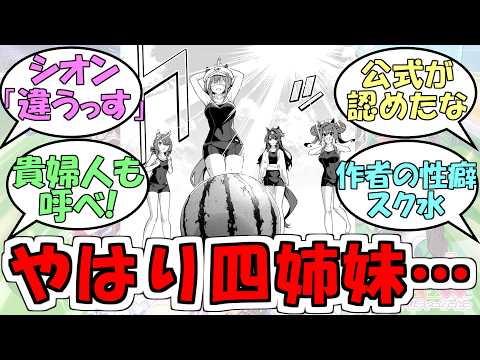
Episode 77 of Uma Musume Pretty Derby, titled “Watermelon Game,” centers on a casual summer activity where the four main characters participate in a traditional Japanese watermelon-splitting game. Through this seemingly mundane scene, the episode reveals that the four characters—collectively referred to as the Violet Sisters—possess exceptional compatibility and teamwork. The episode suggests that their gathering may not have been accidental but rather the result of deliberate planning, raising questions about who orchestrated their meeting and for what purpose.
Why It Matters
This episode exemplifies a sophisticated narrative technique increasingly used in anime adaptations of game-based franchises. By presenting what appears to be a casual daily scene, the production team embeds significant character development and plot advancement. The revelation challenges viewers’ previous understanding of character relationships and introduces new narrative dimensions for future episodes. This approach demonstrates how anime can use everyday moments to convey complex emotional truths and foreshadow larger story developments, making it relevant to broader discussions about storytelling quality in contemporary anime.
Background
Uma Musume Pretty Derby is an anime adaptation of a mobile game featuring personified racehorses competing in racing competitions. The series has developed a reputation for layered character development and intricate relationship-building between characters. The four characters featured in Episode 77—Biwa Hayahide, Mejiro Mcqueen, Nice Nature, and Smart Falcon—have appeared throughout the series, but their specific connection as a cohesive unit had not been explicitly established until this episode. The watermelon game serves as a turning point where their compatibility becomes undeniable, prompting viewers to reconsider earlier episodes for overlooked foreshadowing.
Key Points
- Daily life as narrative device: The watermelon game functions as more than entertainment, serving as a vehicle for character expression and relationship revelation, similar to techniques used in acclaimed series like K-On! and Love Live!
- Strategic character assembly: The episode suggests the four characters were deliberately gathered together, raising questions about the planning and intent behind their formation as a team.
- Individual character traits revealed naturally: Each character’s personality—Biwa Hayahide’s leadership, Mejiro Mcqueen’s caution, Nice Nature’s cheerfulness, and Smart Falcon’s composure—emerges organically through their participation in the game.
- Metaphorical significance: The blindfolded nature of watermelon-splitting parallels racing itself, where competitors move toward an unseen future while relying on teamwork and trust.
- Viewer reception: The episode generated significant positive response on social media, with viewers expressing surprise at the emotional depth of a seemingly lighthearted scene.
- Future narrative implications: The episode establishes setup for future conflicts and character development, suggesting external challenges to the group’s unity may emerge.
Narrative Structure Analysis
Episode 77 employs a narrative technique where apparent coincidence is revealed as calculated design. This approach mirrors similar constructions in series like Haikyuu!!, where team members initially appear randomly assembled but are later revealed to have been strategically selected. The watermelon game scene functions as the narrative pivot point where viewers transition from accepting the characters’ gathering as natural to questioning whether deeper planning exists beneath the surface.
The episode’s effectiveness relies on what might be termed “foreshadowing through mundanity.” By embedding character compatibility indicators within a casual activity, the production team creates a dual emotional impact: viewers experience both the immediate enjoyment of the scene and the retrospective realization that earlier episodes may have contained subtle hints about the characters’ connection. This technique requires careful planning across multiple episodes to succeed convincingly.
Comparative Context
The construction of Episode 77 follows patterns established in other successful anime franchises. Love Live! similarly builds team cohesion through daily school life scenes before revealing the deeper significance of character groupings. Haikyuu!! uses sports activities to naturally express character compatibility while advancing plot elements. K-On! pioneered the use of mundane club activities as primary vehicles for character development. Uma Musume Episode 77 adapts these proven techniques while incorporating racing-specific elements unique to its source material, demonstrating how established narrative methods can be successfully applied to different genres and settings.
Viewer Reception
Social media response to Episode 77 was predominantly positive. The hashtag #UmaMusumeEpisode77 trended rapidly following broadcast, generating thousands of posts within hours. Common viewer reactions included surprise at the emotional resonance of a watermelon game scene, recognition of the characters’ carefully constructed compatibility, and praise for the natural expression of Biwa Hayahide’s leadership qualities.
Some critical perspectives emerged, with certain viewers questioning whether the watermelon game theme fit the serious tone of horse racing competition, or whether the Violet Sisters setup felt abrupt without sufficient prior foreshadowing. These critiques likely stem from the deliberate subtlety of earlier episode hints, which may not have registered with all viewers, particularly those unfamiliar with the source game material.
Insights
Episode 77 demonstrates the maturation of game-based anime adaptations in handling the challenge of assembling diverse characters from expansive source material into coherent narrative units. Rather than presenting character groupings as arbitrary selections, the episode provides narrative justification through relationship development and compatibility demonstration. This approach respects both game players familiar with individual character stories and anime-only viewers encountering these characters for the first time.
The episode’s success suggests that contemporary anime audiences respond positively to narrative sophistication that rewards careful viewing and retrospective analysis. By hiding significant plot information within seemingly casual scenes, Uma Musume Episode 77 creates engagement opportunities that extend beyond the immediate viewing experience, encouraging discussion and re-examination of earlier episodes.
The Violet Sisters revelation also raises important questions about future narrative direction. The establishment of their connection creates narrative tension around the revelation of who orchestrated their meeting and why, providing clear hooks for upcoming episodes. This structure demonstrates how character relationship development can simultaneously provide emotional satisfaction in the present while creating anticipation for future revelations.