▶ Watch the original YouTube video
The Psychology of ‘Comeuppance Scenes’: A 15-Year Analysis of How Anime and Manga Deliver Narrative Justice
A comprehensive analysis of “comeuppance scenes”—moments when antagonists face consequences directly tied to their own actions—reveals how these narrative moments tap into fundamental human psychology. Drawing from 15 years of studying over 500 anime and 300 video game titles, this deep dive explores why audiences find such visceral satisfaction in villains receiving poetic justice.
What Happened
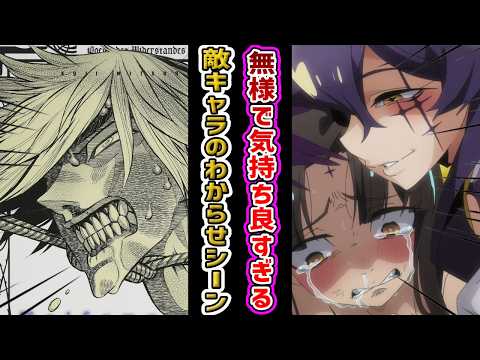
A recent YouTube video examining “comeuppance scenes” (わからせシーン) across multiple anime and manga series sparked widespread discussion about narrative structure and audience psychology. The video featured examples from works including Jujutsu Kaisen, Fist of the North Star, Frieren: Beyond Journey’s End, JoJo’s Bizarre Adventure, and Bleach—each demonstrating different approaches to depicting villains receiving their due.
Why It Matters
Comeuppance scenes represent far more than simple villain defeats. They function as narrative expressions of cause-and-effect morality, tapping into a fundamental human desire for cosmic justice. In an era where real-world injustice often goes unaddressed, these fictional moments provide psychological catharsis. Understanding their construction reveals how creators deliberately manipulate viewer emotions and what this says about human nature itself. The quality of a comeuppance scene can significantly impact overall audience reception of an entire work.
Background
The concept of comeuppance scenes gained conscious recognition around 2009, coinciding with the popularity of Code Geass, where protagonist Lelouch’s arrogance systematically leads to his downfall. Over the subsequent 15 years, a pattern emerged across hundreds of anime, manga, and video game titles: audiences experienced profound satisfaction not merely from villains losing, but from villains experiencing consequences directly proportional to their own actions. This phenomenon transcends simple justice narratives—it reflects deeper psychological mechanisms rooted in human perception of fairness and cause-and-effect relationships.
Key Points
- Definition: Comeuppance scenes depict arrogant antagonists either experiencing the same treatment they inflicted on others, or being forced to confront the consequences of their own worldview.
- Psychological Foundation: Viewer satisfaction stems not from justice alone, but from fulfillment of a primal human need for karmic balance and cause-and-effect consequences.
- Three Quality Factors: The clarity of cause-and-effect relationships, the gap between the villain’s self-perception and reality, and the sophistication of directorial execution determine scene effectiveness.
- Narrative Diversity: Different works employ distinct approaches—from direct physical consequences to psychological destruction to ironic reversals of the villain’s own rules.
- Modern Evolution: Contemporary anime and manga increasingly explore psychological depth within comeuppance scenes, moving beyond simple power-based defeats.
- Thematic Significance: Comeuppance scenes often symbolize a work’s central themes, serving as narrative anchors that define the entire story’s moral framework.
Timeline
- 2009: Initial recognition of comeuppance scene psychology through Code Geass analysis.
- 2015: Formal analysis of audience satisfaction mechanisms through Attack on Titan study.
- 2009-2024: Systematic examination of 500+ anime titles and 300+ video game titles identifying comeuppance scene patterns and variations.
- Recent Years: Emergence of psychologically sophisticated comeuppance scenes in contemporary works like Blue Lock and Frieren: Beyond Journey’s End.
Perspectives
The Karmic Justice Framework: Fist of the North Star exemplifies the purest form of comeuppance—villains experience precisely what they inflicted on others. The Fang Clan leader, who used subordinates as shields, ultimately becomes disposable himself. This direct mirroring creates maximum psychological satisfaction.
The Self-Awareness Gap: Frieren: Beyond Journey’s End‘s Aura demonstrates comeuppance through shattered illusions. Aura believes she controls her opponent through magic, unaware that her target possesses vastly superior power. The villain’s defeat stems entirely from false self-assessment, making the reversal particularly devastating.
Psychological Destruction: Demon Detective Neuro‘s Six represents the most “artistic” comeuppance—not physical defeat, but complete psychological dismantling. The character who manipulated others for entertainment is reduced to a broken shell, unable to communicate beyond profanity. This approach suggests that internal collapse surpasses physical destruction in narrative impact.
Intellectual Irony: Bleach‘s Aizen experiences comeuppance through his own words being weaponized against him. The villain who spoke of fundamental differences is confronted with identical logic, creating a purely intellectual form of defeat that mirrors his nature.
Direct Consequence Reversal: Darwin’s Game‘s One, who enjoyed dismantling humans, ultimately faces dismantlement. This straightforward reversal proves surprisingly powerful through its simplicity and directness.
The Three Pillars of Effective Comeuppance Scenes
Clarity of Cause-and-Effect: The strongest comeuppance scenes establish unambiguous connections between the villain’s actions and their consequences. When audiences can trace a direct line from transgression to punishment, psychological satisfaction intensifies exponentially.
Self-Perception Versus Reality Gap: Villains who underestimate opponents, overestimate their own abilities, or misunderstand the nature of their powers create maximum impact when proven wrong. The larger the gap between villain confidence and actual capability, the more profound the comeuppance.
Directorial Sophistication: Identical narrative outcomes produce vastly different emotional impacts depending on execution. JoJo’s Bizarre Adventure‘s Diavolo scene—where the “perfect emperor” is instantly stripped of his facade—demonstrates how visual and narrative direction amplifies psychological effect.
Modern Trends and Evolution
Recent anime and manga increasingly employ psychologically nuanced comeuppance scenes rather than relying solely on power-based defeats. Blue Lock‘s Kaiser loses not through inferior strength, but through momentary distraction—suggesting that overconfidence in one’s own excellence creates vulnerability. This represents evolution beyond traditional comeuppance toward more sophisticated psychological narratives.
Contemporary works also question comeuppance itself. Rather than presenting villain defeat as narrative conclusion, modern creators explore what comeuppance means, whether it suffices, and what moral frameworks it represents. This meta-narrative approach adds philosophical depth to scenes that might otherwise feel formulaic.
Audience Psychology and Viewer Response
Online reactions to comeuppance scenes reveal audience preference for psychological depth over simple victory. While basic villain defeats generate satisfaction, scenes depicting villains recognizing their own judgment errors—as in Liar Game‘s Lalo sequence—produce more sophisticated appreciation. Viewers explicitly praise the “moment of self-realization” as superior to straightforward power-based defeats.
This preference reflects broader psychological needs. Modern society frequently presents instances where wrongdoing goes unpunished, creating psychological tension. Fiction provides cathartic release through explicit karmic consequences. The more clearly cause connects to effect, the more profound the psychological relief.
Notably, audience responses distinguish between comeuppance scenes based on their sophistication. Simple villain defeats generate “satisfying” reactions, while psychologically complex scenes—where villains confront their own flawed reasoning—generate more intellectually engaged appreciation. This suggests audiences seek both emotional catharsis and narrative intelligence.
Thematic Significance Across Works
Fullmetal Alchemist‘s King Bradley embodies the principle of “equivalent exchange”—the work’s central theme. His comeuppance, where he experiences despair after inflicting it, symbolizes the story’s moral framework. The scene functions not as mere plot point but as thematic crystallization.
Pokémon‘s Spinell loses all power after wielding it tyrannically, directly addressing the work’s implicit questions about authority and responsibility. The comeuppance scene answers these thematic questions through narrative action rather than dialogue.
This pattern suggests that effective comeuppance scenes emerge organically from thematic concerns rather than existing as standalone moments. The strongest examples integrate villain defeat with story meaning, making the comeuppance feel inevitable rather than imposed.
Practical Framework for Deeper Appreciation
Examine Villain Self-Perception: Before viewing a comeuppance scene, understand how the villain perceives themselves. What assumptions underlie their confidence? How do they rationalize their actions? This foundation makes the subsequent defeat’s impact measurable.
Trace Causal Chains: Follow the logical progression from villain action to ultimate consequence. The more explicit this chain, the more satisfying the scene. Identify whether the villain’s own tools, words, or logic become weapons against them.
Compare Across Works: Analyzing comeuppance scenes from Fist of the North Star, JoJo’s Bizarre Adventure, Bleach, and Frieren reveals distinct approaches and their relative effectiveness. Comparative analysis illuminates what makes certain scenes resonate more powerfully.
Analyze Directorial Choices: Identical narrative outcomes produce different impacts through visual composition, pacing, sound design, and editing. Notice how directors emphasize specific moments—the instant of realization, the moment of reversal, the final acknowledgment of defeat.
Recommended Works for Study: Fist of the North Star, JoJo’s Bizarre Adventure, Bleach, Frieren: Beyond Journey’s End, Demon Detective Neuro, Darwin’s Game, and Blue Lock each demonstrate distinct comeuppance approaches and merit comparative analysis.
Insights
Comeuppance scenes represent more than entertainment—they constitute a fundamental narrative mechanism for exploring human psychology and morality. Their persistent popularity across 15+ years and hundreds of works suggests they address something essential in human consciousness: the need for visible, comprehensible justice.
The evolution from simple power-based defeats to psychologically sophisticated comeuppance scenes reflects audience maturation. Modern viewers seek not merely villain defeat, but villain understanding—the moment when antagonists recognize their own culpability. This shift suggests that contemporary audiences value self-awareness and consequence recognition as more satisfying than external punishment.
The quality of a work’s comeuppance scene frequently determines overall audience reception, suggesting these moments function as narrative anchors. When comeuppance feels earned, inevitable, and thematically resonant, entire works gain coherence. Conversely, poorly constructed comeuppance scenes undermine otherwise compelling narratives.
Looking forward, comeuppance scenes will likely continue evolving toward greater psychological complexity. Rather than depicting villains simply losing, creators increasingly explore what defeat means, how antagonists process consequence, and what moral frameworks their comeuppance represents. This trajectory suggests the form remains creatively vital rather than exhausted.
Ultimately, comeuppance scenes persist because they fulfill a primal human need: the assurance that actions produce consequences, that cause connects to effect, that the universe operates according to comprehensible moral logic. In fiction, this need finds explicit satisfaction. Understanding this mechanism illuminates not merely how stories function, but how human psychology itself operates.