▶ Watch the original YouTube video
The Char Aznable Survival Debate: How Gundam’s Ambiguous Ending Continues to Captivate Fans
A long-running fan theory about Char Aznable’s survival in Mobile Suit Gundam has sparked renewed debate online, with viewers divided over whether the character’s ambiguous ending in “Char’s Counterattack” leaves room for interpretation. The discussion reveals how deliberate narrative ambiguity in classic anime continues to drive fan engagement and deeper analysis of the franchise’s core themes.
What Happened
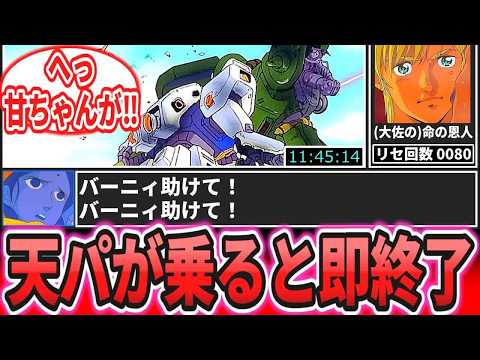
Online communities have been actively discussing the “Char Survival RTA” (Real-Time Analysis) theory, which proposes that Char Aznable may have survived his final confrontation with Amuro Ray in the Mobile Suit Gundam film “Char’s Counterattack.” The debate centers on the film’s deliberately ambiguous final scenes, where Char’s fate is left open to interpretation rather than explicitly confirmed. This has generated diverse reactions across social media platforms, fan forums, and video discussion communities, with viewers analyzing frame-by-frame details and cross-referencing official source materials to support competing interpretations.
Why It Matters
The Char Aznable debate exemplifies how classic anime can maintain cultural relevance decades after release through narrative ambiguity. The discussion demonstrates the psychological appeal of open-ended storytelling and how it encourages sustained fan engagement and critical analysis. This phenomenon also reflects broader questions about authorial intent, textual interpretation, and the role of fan communities in shaping how media is understood and discussed. For Gundam scholars and casual viewers alike, the debate offers insight into why the franchise has remained influential for over 40 years.
Background
Char Aznable is one of Mobile Suit Gundam’s most iconic characters, serving as a complex antagonist whose motivations and ideology evolve throughout the original series and subsequent films. In “Char’s Counterattack” (1988), Char’s final battle with protagonist Amuro Ray concludes with an ambiguous sequence: Char’s mobile suit, the Sazabi, explodes, followed by mysterious light effects whose meaning remains unclear. Unlike later Gundam series, which typically provide definitive character fates, this film deliberately leaves Char’s status undetermined. Director Yoshiyuki Tomino, the franchise’s creator, has indicated in past interviews that he intentionally avoided fully resolved narratives, preferring to leave room for viewer interpretation and imagination.
Key Points
- Char’s final scene in “Char’s Counterattack” contains no explicit death confirmation, only ambiguous visual effects that can be interpreted multiple ways
- Online fan communities have identified three distinct interpretive camps: those who believe Char survived, those convinced of his death, and those who argue the binary itself misses the point
- The ambiguity appears intentional, reflecting director Yoshiyuki Tomino’s stated philosophy of leaving narrative possibilities open rather than fully determined
- Later Gundam series handle character fates with greater clarity, making Char’s ambiguous ending unique within the franchise
- The debate demonstrates how narrative ambiguity drives sustained fan engagement and deeper textual analysis
- Psychological research on “cognitive closure” explains why fans are drawn to incomplete narratives and motivated to develop interpretive theories
Timeline
- 1979–1980: Original Mobile Suit Gundam series airs, establishing Char Aznable as a major character
- 1988: “Char’s Counterattack” film released with ambiguous ending sequence
- 1990s–2000s: Subsequent Gundam series (SEED, 00, Iron-Blooded Orphans) provide clearer character fates
- 2007: Mobile Suit Gundam UC released, exploring Char’s ideological legacy
- Recent years: Online communities revive and intensify “Char Survival” debate through video essays and social media discussion
Perspectives
The Survival Advocates: This group argues that the film provides no definitive death scene. They point to the absence of explicit confirmation, the mysterious light effects, and vague official statements as evidence that Char’s survival remains possible. Their analysis tends to be methodical, examining visual details and cross-referencing source materials.
The Death Confirmation Camp: These viewers interpret the film’s narrative and visual language as clearly indicating Char’s demise. They argue that subsequent Gundam canon treats Char as deceased and that the film’s dramatic structure supports a definitive ending. This group emphasizes contextual reading and thematic coherence.
The Ambiguity Philosophers: A third perspective argues that framing the question as binary—survival or death—misses the work’s essential meaning. This group contends that Gundam’s core theme centers on human choice and possibility, and that Char’s indeterminate status perfectly embodies this philosophy. They suggest that accepting ambiguity rather than resolving it honors the creator’s intent.
Comparative Analysis Across Gundam Series
The treatment of character fates varies significantly across the Gundam franchise. In the original series and “Char’s Counterattack,” Char’s ending remains deliberately unclear. By contrast, later series provide explicit confirmation: Kira Yamato’s survival in “Gundam SEED” is unambiguous and confirmed in sequels; Setsuna F. Seiei’s fate in “Gundam 00” is clearly depicted in the film continuation; and Mikazuki Augus’s death in “Iron-Blooded Orphans” is definitively established with clear narrative consequences. This progression suggests that while Tomino’s original philosophy emphasized interpretive openness, subsequent creators have favored narrative clarity. Yet this very difference has made Char’s ambiguous ending increasingly distinctive and culturally significant within the franchise.
Director Tomino’s Creative Philosophy
Yoshiyuki Tomino has stated in interviews that he deliberately crafted narratives to avoid complete determination, preferring instead to present worlds where “multiple possibilities coexist” and where “the future is never fully decided.” This philosophy directly shaped “Char’s Counterattack,” where the mysterious light following Char’s final battle can be interpreted as death, spiritual transcendence, dimensional transition, or something entirely different. The ambiguity is not accidental but rather a deliberate artistic choice reflecting Tomino’s broader worldview about narrative, possibility, and human agency.
The Psychology of Fan Engagement
The sustained interest in Char’s fate reflects a psychological principle known as “cognitive closure”—the human brain’s tendency to complete incomplete information. When presented with ambiguous narratives, audiences actively work to resolve the uncertainty, generating interpretations and theories in the process. This cognitive engagement deepens viewers’ connection to the material and encourages repeated analysis. The Char debate demonstrates that ambiguity, rather than diminishing interest, actually sustains and intensifies fan engagement by inviting ongoing interpretation and discussion. This mechanism explains why Gundam has remained culturally relevant for over four decades: the franchise’s deliberate narrative openness continuously prompts new analysis and fan creativity.
Online Community Responses
Across Twitter, YouTube, and forum communities, reactions to the Char Survival theory vary widely. Twitter users frequently comment that rewatching the final scenes reveals plausible survival scenarios, attributing this to the film’s intentionally ambiguous direction. YouTube comments include both supportive analyses and critical counterarguments citing post-film canon. On specialized forums like 5channel, discussions become highly technical, with some fans attempting to calculate the Sazabi’s explosion energy to determine survival probability. These varied responses—from casual observation to detailed technical analysis—collectively demonstrate that the Char debate functions as a legitimate interpretive exercise rather than mere fan wishful thinking.
Insights
The Char Aznable survival debate reveals fundamental truths about how classic media maintains cultural vitality. Rather than being resolved by authorial decree or definitive canon, Char’s fate remains perpetually open, inviting each generation of viewers to engage with the question anew. This ambiguity is not a flaw but rather a feature—it embodies Gundam’s central philosophical theme that humans possess agency, face genuine choices, and that futures remain undetermined. By accepting Char’s indeterminate status rather than forcing resolution, fans participate in the work’s core message about possibility and choice. The debate itself becomes an enactment of Gundam’s philosophy: viewers exercise interpretive agency, recognize multiple valid perspectives, and embrace uncertainty as generative rather than frustrating. In this sense, the Char Survival RTA is not merely fan speculation but rather a form of engaged cultural participation that honors the creator’s original artistic vision while demonstrating the enduring power of narratives that trust audiences to think deeply and imagine freely.