▶ Watch the original YouTube video
Why Kingdom’s Allies Are Poorly Written: A Deep Analysis of the Manga’s Structural Crisis
After 15 years of following the manga Kingdom, readers are increasingly frustrated with the series’ narrative structure and character positioning in battle scenes. A recent viral video highlights critical inconsistencies in how the story handles complex multi-front warfare, raising questions about whether the long-running series can sustain its ambitious scope.
What Happened
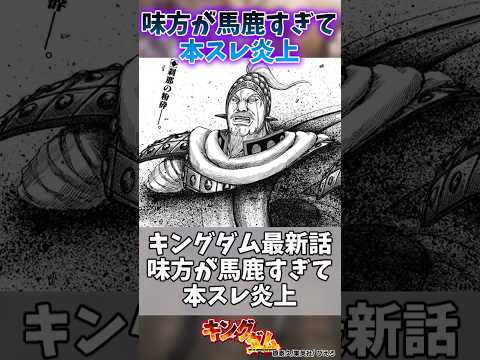
Kingdom, the long-running historical action manga by Yasuhisa Hara, has come under scrutiny for a series of structural and compositional problems in its recent chapters. A widely-shared video analysis breaks down specific issues: enemy forces launching surprise attacks that allied soldiers inexplicably fail to notice, inconsistent character sizing that makes towering figures disappear into crowds, and an overall sense that the narrative has lost its spatial coherence and dramatic tension. These problems have sparked significant discussion across social media platforms including Twitter, 5channel, and YouTube.
Why It Matters
Kingdom represents a critical case study in the challenges facing long-running serialized manga. After 18 years of continuous publication and a transition from weekly to monthly serialization, the series exemplifies how even acclaimed works struggle to maintain narrative clarity when managing increasingly complex storylines. The issues raised are not merely technical errors but symptoms of deeper compositional problems that affect reader engagement and story comprehension. For manga creators and publishers, Kingdom’s current struggles offer important lessons about pacing, character management, and the sustainability of extended narratives.
Background
Kingdom began serialization in 2006 and has maintained a dedicated fanbase for nearly two decades. The series follows Shin, an orphan who dreams of becoming a great general during China’s Warring States period, culminating in the unification of the Qin dynasty. The manga’s early appeal lay in its visceral battle sequences, clear spatial positioning of characters, and the tension created by large-scale military conflicts. However, the series transitioned from weekly to monthly serialization, a change intended to give the author more time but which appears to have created unintended pacing problems.
Key Points
- Spatial Awareness Breakdown: Enemy forces launch surprise attacks that allied soldiers inexplicably fail to notice, violating basic battlefield awareness logic
- Character Scale Inconsistencies: Towering enemy commanders who should be visually prominent become indistinguishable from regular soldiers in crowd scenes
- Narrative Pacing Issues: Story progression has slowed dramatically, with the same battles continuing across multiple months without resolution
- Abrupt Character Appearances: Key characters appear without adequate foreshadowing or logical explanation, creating a sense of narrative “warping”
- Loss of Battle Tension: Combat scenes that once conveyed urgency and danger now feel artificially prolonged and spatially confusing
- Serialization Format Impact: The shift from weekly to monthly publication may have disrupted the author’s pacing instincts without establishing new structural rhythms
Timeline
- 2006: Kingdom begins serialization in Weekly Young Jump
- 2009: Article author begins following the series
- 2015-2018: Author observes similar structural problems in Attack on Titan’s serialization
- Recent Years: Kingdom transitions from weekly to monthly serialization
- Present: Recent chapters spark widespread criticism regarding compositional coherence
Perspectives
Critical Reader Perspective: Social media responses emphasize that these issues represent fundamental compositional failures rather than minor artistic mistakes. Twitter users specifically criticized the violation of basic battlefield logic, while 5channel discussions focused on the glacial story progression. YouTube commenters expressed concern for the author’s wellbeing and suggested the series might benefit from a hiatus to restructure its narrative.
Comparative Analysis: When examined against similar long-running series, Kingdom’s struggles become more contextualized. One Piece has maintained reader engagement across 27 years of weekly serialization by limiting character focus in individual arcs. Naruto successfully concluded after 15 years by deliberately narrowing its cast. Attack on Titan and Berserk, conversely, saw declining reader satisfaction when multiple factions created narrative complexity the authors struggled to manage. Kingdom appears to have followed the latter pattern, expanding its cast and battlefronts rather than consolidating them.
Structural Explanation: The shift from weekly to monthly serialization may have created an unintended consequence. While intended to provide more writing time, monthly formats often encourage authors to pack more content per chapter, potentially leading to insufficient development of individual scenes and a sense of narrative congestion rather than clarity.
Insights
Kingdom’s current difficulties illuminate a fundamental challenge in serialized storytelling: the management of narrative complexity over extended timelines. The series’ problems are not random errors but systematic consequences of attempting to maintain multiple simultaneous battlefronts while controlling an expanding cast of characters. Unlike One Piece, which strategically limits character prominence per arc, or Naruto, which deliberately narrowed its scope in the final act, Kingdom has continued expanding its scope—a choice that appears unsustainable given the author’s current management of spatial and temporal storytelling.
The transition from weekly to monthly serialization, while intended as a supportive measure, may have inadvertently disrupted the author’s established pacing rhythms without establishing new structural disciplines. The result is a series that feels simultaneously rushed (with insufficient scene development) and stalled (with minimal story progression).
Despite these challenges, Kingdom remains a work of significant ambition. The series has previously demonstrated the capacity to evolve—transitioning from Qin-Zhao conflicts to new theatrical arcs with fresh character introductions. Recovery is possible if the author adopts strategies employed by successful long-running peers: consolidating character focus, reducing simultaneous narrative threads, and prioritizing spatial clarity in battle sequences. The series’ current crisis, while real, is not necessarily permanent—but it requires deliberate structural intervention to resolve.
Reader Recommendations
For Current Readers: Consider reading multiple chapters in batch sessions rather than following monthly releases individually. This approach can improve narrative comprehension when pacing is irregular. Supplementing manga reading with the anime adaptation may also clarify spatial relationships and battle positioning that the manga’s current presentation obscures.
For New Readers: The series remains worthwhile, particularly the earlier arcs that exemplify Kingdom at its narrative peak. Readers may benefit from exploring related historical fiction, such as Romance of the Three Kingdoms, to deepen appreciation for the historical context that informs the story.