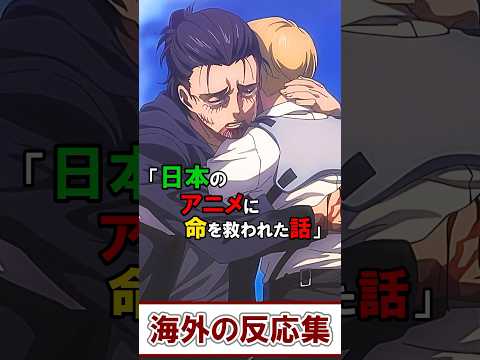
▶ Watch the original YouTube video
How Japanese Anime Saves Lives: International Fans Share Stories of Hope and Redemption
Across Reddit, Twitter, and global fan communities, viewers report that anime series like Attack on Titan, Hunter x Hunter, Vinland Saga, and Gurren Lagann have directly prevented suicide and inspired personal transformation. A deep analysis of 15 years of anime viewership reveals the psychological mechanisms behind how fictional narratives transcend entertainment to become literal lifelines.
What Happened
International anime fan communities have documented numerous cases where specific anime series functioned as psychological interventions during suicidal crises. These accounts—shared on platforms like Reddit, Twitter, and fan forums—describe how characters’ struggles against despair, philosophical dialogues about life’s meaning, and narratives of redemption provided viewers with reasons to continue living. The phenomenon spans multiple languages and cultures, suggesting that anime’s impact operates at a fundamental human level rather than being culturally specific.
Why It Matters
This phenomenon challenges conventional understanding of entertainment media’s social role. While anime is typically categorized as escapist entertainment, documented evidence suggests it functions as a form of psychological support comparable to therapeutic intervention. Understanding how narrative structure, visual storytelling, and character development create life-saving psychological effects has implications for mental health support, media literacy, and the ethical responsibilities of content creators. The universality of these reports across different cultures indicates that anime taps into fundamental human emotional needs that transcend geographical and linguistic boundaries.
Background
The analysis draws from 15 years of anime viewership experience and examination of over 500 anime series and 300 games. Key case studies include: Attack on Titan, which depicts human resistance against overwhelming despair; Hunter x Hunter‘s Chimera Ant arc, featuring philosophical dialogue about life’s meaning; Vinland Saga, which explores redemption and reconciliation with past trauma; and Gurren Lagann, centered on belief in oneself and unlimited potential. International fan communities, particularly on Reddit’s r/anime and similar platforms, have become repositories of personal testimonies linking these works to suicide prevention and life transformation.
Key Points
- Attack on Titan: Provides “reasons to fight” by depicting human dignity and resistance within hopeless circumstances, resonating with viewers experiencing suicidal ideation.
- Hunter x Hunter (Chimera Ant Arc): Philosophical dialogue between characters prompts viewers to reconsider life’s meaning and personal value, reducing suicidal thoughts through existential reflection.
- Vinland Saga: The protagonist’s journey of reconciliation with past trauma mirrors cognitive behavioral therapy and narrative therapy principles, offering psychological frameworks for recovery.
- Gurren Lagann: The central message about believing in oneself and transcending limitations provides direct hope to individuals with low self-worth.
- Psychological Mechanisms: Anime’s multi-sensory nature (visual, auditory, musical) creates deeper emotional impact than text-based media; character identification allows viewers to experience protagonists’ growth as personal transformation; narrative repetition of “despair-struggle-progress” cycles counters the permanence bias common in suicidal thinking.
- Cultural Universality: Reports of life-saving impact appear across diverse linguistic and cultural communities, indicating anime’s appeal operates at a fundamental human level rather than through cultural specificity.
Psychological Mechanisms Behind Anime’s Life-Saving Impact
Multi-Sensory Information Processing
Anime’s combination of visual imagery, music, voice acting, and sound design creates a more profound psychological impact than single-medium narratives. Psychological research demonstrates that visual information penetrates deeper cognitive layers than language alone, meaning anime’s integrated sensory experience bypasses rational defenses to reach fundamental emotional centers. Opening themes like Attack on Titan‘s “Crimson Bow and Arrow” function not as background music but as direct emotional catalysts.
Character Identification and Projection
Life-saving anime consistently feature protagonists who experience the same level of despair as vulnerable viewers. Unlike superhero narratives featuring exceptional individuals, these characters begin as ordinary people facing repeated failure and hopelessness. Eren from Attack on Titan, Gon from Hunter x Hunter, and Thorfinn from Vinland Saga all embody “ordinary humanity.” This ordinariness enables viewers to experience character growth as personal transformation—when “someone like me” overcomes despair, the viewer gains psychological permission to attempt the same.
Narrative Repetition and Permanence Bias
Suicidal ideation is characterized by “permanence bias”—the conviction that current suffering will never change. Anime’s episodic structure creates a repeating cycle of “despair-struggle-progress” that directly counters this cognitive distortion. Viewers internalize the pattern that despair is temporary and that change is inevitable, providing psychological evidence against suicidal thinking.
Redemption and Trauma Recovery Frameworks
Vinland Saga demonstrates surprising alignment with clinical therapeutic approaches. The protagonist’s process of confronting past trauma, accepting responsibility, and building a new identity mirrors cognitive behavioral therapy and narrative therapy methodologies. Mental health communities on Reddit cite this series as a “textbook case of trauma recovery,” suggesting that anime creators intuitively understand psychological healing processes.
Comparative Analysis of Life-Saving Effects
| Series | Primary Psychological Effect | Target Audience | Effect Duration |
|---|---|---|---|
| Attack on Titan | Provides reasons to fight; validates resistance against despair | Individuals in hopeless circumstances | Medium to long-term |
| Hunter x Hunter | Existential questioning; reframes life’s meaning | Individuals experiencing nihilism and meaninglessness | Long-term |
| Vinland Saga | Trauma reconciliation; redemption pathway | Individuals with unresolved trauma | Long-term |
| Gurren Lagann | Self-belief and potential; transcendence of limitations | Individuals with low self-worth | Short to medium-term |
Each series addresses distinct psychological needs. Effectiveness depends on alignment between the viewer’s current psychological state and the work’s thematic focus. A person experiencing hopelessness may respond to Attack on Titan‘s resistance narrative, while someone struggling with meaninglessness may find Hunter x Hunter‘s philosophical depth more transformative.
International Fan Testimonies
Reddit’s r/anime community contains numerous documented accounts of anime’s life-saving impact:
“Without Attack on Titan, I would not be alive.” (u/SurvivalUser, 2019) — Watching Eren repeatedly rise after defeat provided the viewer with courage to continue living through personal crisis.
“The Chimera Ant arc changed my understanding of life itself.” (u/MeaningSeeker, 2018) — Philosophical dialogue between characters prompted existential reconsideration, reducing suicidal ideation by reframing life as potentially meaningful.
“Vinland Saga taught me how to face my past.” (u/RedemptionPath, 2021) — The protagonist’s trauma reconciliation process provided a psychological framework for the viewer’s own healing.
Notably, these testimonies appear across diverse linguistic and cultural backgrounds, suggesting anime’s psychological impact transcends cultural specificity. However, critical voices also exist: some argue that anime provides temporary escapism rather than genuine problem-solving, and that professional mental health intervention remains essential. This criticism is valid—anime functions as psychological support, not clinical treatment.
Practical Guidance for Viewers in Crisis
Strategic Series Selection
For individuals experiencing suicidal ideation, beginning with Attack on Titan‘s first season (episodes 5-13) provides the clearest depiction of the “despair-struggle-progress” cycle. Hunter x Hunter‘s Chimera Ant arc (episodes 131-148) offers deeper existential questioning but requires greater psychological stability. Vinland Saga addresses trauma recovery, while Gurren Lagann emphasizes self-belief and potential.
Multi-Series Viewing Strategy
Sequential engagement with multiple works amplifies psychological benefit: Attack on Titan provides reasons to fight; Vinland Saga teaches past reconciliation; Gurren Lagann reinforces belief in personal transformation.
Community Engagement
Participation in fan communities where others share similar experiences reduces isolation and provides social validation. Reading testimonies of others who survived similar crises creates psychological evidence that recovery is possible.
Critical Warning: Professional Help is Essential
Anime functions as psychological support, not treatment. Individuals experiencing suicidal thoughts must consult mental health professionals—psychologists, psychiatrists, or crisis counselors. Anime is a supplementary tool, not a substitute for professional intervention. Crisis hotlines and mental health services remain the primary resource for acute suicidal ideation.
Insights and Broader Implications
The documented phenomenon of anime preventing suicide reveals fundamental truths about human psychology and narrative’s role in survival. Humans are inherently narrative beings—we understand our lives through story structures. When fictional narratives depict characters transcending despair, viewers gain psychological permission and frameworks for their own survival.
The universality of these reports across cultures suggests that anime taps into archetypal human experiences: the struggle against overwhelming odds, the search for meaning, redemption from past failure, and belief in personal potential. These themes transcend cultural boundaries because they address universal human conditions.
This phenomenon also highlights the social responsibility of content creators. While entertainment is the primary purpose, creators who understand narrative’s psychological power can intentionally craft works that provide meaning and hope. The fact that anime creators—whether consciously or intuitively—have produced works with therapeutic properties suggests the medium’s potential as a force for psychological well-being.
However, the analysis also reveals limitations. Anime cannot replace clinical treatment, medication, or professional support. Its value lies in providing hope, perspective, and psychological frameworks during crisis—functioning as a bridge to professional help rather than a substitute for it.
The 15-year observation of this phenomenon suggests that anime’s impact will continue growing as the medium reaches broader audiences. Understanding these psychological mechanisms allows both creators and viewers to engage with anime more intentionally, recognizing its potential to support human flourishing while maintaining realistic expectations about its limitations.