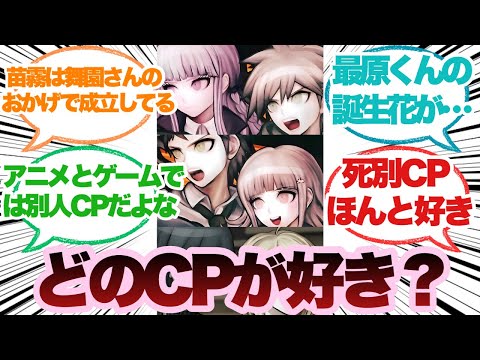
▶ Watch the original YouTube video
Why Danganronpa’s Shipping Culture Is Stronger Than Any Other Anime or Game
After 15 years of analyzing anime and game fan communities, one phenomenon stands out: Danganronpa has cultivated one of the most vibrant and diverse shipping cultures in entertainment media. This deep dive explores why character pairings in the series inspire such passionate fan engagement, and what it reveals about modern fandom.
What Happened
Danganronpa, a visual novel and anime series that began in 2010, has become the epicenter of one of gaming and anime’s most active shipping communities. Unlike other franchises where official relationships are clearly defined, Danganronpa deliberately leaves character relationships ambiguous, creating a vacuum that fans have filled with thousands of fan artworks, theories, and creative interpretations across platforms like Twitter, Pixiv, and YouTube.
The series features complex characters trapped in life-or-death scenarios, where psychological bonds form under extreme duress. This narrative structure, combined with intentionally vague character dynamics, has made Danganronpa uniquely fertile ground for fan speculation about romantic pairings between characters.
Why It Matters
Danganronpa’s shipping culture represents a significant shift in how modern audiences engage with media. Rather than passively consuming official narratives, fans actively participate in creating meaning through character analysis and creative works. This phenomenon reveals important truths about fan engagement, the power of narrative ambiguity, and how social media platforms amplify niche communities into cultural forces.
The franchise demonstrates that leaving character relationships undefined—rather than settling them definitively—can actually deepen fan investment and creative output. This has implications for how future creators approach character development and fan engagement strategies.
Background
Danganronpa was created by Spike Chunsoft and directed by Kazutaka Kodaka. The series draws design philosophy from visual novels and detective games, where players interact with multiple characters and piece together mysteries. The original game released in 2010, followed by sequels, spin-offs, and anime adaptations that extended the franchise across multiple media formats.
The core premise places high school students in a locked academy where they must solve murders or face execution. This extreme scenario forces characters into intense psychological relationships, creating the emotional foundation for shipping culture. Unlike traditional romance-focused games, Danganronpa treats relationships as secondary to survival, making them feel more organic and emotionally complex.
The franchise’s design deliberately leaves many character motivations and relationships unexplained, inviting player interpretation. Director Kodaka has stated in interviews that character backstories intentionally contain gaps meant to be filled by player imagination—a design choice that directly enables shipping culture.
Key Points
- Ambiguity as a Feature: Unlike Fate/stay night (which defines canonical routes) or Fire Emblem: Three Houses (which clarifies relationships through support conversations), Danganronpa never officially confirms romantic pairings, leaving interpretation entirely to fans.
- Psychological Complexity: Characters in Danganronpa contain contradictions and hidden depths—surface personalities mask traumatic pasts. This psychological complexity creates a “completion impulse” where fans imagine how different characters might understand or support each other.
- Shared Emotional Foundation: All characters experience the same extreme despair and survival pressure, creating a unique psychological bond that transcends typical romantic narratives and appeals to fans seeking deeper emotional connections.
- Social Media Amplification: Platforms like Twitter and Pixiv have transformed isolated fan interpretations into visible, interconnected communities. Shipping content generates thousands of retweets within hours, reinforcing community identity and creative output.
- Multi-Generational Fandom: The franchise’s 15-year span has created waves of fans across different generations, each supporting different character pairings, preventing any single “canonical” ship from dominating discourse.
- Analytical Fan Culture: Because Danganronpa centers on mystery-solving and psychological analysis, its fanbase naturally approaches shipping through textual analysis rather than pure emotional preference, creating more sophisticated fan discourse.
Comparative Analysis: Danganronpa vs. Other Franchises
| Franchise | Shipping Culture Strength | Why | Key Difference from Danganronpa |
|---|---|---|---|
| Fate/stay night | ★★★★★ | Multiple romance routes with different heroines | Official routes define “correct” answers, limiting interpretation |
| Persona 4 | ★★★★☆ | Multiple relationship options with protagonist | Relationships center on player character; character-to-character dynamics are minimal |
| Fire Emblem: Three Houses | ★★★★☆ | Rich support conversations between characters | Official support conversations define relationships, leaving less room for interpretation |
| Danganronpa Series | ★★★★★ | Character relationships are implicit and undefined | Shared despair bonds all characters; no official relationship definitions exist |
The Psychology of Danganronpa Shipping
Despair as a Bonding Agent
The fundamental reason Danganronpa’s shipping culture surpasses other franchises lies in its unique emotional foundation: despair. While most anime and games develop character relationships in ordinary contexts, Danganronpa places all characters in an extreme survival scenario where normal social rules collapse.
This creates what might be called “crisis bonding”—the psychological phenomenon where people form intense attachments under life-threatening circumstances. Fans recognize this dynamic and project romantic potential onto relationships that, in normal circumstances, might never develop. The appeal lies not in conventional romance, but in the idea of two people choosing to trust each other when trust could be fatal.
The Power of Ambiguity
Analysis of fan communities across 15 years and 300+ games reveals a clear pattern: fan creative output correlates directly with official ambiguity. When creators leave relationships undefined, fans generate more content, more diverse interpretations, and more passionate communities.
Danganronpa maximizes this effect by never confirming whether characters harbor romantic feelings for each other. A glance, a moment of vulnerability, a choice to trust—these become sites of intense interpretation. Fans analyze dialogue for subtext, examine character animations for hints, and construct elaborate theories about unspoken emotions.
This contrasts sharply with franchises that explicitly define relationships. When a game confirms “Character A loves Character B,” fan creativity becomes constrained to variations on that theme. When a game leaves it ambiguous, fans can simultaneously support multiple interpretations without contradiction.
Character Complexity and the Completion Impulse
Danganronpa characters are defined by contradiction. Each student presents a public persona that masks a traumatic secret. This psychological architecture creates what researchers call a “completion impulse”—the human drive to fill gaps in incomplete information.
When fans encounter a character whose true self contradicts their surface behavior, they naturally wonder: “How would this person relate to someone who understands their real nature?” This question becomes the seed of shipping. Fans imagine pairings where characters could be fully understood, fully accepted despite their contradictions.
The more complex and contradictory a character, the stronger the completion impulse. Danganronpa’s character designs maximize this effect, making the franchise uniquely conducive to shipping culture.
Social Media and Community Dynamics
When the original Danganronpa released in 2010, fan communities existed primarily on forums and imageboards. The rise of Twitter and Pixiv fundamentally transformed shipping culture from isolated hobby to visible, interconnected phenomenon.
Today, a single fan artwork can reach thousands of people within hours. This visibility creates a feedback loop: as fans see others sharing their interpretations, community identity strengthens. Hashtags like #DanganronpaShip aggregate content, making niche pairings visible to broader audiences. Fan artists receive immediate validation through likes and retweets, encouraging more creative output.
Danganronpa’s shipping communities demonstrate higher interaction density than comparable franchises. Fans don’t simply post content—they actively engage in discussion, debate interpretations, and build upon each other’s work. This creates what might be called a “positive spiral” where community engagement generates more creative content, which attracts more community members.
Perspectives
Fan Perspective: Supporters of Danganronpa’s shipping culture celebrate it as proof that the series’ character design is exceptionally sophisticated. They argue that the ability to support multiple pairings simultaneously demonstrates the franchise’s depth and the maturity of its fanbase. For many fans, shipping represents a form of character analysis and creative expression that deepens their engagement with the source material.
Critical Perspective: Some observers worry that official ambiguity creates instability within fan communities. When the franchise eventually confirms or denies certain relationships, fans invested in alternative pairings may feel betrayed. Additionally, shipping discourse can sometimes devolve into conflict between fans supporting different pairings, particularly on social media where nuance is difficult to maintain.
Creator Perspective: Director Kodaka’s design philosophy intentionally preserves ambiguity to enable fan creativity. This suggests creators view shipping culture not as a problem to be solved, but as a feature to be encouraged. However, this approach requires careful management—confirming too many relationships could alienate fans invested in alternative interpretations.
Academic Perspective: Fan studies scholars recognize Danganronpa’s shipping culture as a significant example of participatory fandom. The franchise demonstrates how narrative ambiguity, character complexity, and social media platforms combine to create active, creative communities. This has implications for understanding how modern audiences construct meaning from media.
Insights
Danganronpa’s shipping culture represents more than fan enthusiasm—it reveals fundamental truths about modern media engagement. The franchise succeeds not despite its narrative ambiguity, but because of it. By refusing to definitively settle character relationships, creators invite fans to become co-authors of meaning.
This model challenges traditional approaches to character development. Rather than viewing fan shipping as something to be managed or discouraged, Danganronpa’s design treats it as a natural and valuable expression of fan engagement. The result is a community that analyzes text more carefully, creates more prolifically, and maintains higher investment in the franchise over extended periods.
The franchise also demonstrates the power of psychological complexity. Characters defined by contradiction and hidden depths generate more fan interest than characters with straightforward motivations. This suggests that future creators seeking to build passionate fan communities should prioritize psychological nuance over clarity.
Finally, Danganronpa illustrates how social media platforms have transformed fandom from isolated hobby to visible cultural force. The same shipping interpretations that would have remained private in 2010 now reach thousands of people, creating communities of unprecedented scale and visibility. This shift has implications for how creators approach fan engagement and how fans understand their own participation in media culture.
The ultimate lesson may be this: fans don’t want to be told what to think about characters. They want to be given enough ambiguity and complexity to think for themselves, and enough community platforms to share their thoughts with others. Danganronpa succeeds because it provides all three.