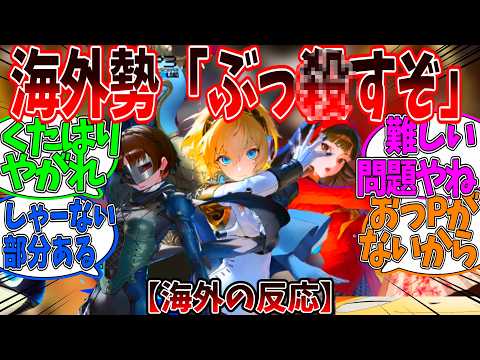
▶ Watch the original YouTube video
How Global Players Reacted to NIKKE’s Persona Collaboration and Its Bold Japanese Expression
The Persona collaboration in Goddess of Victory: NIKKE sparked significant international attention when a particular Japanese phrase resonated strongly with overseas players. This phenomenon reveals how global gaming communities increasingly value cultural authenticity and original language expressions over complete localization.
What Happened
During NIKKE’s Persona collaboration event, a specific Japanese expression used by a character generated unexpected buzz among international players. The phrase, which translates roughly to “I’ll crush you,” became a focal point of discussion across social media platforms including Reddit and Twitter. Rather than dismissing the direct Japanese phrasing, overseas players engaged deeply with the expression, discussing its nuances and comparing it to English translations. This reaction highlighted a broader shift in how global gaming audiences consume and appreciate Japanese cultural content.
Why It Matters
This event demonstrates a fundamental transformation in the global gaming industry. For decades, the standard approach to international game releases emphasized complete localization and cultural adaptation. However, NIKKE’s Persona collaboration reveals that modern international audiences increasingly value cultural authenticity and original expressions. This trend has significant implications for how game developers approach multilingual releases, suggesting that preserving original cultural elements can enhance rather than hinder global appeal. The phenomenon also indicates that overseas players now possess sufficient familiarity with Japanese culture to appreciate and engage with nuanced language expressions.
Background
NIKKE is a mobile game developed by South Korean studio Shift Up that has strategically positioned itself within Japanese anime and gaming culture. The Persona series, developed by Atlus, is a cornerstone of Japanese JRPG culture known for its distinctive character dialogue and individual personality expressions. The collaboration between these two properties represents a convergence of Japanese gaming traditions with a globally-distributed title. Over the past 15 years, the gaming industry has witnessed increasing international interest in Japanese cultural expressions, particularly following the global success of titles like Fire Emblem: Three Houses (2019) and Animal Crossing: New Horizons (2020).
Key Points
- A Japanese phrase from the Persona collaboration generated significant discussion among international NIKKE players
- Overseas audiences demonstrated appreciation for the original Japanese expression rather than requesting English-only alternatives
- The reaction reflects a broader trend of international players valuing cultural authenticity in games
- Character dialogue and language choices now function as key elements of character identity and brand differentiation
- Social media platforms amplified the discussion, with players actively seeking explanations of Japanese language nuances
- This collaboration exemplifies how multilingual games can leverage cultural diversity as a strategic advantage
Timeline
- 2016: Persona 5 releases, establishing distinctive character dialogue as a series hallmark
- 2019: Fire Emblem: Three Houses demonstrates strong international reception for games preserving Japanese cultural elements
- 2020: Animal Crossing: New Horizons achieves global success while maintaining Japanese cultural characteristics
- 2021-2022: Observation period for multilingual game localization strategies across titles like Genshin Impact
- 2024: NIKKE’s Persona collaboration launches, generating international discussion about Japanese language expressions
Perspectives
International players demonstrated multiple layers of engagement with the collaboration. Many praised the Japanese voice acting and original expressions, noting that the direct impact of the Japanese phrasing exceeded what English translations could convey. Reddit discussions revealed players actively seeking explanations of Japanese language nuances, indicating genuine cultural curiosity rather than superficial interest. Some players compared the Japanese and English versions, concluding that the original language version offered superior character expression and emotional impact.
Simultaneously, constructive criticism emerged regarding translation consistency. Some players questioned why certain expressions were preserved in Japanese while others received full localization, suggesting a desire for more systematic approaches to multilingual character representation. This feedback, while critical, demonstrates that international audiences now possess sufficient sophistication to evaluate localization strategies thoughtfully.
From a developer perspective, the strategy appears intentional. By preserving distinctive Japanese expressions, NIKKE’s creators maintained character authenticity while simultaneously generating organic social media engagement. This approach treats language not merely as a communication tool but as a cultural marker that enhances character identity and brand recognition.
Insights
The NIKKE Persona collaboration represents a significant inflection point in global gaming culture. The international gaming community has evolved from viewing Japanese cultural elements as obstacles requiring localization into viewing them as valuable assets enhancing player experience. This shift reflects broader changes in global media consumption, where audiences increasingly seek authentic cultural expressions rather than homogenized content.
The phenomenon also illustrates what might be termed “cultural signaling” within gaming communities. Players who engage with and share discussions about Japanese language expressions demonstrate cultural literacy and community participation. This social dimension amplifies the reach and impact of such collaborations beyond traditional marketing channels.
Looking forward, this trend suggests that game developers will increasingly prioritize cultural authenticity over complete localization. Rather than translating every expression into culturally neutral English, successful global releases may maintain original language elements while providing context and explanation for international audiences. This approach acknowledges that modern gaming communities are culturally diverse and sophisticated enough to appreciate multilingual, multicultural content.
The success of this collaboration also validates a strategic shift from “localization” to “cultural adaptation,” where developers preserve original cultural elements while ensuring international accessibility. This model appears particularly effective for properties with established fanbases, such as Persona, where character expression and cultural authenticity are central to the franchise’s identity.