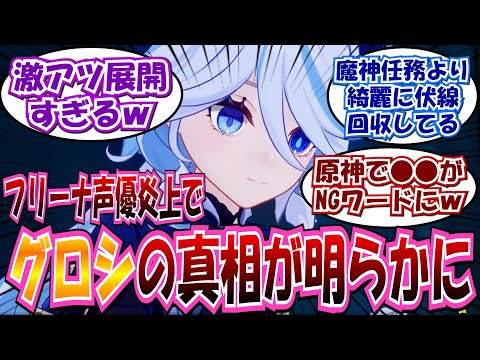
▶ Watch the original YouTube video
Genshin Impact Voice Actor Scandal and Furina’s Story: How Live Service Games Handle Creative Crises
A voice actor controversy surrounding Genshin Impact’s character Furina has sparked widespread debate about how live service games balance creative integrity with social responsibility. Unlike traditional anime productions, live service games like Genshin Impact face unique challenges when voice actor scandals intersect with ongoing story development, raising questions about whether narrative solutions can resolve real-world controversies.
What Happened
Voice actress Inori Minase faced a public controversy that raised questions about the future of her character Furina in Genshin Impact. The incident triggered speculation among fans and industry observers about whether the character’s storyline—particularly an upcoming plot development called “Grosio’s Truth”—might be creatively altered or reimagined as a response to the scandal. Unlike traditional anime where voice actor changes don’t affect already-aired episodes, Genshin Impact’s live service model means character stories continue to develop, creating a direct intersection between real-world controversies and ongoing narrative development.
Why It Matters
This situation represents a pivotal moment for the gaming industry. It demonstrates how modern live service games operate differently from traditional media, where production timelines are fixed. In Genshin Impact, character narratives are still being written, giving developers the unprecedented ability to respond creatively to external pressures. The way HoYoverse (the game’s developer) handles this situation will set a precedent for how the industry addresses similar conflicts between voice actor controversies and character continuity. The incident also highlights a broader tension in contemporary entertainment: the relationship between creative work and the personal circumstances of those who bring characters to life.
Background
Furina is a prominent character in Genshin Impact, introduced in the Fontaine region storyline. Her character design emphasizes duality—she maintains a public persona as the “Archon’s representative” while harboring hidden depths and secrets. This narrative structure mirrors similar character archetypes found in games like Persona 5, where characters present one face to the world while concealing their true nature.
The voice actor controversy emerged in 2023, coinciding with ongoing story developments in the game. Genshin Impact’s narrative structure is notably intricate, with plot threads woven across multiple character storylines and main scenario chapters. The upcoming “Grosio’s Truth” storyline—which appears designed to reveal hidden aspects of Furina’s character—has taken on new significance in light of the controversy.
Live service games like Genshin Impact differ fundamentally from completed media like films or traditionally-aired anime. Rather than being finished products, they are ongoing creative works that evolve over months and years. This structure creates both opportunities and challenges when real-world events intersect with fictional narratives.
Key Points
- Voice actor controversies in live service games have direct implications for ongoing story development, unlike traditional anime where past episodes remain unchanged
- Furina’s character is structured around duality and hidden truths, making narrative-based solutions creatively feasible
- The gaming industry increasingly employs “creative solutions” to address external pressures, rather than simple voice actor replacements
- Fan communities are divided between those who believe creative work should be separate from voice actor issues and those who think character changes are appropriate responses
- The “Grosio’s Truth” storyline may represent an opportunity for developers to address the controversy through narrative evolution rather than character deletion
- This situation reflects broader industry trends toward sophisticated storytelling that can accommodate real-world complications
How Live Service Games Differ from Traditional Media
Traditional anime productions face limited options when voice actor scandals occur. Already-aired episodes cannot be changed, and voice actor replacements only affect future episodes. In contrast, live service games like Genshin Impact operate on a fundamentally different model. Character stories are continuously developed through new quests, events, and main scenario chapters released over months and years.
This creates three primary options for developers facing voice actor controversies:
- Voice actor replacement: Replace the actor while keeping the character intact
- Character removal or major redesign: Significantly alter or remove the character from the game
- Narrative solution: Use story development to creatively address the situation, potentially transforming the character’s role or existence within the game world
The third option represents a uniquely powerful tool available to live service game developers. By leveraging ongoing narrative development, creators can address external pressures through storytelling rather than administrative decisions.
Character Design and Narrative Structure
Furina’s character design makes her particularly suited to narrative-based solutions. Her established duality—the contrast between her public role and hidden nature—aligns naturally with story developments that reveal deeper truths about her character. The “Grosio’s Truth” storyline appears designed to explore this duality, making it a logical narrative vehicle for addressing the broader controversy.
This approach mirrors successful character development in other games. In Persona 5, for example, characters like Morgana present cheerful exteriors while concealing complex motivations and hidden purposes. Similarly, Zelda: Tears of the Kingdom features characters with dual identities and hidden roles. Genshin Impact’s narrative structure follows this proven pattern, suggesting that creative solutions are narratively feasible.
Industry Precedents
The gaming industry has faced similar situations before. Fate/Grand Order (FGO) experienced casting-related controversies that resulted in event delays and scenario modifications. Unlike traditional anime, FGO’s live service model allowed developers to adjust storylines in response to real-world events. These adjustments were made carefully to preserve character integrity while addressing external concerns.
Attack on Titan faced voice actor changes, but as a traditionally-aired anime, these changes only affected future episodes. Already-completed episodes remained unchanged. This limitation does not apply to live service games, where developers retain creative flexibility across the entire narrative timeline.
Community Response and Perspectives
Fan reactions to the Furina controversy have been notably diverse. On social media platforms like Twitter, hashtags such as “#ProtectFurina” trended temporarily, reflecting strong community engagement. However, the community remains divided on the appropriate response.
Supportive perspectives: Many fans argue that creative work and voice actor casting should be evaluated separately. They contend that Furina’s value as a character extends beyond the voice performance, encompassing character design, narrative role, and story development. These fans express confidence that the game’s developers can maintain character integrity regardless of voice actor changes.
Critical perspectives: Other community members argue that voice actor controversies should result in character changes or removal. They believe that characters are inseparable from the performances that define them, and that maintaining a character associated with a controversial figure sends problematic messages.
Narrative-focused perspectives: A significant portion of the community has expressed enthusiasm for the “Grosio’s Truth” storyline itself, viewing it as an exciting narrative development independent of the controversy. YouTube comments frequently describe the upcoming story reveal as “incredibly compelling,” suggesting that fans are invested in the creative direction regardless of external circumstances.
The Broader Industry Implications
This situation reflects a maturing gaming industry learning to navigate complex intersections between creative work and social responsibility. Fifteen years ago, the industry’s response to voice actor controversies was limited to simple replacements or cancellations. Today, developers have access to sophisticated narrative tools that allow for creative problem-solving.
The key insight is that characters in modern games are composite creations. They consist of character design, narrative role, story development, voice performance, and player investment. When one element becomes problematic, developers can potentially address the issue through other elements rather than abandoning the entire character.
However, this approach carries risks. If developers’ creative solutions appear transparently motivated by external pressure rather than genuine narrative logic, player immersion and trust can be damaged. Successful implementation requires that narrative changes feel organic to the story rather than reactive to controversy.
Predictions for Future Development
Based on industry trends and Genshin Impact’s narrative structure, the most likely scenario involves creative evolution rather than character deletion. The “Grosio’s Truth” storyline appears positioned to reveal new dimensions of Furina’s character, potentially transforming her role within the game world. This approach would allow developers to address the controversy while maintaining narrative integrity.
Such a solution would represent a sophisticated response to a complex problem. Rather than choosing between character preservation and social responsibility, developers would use narrative development to achieve both objectives simultaneously.
Insights and Takeaways
This situation illuminates the fundamental differences between live service games and traditional media. It demonstrates that creative problems don’t always require administrative solutions. When developers retain narrative flexibility, they can address external pressures through storytelling itself.
The incident also reveals evolving fan expectations. Modern gaming communities increasingly expect developers to balance creative integrity with social responsibility. Fans demonstrate sophisticated understanding of how narrative, performance, and character design interact, and they expect developers to leverage this complexity rather than resort to simplistic solutions.
Ultimately, how HoYoverse handles this situation will serve as a case study for the entire industry. The approach taken will influence how other developers respond to similar controversies in the future. The outcome will demonstrate whether modern game development can successfully navigate the intersection of creative freedom and social accountability—a challenge that will only become more relevant as gaming continues to mature as a medium.
For players currently experiencing Genshin Impact, the recommendation is to engage with the “Grosio’s Truth” storyline as a narrative experience first and foremost. Regardless of external circumstances, the quality of the storytelling itself remains the primary measure of creative success. By focusing on narrative quality, players can appreciate the developers’ creative choices while maintaining perspective on the broader context.