▶ Watch the original YouTube video
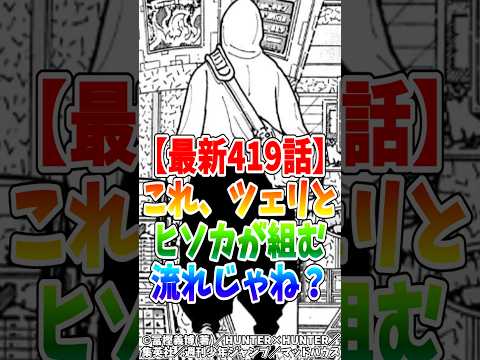
Hunter x Hunter Episode 419: Could Cheadle and Hisoka Really Team Up? Fan Theories Explained
Episode 419 of Hunter x Hunter has sparked intense debate among fans about a seemingly impossible scenario: a collaboration between Queen Cheadle and Hisoka Morow. This article examines the psychological profiles of both characters, analyzes narrative precedents from similar anime, and explores whether this unexpected alliance could actually occur within the story’s complex political framework.
- What Happened
- Why It Matters
- Background
- Key Points
- Character Psychology Analysis
- Collaboration Scenarios: Probability Analysis
- Comparative Analysis: Alliance Patterns in Similar Anime
- Fan Reactions and Community Response
- Narrative Structure and Author Intent
- Practical Viewing Recommendations
- Insights and Implications
What Happened
Episode 419 of Hunter x Hunter has generated significant online discussion regarding the potential collaboration between Queen Cheadle and Hisoka. The episode appears to set up circumstances where these two fundamentally opposed characters might find common ground. Cheadle, currently navigating the succession war while protecting her children, and Hisoka, deepening his conflict with the Phantom Troupe while exploring new objectives, could theoretically align against a shared threat.
Why It Matters
This potential alliance represents more than a simple plot twist. It signals a fundamental shift in how the succession war arc is structured. The collaboration would demonstrate character evolution—particularly for Hisoka, who has progressively moved from pure combat obsession toward interest in political maneuvering. For viewers invested in character psychology and narrative complexity, this development challenges established character dynamics and suggests the story is entering a new phase with unpredictable alliances.
Background
Queen Cheadle is characterized by rational decision-making and pragmatic alliance-building throughout the succession war. She operates as both a protective mother and a political strategist, willing to cooperate with various factions when it serves her interests. Hisoka, introduced as a combat-obsessed fighter in the Heavens Arena arc, has evolved significantly. His journey from seeking pure battles to engaging in political intrigue suggests he is capable of complex strategic thinking beyond simple violence.
The succession war itself is structured around multiple competing factions with overlapping interests. This environment naturally creates conditions where temporary alliances between unlikely parties become plausible. Historical precedent from similar narrative structures in anime suggests that such unexpected collaborations often serve as turning points in complex multi-faction conflicts.
Key Points
- Character Evolution: Hisoka has demonstrated clear progression from pure combat focus to engagement with political strategy and complex “games” beyond simple fighting.
- Shared Pragmatism: Both Cheadle and Hisoka prioritize their objectives above conventional morality, making cooperation theoretically possible if mutual benefits align.
- Common Enemy Potential: The Phantom Troupe and competing Kakin factions could create circumstances where both characters face shared threats.
- Narrative Structure: The succession war’s multi-faction design inherently supports unexpected alliances as a storytelling mechanism.
- Fan Reception: Online reactions split between “impossible” and “compelling,” indicating genuine narrative tension around this possibility.
- Author’s Pattern: Yoshihiro Togashi consistently employs relationship reversals and alliance shifts as core narrative tools.
Character Psychology Analysis
Cheadle’s Profile
Cheadle demonstrates consistent rationality in decision-making. She calculates outcomes based on protecting her children and maintaining her position, rather than acting from emotion. Throughout the succession war, she has established multiple alliances and shown willingness to cooperate with diverse parties. This pragmatism suggests she would consider collaboration with Hisoka if strategic circumstances demanded it.
Hisoka’s Evolution
Hisoka’s character arc reveals progressive sophistication. In the Heavens Arena arc, he sought pure combat. During the Yorknew arc, he developed interest in the Phantom Troupe as a collective entity. In the Chimera Ant arc, he demonstrated interest in “games” beyond physical fighting. In the succession war arc, he actively participates in political maneuvering. This trajectory indicates he has become capable of strategic thinking that extends beyond combat.
Collaboration Scenarios: Probability Analysis
Scenario 1: Direct Alliance (40% Probability)
Cheadle and Hisoka form an explicit cooperative relationship against a common enemy—likely a faction of the Phantom Troupe or rival Kakin forces. This scenario would represent clear character development and serve as a major narrative turning point. Similar patterns appear in other complex anime narratives where opposing forces unite against greater threats.
Scenario 2: Indirect Cooperation (35% Probability)
The two characters pursue independent actions that coincidentally serve mutual interests. They remain aware of each other but maintain separate agendas. Both work toward overlapping goals without formal alliance, creating tension through their parallel operations.
Scenario 3: Continued Opposition (25% Probability)
Cheadle and Hisoka remain adversarial throughout. However, even in this scenario, their relationship likely undergoes transformation. Complete stasis in character relationships is rare in narratively complex works like Hunter x Hunter.
Comparative Analysis: Alliance Patterns in Similar Anime
| Series | Collaborating Characters | Collaboration Reason | Narrative Impact |
|---|---|---|---|
| Attack on Titan | Eren vs. Armin | Opposition to Marley Empire | Story advances to final phase |
| Code Geass | Lelouch vs. Suzaku | Third-party threat response | Fundamental relationship transformation |
| Jujutsu Kaisen | Yuji vs. Megumi | Common enemy (curses) | Character relationship deepens |
These examples demonstrate a consistent pattern: unexpected alliances between opposed characters serve as structural turning points that fundamentally alter narrative trajectory. The succession war arc shares similar multi-faction complexity, suggesting comparable mechanisms could apply.
Fan Reactions and Community Response
Positive Reception
Supportive fans cite excitement about narrative unpredictability, anticipation of character development, and appreciation for complex political intrigue. Common responses include: “Impossible, but compelling,” “Hisoka has evolved beyond simple combat,” and “This reflects the succession war’s genuine complexity.” These reactions indicate fans recognize the psychological plausibility of the scenario.
Skeptical Reception
Critical fans emphasize character consistency concerns, questioning whether such collaboration contradicts established personalities. Some express doubt about information authenticity. These responses reflect investment in character integrity and narrative coherence.
Broader Impact
The discussion has prompted fans to revisit earlier episodes and reconsider character development trajectories. This engagement demonstrates how narrative possibilities generate deeper audience analysis and re-engagement with source material.
Narrative Structure and Author Intent
Yoshihiro Togashi’s storytelling consistently employs relationship reversals as core narrative devices. The succession war’s deliberate multi-faction structure creates conditions where unexpected alliances function as natural story progression rather than arbitrary plot devices. The complexity of the arc suggests Togashi intends to explore how competing interests intersect and create surprising alignments.
Hisoka’s character specifically serves as a narrative tool for unpredictability. His actions consistently subvert reader expectations, generating tension and engagement. A collaboration with Cheadle would exemplify this function while advancing character development.
Practical Viewing Recommendations
Reframe the Succession War Arc
Approach this arc not as simple binary opposition but as multi-faction competition where each party pursues distinct interests. This perspective reveals how unexpected cooperation becomes narratively logical rather than arbitrary.
Track Hisoka’s Evolution
Review key episodes across arcs to observe his progression: Heavens Arena (basic combat focus), Yorknew (collective interest), Chimera Ant (game-based thinking), and Succession War (political participation). This trajectory clarifies his capacity for complex strategic action.
Understand Cheadle’s Dual Role
Recognize that Cheadle operates simultaneously as queen and mother. Her actions emerge from tension between these roles. This framework makes her pragmatic cooperation with unlikely allies comprehensible.
Study Comparative Narratives
Revisit Attack on Titan’s final arc to observe how complex multi-faction narratives handle unexpected alliances. This provides context for understanding similar mechanisms in Hunter x Hunter.
Insights and Implications
The possibility of Cheadle and Hisoka collaboration reflects Hunter x Hunter’s fundamental commitment to psychological complexity over simplistic character archetypes. Whether this alliance actually occurs matters less than what its possibility reveals: the succession war operates as a genuinely complex political environment where character motivations transcend binary opposition.
Togashi has consistently demonstrated mastery of intricate multi-faction narratives. The Phantom Troupe’s internal divisions, the Chimera Ant arc’s competing objectives, and the succession war’s structural complexity all showcase his ability to manage sophisticated political storytelling. An unexpected Cheadle-Hisoka alliance would represent another example of this skill.
For viewers, this discussion opportunity highlights why Hunter x Hunter maintains engagement across years of serialization. The series rewards deep character analysis and encourages readers to reconsider established dynamics. The prospect of unlikely collaboration invites precisely this kind of sustained analytical engagement.
The succession war arc continues to demonstrate that in complex political environments, traditional enemy-ally binaries dissolve into networks of competing interests. Cheadle and Hisoka’s potential cooperation would exemplify this principle while advancing both characters toward new narrative phases.