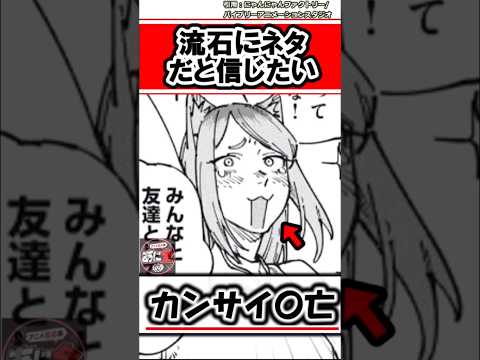
▶ Watch the original YouTube video
Yani Neko’s Shocking Character Death: How a Short-Form Anime Delivered Unexpected Emotional Impact
The short-form anime series “Yani Neko” has sparked widespread discussion across social media following the unexpected death of the character Kansai in episode 402mg. The sudden narrative turn has resonated deeply with viewers, demonstrating how limited runtime can amplify emotional storytelling through unpredictability and carefully crafted character development.
What Happened
In the 402mg episode of “Yani Neko,” the character Kansai dies unexpectedly, subverting viewer expectations and generating significant online discourse. The death occurs within the constraints of a short-form format, yet delivers emotional weight comparable to longer narrative works. The event has become a focal point for discussions about storytelling technique in contemporary anime, with viewers expressing surprise and emotional resonance across platforms including Twitter and YouTube.
Why It Matters
This narrative development highlights a significant trend in modern anime production: the strategic use of unpredictability to create lasting emotional impact within limited timeframes. The death of Kansai challenges conventional assumptions about short-form content, demonstrating that brevity need not compromise narrative depth. For the anime industry, this approach represents an evolution in how creators maximize viewer engagement through subverted expectations rather than extended exposition. The event also reflects broader audience preferences for content that defies predictability in an era saturated with formulaic storytelling.
Background
“Yani Neko” operates within the short-form anime format, a medium characterized by severe production constraints including limited budget and runtime. Despite these restrictions, the series has garnered attention for its emotional storytelling and character development. The character Kansai had been established throughout previous episodes, allowing viewers to develop investment in his narrative arc. The sudden death subverts the typical trajectory viewers might anticipate from a short-form comedy or slice-of-life series, transforming the work into something more thematically complex. This narrative choice aligns with recent industry trends where major anime productions have employed character death as a pivotal plot device—examples include “Charlotte,” “Attack on Titan,” and “Jujutsu Kaisen”—though rarely with such impact in the short-form space.
Key Points
- Unexpected narrative turn: Kansai’s death in episode 402mg occurs without foreshadowing, creating genuine shock value for viewers unfamiliar with spoilers
- Subverted expectations: The short-form format typically signals lighthearted content, making the serious narrative shift more impactful
- Character depth revealed through absence: Kansai’s death prompts viewers to recontextualize previous episodes, discovering previously unnoticed character details and motivations
- Social media amplification: Widespread discussion across Twitter, YouTube, and other platforms demonstrates the event’s cultural resonance
- Rewatch value: Viewers report that subsequent viewings reveal new meaning, as earlier scenes gain tragic undertones
- Production strategy: The narrative choice reflects deliberate creative decisions to maximize emotional impact within format constraints
Viewer Reactions
Online responses have been predominantly positive, with viewers expressing surprise and emotional resonance. Common comments include “I never expected Kansai to die” and “This short form hit harder than full-length series.” YouTube comments frequently note that rewatching reveals entirely new interpretations of earlier scenes. Some viewers have reported experiencing a sense of loss comparable to longer narrative works, despite the limited runtime. A minority of responses question whether the death feels abrupt, though critical analysis suggests this abruptness may be intentional—designed to mirror the unpredictability of real loss and prevent viewers from psychologically preparing for the event.
Narrative Analysis
The death of Kansai functions as more than a shock tactic; it represents a calculated narrative strategy. Within the constraints of short-form anime, character death serves as a final, indelible impression that lingers with viewers long after viewing concludes. Unlike extended narratives where character deaths are gradually processed through subsequent plot developments, the short-form format leaves death as the ultimate remaining image. This structural choice forces viewers to confront themes of impermanence and loss without the cushion of narrative resolution. The episode number “402mg” itself may carry symbolic weight, potentially referencing quantity or substance in ways that reward deeper analysis. The narrative structure encourages viewers to reconsider earlier episodes as containing subtle foreshadowing, transforming casual viewing into archaeological textual analysis.
Industry Context
The success of this narrative approach reflects broader trends in contemporary anime production. Over the past five years, unpredictability has become a primary tool for generating social media engagement and cultural conversation. Works including “Attack on Titan: The Final Season,” “Chainsaw Man,” and “Jujutsu Kaisen” have all leveraged unexpected character deaths and plot developments to maintain audience investment and online discourse. For short-form content specifically, the challenge of creating memorable experiences within severe time constraints has driven creators toward increasingly bold narrative choices. The production environment for short-form anime demands maximum emotional efficiency—every scene must serve multiple purposes, and character development must occur through implication rather than exposition.
Comparative Analysis
Kansai’s death parallels narrative techniques employed in acclaimed anime works. “Charlotte” similarly employs sudden character death as a turning point that recontextualizes the entire narrative. “Puella Magi Madoka Magica” subverts genre expectations through unexpected character fates. “Angel Beats!” explores death and its meaning as central thematic material. However, “Yani Neko” distinguishes itself by achieving comparable emotional impact within the constraints of short-form storytelling, a feat rarely accomplished in the medium. The efficiency of this narrative delivery—maximum emotional resonance within minimal runtime—represents an evolution in anime storytelling technique.
Implications for Short-Form Storytelling
This narrative development demonstrates that short-form content need not sacrifice emotional depth or thematic complexity. The success of Kansai’s death suggests that viewers increasingly value unpredictability and emotional authenticity over comfort and predictability. For creators, the lesson is clear: format constraints can be transformed into advantages when narrative choices prioritize impact over exposition. The rewatch value of “Yani Neko” indicates that audiences appreciate content that rewards deeper engagement and multiple viewings. This approach challenges the assumption that short-form content serves primarily as casual entertainment, instead positioning it as capable of delivering profound artistic experiences. The episode’s success may influence future short-form anime production, encouraging creators to pursue thematically ambitious narratives within their format constraints.
Looking Forward
The immediate question facing viewers and creators alike concerns the narrative’s continuation: Will subsequent episodes explore the reasons behind Kansai’s death, or does the death stand as the final statement? If the former, “Yani Neko” may evolve into a meditation on grief and loss. If the latter, the work becomes a statement on life’s impermanence and the arbitrary nature of existence. Either direction would represent sophisticated thematic territory for short-form anime. The production team’s next moves will determine whether this moment represents a singular shocking event or the foundation for deeper narrative exploration. Regardless, Kansai’s death has already secured its place as a significant moment in contemporary short-form anime, demonstrating the medium’s capacity for genuine emotional resonance.
Conclusion
“Yani Neko’s” treatment of Kansai’s death represents a high point in short-form anime storytelling. By leveraging unpredictability, subverted expectations, and the inherent power of narrative finality within a limited format, the series has created an experience that resonates beyond its runtime. The widespread viewer response demonstrates that audiences hunger for content that challenges their assumptions and delivers genuine emotional impact. For anime enthusiasts and narrative enthusiasts generally, “Yani Neko” exemplifies how creative constraints can drive artistic innovation, transforming limitations into opportunities for maximum emotional efficiency. The episode stands as a reminder that profound storytelling transcends format, and that sometimes the most powerful narratives are those that refuse to follow established conventions.