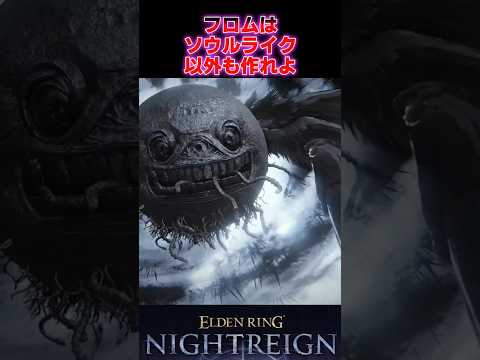
▶ Watch the original YouTube video
After 15 years following FromSoftware’s catalog, a dedicated fan analyzes the contradictory demands of the gaming community regarding the studio’s future direction. The analysis reveals that players simultaneously want FromSoftware to continue the Souls-like formula while also exploring entirely new genres—a psychological paradox rooted in both trust and attachment to beloved franchises.
What Happened
A YouTube video sparked discussion about FromSoftware’s creative direction, with viewers expressing conflicting opinions: some demand new Souls-like entries, others want genre experimentation, and many want both. This contradiction reflects a deeper tension in how fans perceive the studio’s identity and potential. The release of Armored Core VI in 2023 further complicated these expectations by demonstrating FromSoftware’s capability to excel outside the Souls-like framework.
Why It Matters
FromSoftware has become one of gaming’s most influential studios, defining the “Souls-like” genre while simultaneously proving it can master entirely different systems. Understanding fan expectations reveals how creative studios navigate the burden of success and genre-defining status. The studio’s next project will likely shape industry trends and player expectations for years to come. Additionally, this analysis exposes the psychological mechanisms behind fan communities and how they reconcile desire for innovation with attachment to established franchises.
Background
FromSoftware’s journey began with Demon’s Souls in 2009, which revolutionized action RPG design. Over 15 years, the studio released Dark Souls (three entries), Bloodborne, Sekiro: Shadows Die Twice, Elden Ring, and Armored Core VI. Each title either refined the Souls-like formula or ventured into new territory. Sekiro introduced parry-based combat and faster-paced action. Armored Core VI returned to a dormant mecha series with a completely different gameplay structure emphasizing mobility, customization, and multiplayer elements. This track record has created a fanbase with diverse and sometimes contradictory expectations about the studio’s future direction.
Key Points
- Three distinct fan categories exist: approximately 40% want continued Souls-like entries, 35% demand genre diversification, and 25% want both simultaneously—a mathematically impossible expectation without studio expansion.
- User expectations are fundamentally contradictory: After Dark Souls III, fans demanded new worlds; when Sekiro arrived, they immediately requested Dark Souls sequels, revealing a psychological attachment that contradicts stated desires.
- FromSoftware’s true talent transcends genre: The studio’s core strength lies in responsive player feedback systems and mechanical consistency, not Souls-like mechanics specifically, as demonstrated by Armored Core VI’s success.
- Armored Core VI revealed hidden potential: The game proved FromSoftware excels at high-speed 3D combat, weapon customization, and multiplayer design—capabilities previously underutilized in Souls-like titles.
- Studio philosophy prioritizes quality over scale: FromSoftware deliberately maintains a small, focused team and rejects expansion, making simultaneous multi-project development incompatible with the studio’s stated strategy.
- World-building expansion through spin-offs is emerging: Projects like Nightrain suggest FromSoftware may connect multiple game worlds, creating a larger narrative universe while maintaining individual game independence.
Timeline
- 2009: Demon’s Souls launches on PlayStation 3, establishing the Souls-like formula.
- 2011-2016: Dark Souls trilogy released, cementing FromSoftware’s dominance in action RPGs.
- 2015: Dark Souls III released; fan community expresses desire for new worlds rather than sequels.
- 2019: Sekiro: Shadows Die Twice launches with completely new combat system; fans immediately request Dark Souls sequels despite praising Sekiro.
- 2023: Armored Core VI releases, demonstrating FromSoftware’s mastery of non-Souls-like design.
- 2024: Nightrain announced as Elden Ring spin-off, suggesting potential world-building connections across FromSoftware titles.
Perspectives
The Traditionalist View: Approximately 40% of fans believe FromSoftware’s greatest achievement is the Souls-like formula and that the studio should continue refining this genre. They view Sekiro and Armored Core VI as “good but not true FromSoftware,” valuing the specific combination of stamina management, dodge-rolling, and methodical boss design that defined Dark Souls.
The Diversification Advocates: About 35% of players argue that FromSoftware’s talent is universal rather than genre-specific. They point to Armored Core VI’s quality as evidence that the studio can create excellence across multiple genres and want to see FromSoftware explore entirely new territory.
The Maximalist Position: Roughly 25% of fans want everything—continued Souls-like entries alongside new genre experiments. This perspective assumes FromSoftware’s talent is infinite and that studio expansion would enable simultaneous development of multiple projects. However, this contradicts FromSoftware’s stated philosophy of maintaining small team size and quality-focused development.
The Industry Reality: FromSoftware deliberately maintains a small, focused organizational structure and has explicitly avoided expansion. This strategic choice directly conflicts with fan expectations for simultaneous multi-project development, creating an unbridgeable gap between what players want and what the studio’s business model permits.
Insights
The contradictions in fan expectations reveal a fundamental psychological pattern: communities attach to both the creator’s identity and the specific works that identity produced. Fans simultaneously want FromSoftware to remain true to its Souls-like legacy while transcending it—a paradox that reflects deep trust in the studio’s creative vision combined with fear of losing beloved franchises.
Armored Core VI’s critical success demonstrates that FromSoftware’s core competency—responsive mechanical systems and rigorous difficulty design—transcends genre boundaries. The studio’s true talent lies not in Souls-like mechanics but in creating systems where player input receives immediate, consistent feedback. This insight suggests FromSoftware’s future should prioritize mechanical innovation over genre loyalty.
The emerging concept of “world-building connections” through spin-offs like Nightrain offers a potential solution to fan contradictions. Rather than choosing between Souls-like sequels and new genres, FromSoftware could expand its narrative universe horizontally, creating interconnected worlds that satisfy both traditionalists and diversification advocates without requiring unsustainable studio expansion.
Ultimately, FromSoftware’s greatest asset may be its unpredictability. Every major release—Sekiro’s parry system, Elden Ring’s open world, Armored Core VI’s return—surprised players who thought they understood the studio’s direction. This track record suggests the studio’s next project should prioritize creative authenticity over fan expectations. As one commenter noted: “FromSoftware should make what it wants, not what others tell it to make.” This paradoxically represents the most sophisticated form of fan trust—asking the studio to ignore fan demands in pursuit of excellence.