▶ Watch the original YouTube video
How Detective Precure’s Ruruka and Kurea Became Anime’s Most Unlikely Villain Characters
Fans of the latest Precure series are reinterpreting the character Ruruka and Kurea as a villain organization executive, defying the franchise’s traditional heroic archetypes. This creative fan phenomenon reveals how modern anime increasingly embraces complex, morally ambiguous characters that invite unconventional interpretations.
What Happened
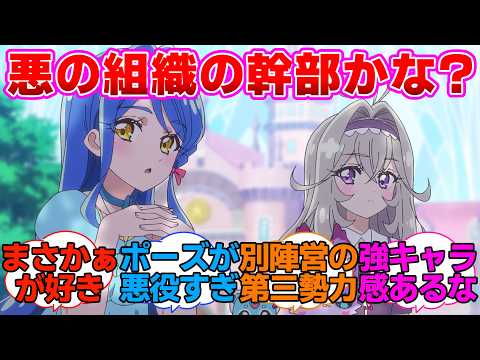
In the latest Precure installment, “Detective Precure,” the character Ruruka and Kurea has become the subject of widespread fan reinterpretation across social media platforms. Despite being officially positioned as a Precure ally, fan communities—particularly on Twitter and YouTube—have begun treating this character as if she were an executive of an evil organization. The phenomenon has spawned numerous reaction videos and fan discussions that emphasize her “villain-like” demeanor, speech patterns, and expressions, creating a stark contrast with the character’s canonical role.
Why It Matters
This fan-driven reinterpretation reflects a significant shift in how anime audiences engage with character complexity. Rather than accepting official character designations at face value, modern fandom actively reinterprets characters through creative lenses, extending the narrative life of series and deepening fan engagement. This phenomenon demonstrates that the Precure franchise—and anime more broadly—has evolved to accommodate morally ambiguous and complex characters that transcend traditional hero-villain binaries. Understanding this trend reveals how contemporary anime production deliberately introduces characters that challenge conventional archetypes, inviting audiences to construct their own interpretations.
Background
The Precure franchise has undergone significant evolution since its 2004 debut. Early series featured straightforward character archetypes: bright, cheerful, and pure-hearted heroines with clearly defined moral alignments. However, beginning in the early 2010s, the franchise began deliberately introducing characters with complex psychological profiles, moral ambiguity, and personality traits that deviate from traditional Precure conventions.
This shift accelerated throughout the 2010s. Characters like Cure Sunshine from “Heartcatch Precure!” and Cure Beauty from “Smile Precure!” exhibited personality traits—coolness, emotional distance, calculated behavior—that invited fan reinterpretation as “villain-like” figures. The franchise’s creative direction increasingly embraced characters with non-traditional backgrounds, including those from problematic family situations, non-human origins, and emotionally detached demeanors.
Ruruka and Kurea represents the culmination of this trend. Despite official designation as a Precure ally, the character’s dialogue, expressions, and behavioral patterns diverge so significantly from franchise conventions that fans have creatively reframed her as an antagonistic force.
Key Points
- Ruruka and Kurea is officially a Precure ally but exhibits behavior and expressions reminiscent of a villain organization executive
- Fan communities have collectively reinterpreted the character through creative fan content, emphasizing her “villain” characteristics
- This phenomenon represents a broader trend in anime fandom where audiences actively reinterpret characters beyond their canonical designations
- The Precure franchise has deliberately shifted toward complex, morally ambiguous character designs over the past 15 years
- Similar “villain reinterpretations” occur across multiple anime franchises, including “Puella Magi Madoka Magica” and “Attack on Titan”
- Fan reinterpretation serves as a creative response to character complexity, extending narrative engagement and enriching franchise culture
Timeline
- 2004: Precure franchise launches with straightforward heroic character archetypes
- 2009: “Fresh Precure!” airs; franchise begins subtle shifts toward character complexity
- 2012: “Smile Precure!” era; fan communities begin playfully discussing whether Cure Beauty might be a “villain”
- 2015: “Go! Princess Precure” introduces Cure Mermaid; fan communities widely reinterpret her as a “cold-hearted villain” in creative works
- 2019–2021: Precure introduces non-human characters and characters with unconventional backgrounds; trend toward complexity accelerates
- Present: “Detective Precure” features Ruruka and Kurea; fan reinterpretation reaches peak visibility across social media
Perspectives
Fan Interpretation Perspective: From the fan community’s viewpoint, Ruruka and Kurea’s character design—featuring cool demeanor, calculated expressions, and emotional distance—naturally invites villain-like reinterpretation. This creative reframing is not a misunderstanding but rather an engaged, imaginative response to character complexity. Fans argue that this reinterpretation actually enhances character appreciation by exploring psychological depth beyond official narratives.
Official Canon Perspective: The Precure production team has officially designated Ruruka and Kurea as a Precure ally. From this standpoint, fan reinterpretation represents creative misreading of canonical material. However, the deliberate introduction of complex character traits suggests the production team anticipated and potentially welcomed such creative audience engagement.
Psychological Perspective: This phenomenon reflects what psychologists term “complexity preference”—the human tendency to find ambiguous, multifaceted subjects more compelling than clearly defined ones. Audiences actively construct interpretations that satisfy their psychological need for narrative complexity, particularly when official material provides ambiguous character signals.
Industry Evolution Perspective: The shift toward complex characters represents deliberate franchise maturation. As the Precure audience has aged alongside the franchise, production teams have responded by introducing characters that appeal to multiple demographic layers, enabling both child and adult audiences to find engagement through different interpretive frameworks.
Insights
The Ruruka and Kurea phenomenon illuminates fundamental changes in contemporary anime production and fandom culture. Rather than presenting characters with unambiguous moral alignments, modern anime increasingly embraces psychological complexity and moral ambiguity. This shift reflects both audience sophistication and deliberate creative strategy.
The franchise’s 20-year longevity partly results from this dynamic between official narrative and fan creativity. When production teams introduce characters with contradictory traits—simultaneously heroic and villain-like—they create interpretive space that audiences actively fill through creative reinterpretation. This collaborative meaning-making process extends narrative engagement far beyond canonical material.
The widespread nature of this phenomenon across multiple franchises—from “Madoka Magica” to “Attack on Titan”—suggests this represents not isolated fandom behavior but rather a fundamental shift in how contemporary audiences engage with character-driven narratives. Characters exhibiting cool, calculating, emotionally distant traits consistently invite villain reinterpretation, indicating that audiences recognize these traits as signaling moral complexity rather than straightforward heroism.
For the Precure franchise specifically, this evolution signals maturation without abandonment of core identity. The series maintains its fundamental structure while accommodating increasingly sophisticated character psychology, enabling the franchise to retain longtime fans while remaining accessible to new audiences. The creative tension between official designation and fan reinterpretation has become a feature rather than a bug—a mechanism through which franchise culture deepens and extends.