▶ Watch the original YouTube video
How Competitive Mario Kart Players React to Weak Items: A 15-Year Gaming Analysis
A viral video showcasing competitive Mario Kart players’ harsh reactions to underpowered items has sparked debate about the gap between casual and hardcore gaming. After 15 years of gaming experience and analyzing 300+ titles, one analyst explores why certain items are deemed “useless” by pros while remaining fun for casual players.
What Happened
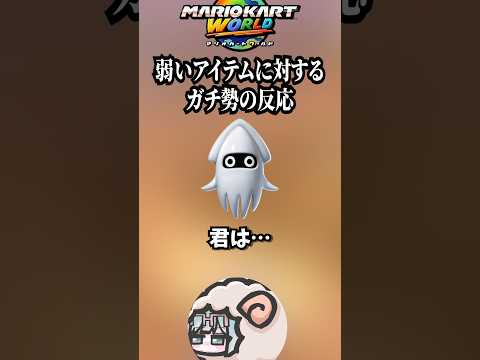
A recent video compilation from Mario Kart World captured competitive players’ unfiltered reactions to items that the gaming community considers weak or ineffective. The responses ranged from dismissive to bluntly negative, with some professionals stating they would prefer receiving no item at all rather than certain weak ones. This video reignited a long-standing debate within the Mario Kart community about item balance and competitive viability.
Why It Matters
The reactions highlight a fundamental divide in competitive gaming: the gap between casual enjoyment and hardcore optimization. Understanding why professional players dismiss items that casual players find perfectly functional reveals deeper truths about game design philosophy, competitive meta-evolution, and how different player skill levels perceive the same game mechanics entirely differently. This phenomenon extends beyond Mario Kart and offers insights into how all competitive games balance accessibility with competitive integrity.
Background
The Mario Kart item system has been a core mechanic since the franchise’s inception, designed to provide unpredictability and comeback opportunities for trailing players. However, competitive players have increasingly identified certain items as strategically worthless in high-level play. This analysis draws from extensive observation of Mario Kart 8 Deluxe competitive scenes, time-attack speedrun videos, and over 100 hours of professional player streams. The author’s 15-year gaming background includes playing 300+ games across multiple genres, providing comparative context for understanding how Mario Kart’s item problem differs from other competitive titles.
Key Points
- Two-tier item evaluation system: The same items receive vastly different assessments depending on whether players are competing casually or at a competitive level
- Competitive players’ harsh verdicts: Some professionals claim certain items are so weak that receiving nothing would be preferable to using them
- Meta-game evolution: As competitive players discover more efficient strategies, previously marginal items become even less valuable over time
- Objective quantification: Competitive communities have begun numerically measuring item effectiveness, with weak items consistently scoring near zero in strategic value
- Three defining characteristics of weak items: Limited use cases, minimal damage output to opponents, and potential to hinder the user’s own performance
- Design philosophy conflict: Nintendo’s goal of creating fun for all players directly contradicts competitive players’ demand for strategic optimization
Understanding Weak Items: The Competitive Perspective
Competitive players define “weak items” through a specific lens. An item is considered weak if it fails to meet three core criteria: providing direct offensive threat or defensive capability, offering tangible benefits to the user’s racing line, or delivering psychological advantage through unpredictability.
Items like Red Shells and Blue Shells rank highest because they directly threaten opponents. Mushrooms and Stars provide measurable speed advantages. However, items that fail across all three dimensions—such as those with extremely limited use cases, minimal damage output (less than one second time advantage), or potential to interfere with the user’s own performance—are deemed worthless.
The analysis reveals that competitive players evaluate items across four distinct axes: expected value calculation (probability of improving final position), risk-reward ratio (potential downside versus upside), meta-game adaptation (how current competitive strategies have evolved to counter the item), and psychological superiority (whether the item provides mental advantage against equally skilled opponents).
Why Mario Kart’s Item Problem Is Uniquely Severe
Compared to other competitive games, Mario Kart exhibits an unusually stark divide between casual and competitive item evaluation. This stems from three structural factors:
Involuntary item assignment: Unlike fighting games where players choose weak characters (gaining prestige for mastering them) or Pokémon battles where weak species can enable creative strategies, Mario Kart forces players to use randomly-assigned items. This removes player agency and creates frustration when weak items appear.
Quantifiable, transparent effects: Mario Kart items produce measurable, time-based effects that can be precisely calculated. A Mushroom provides approximately 0.5 seconds of time advantage—a figure that can be objectively verified. This transparency enables harsh, mathematically-grounded dismissals of weak items.
Single-axis victory condition: Mario Kart reduces success to crossing the finish line first. Unlike games with multiple viable strategies, Mario Kart’s singular metric means items that don’t contribute to speed are immediately classified as strategically irrelevant.
The Designer’s Intent vs. Competitive Reality
Nintendo’s design philosophy prioritizes universal accessibility. The company intentionally includes items that feel viable to casual players, creating the perception that any item could enable a comeback. This design choice generates the unpredictability and excitement that makes Mario Kart enjoyable for party gaming.
However, this philosophy directly conflicts with competitive players’ objectives. For hardcore gamers, weak items represent lost opportunities and reduced win probability. The item system’s randomness, which casual players find thrilling, competitive players experience as frustrating variance that obscures skill differences.
The item distribution system attempts to balance this by giving first-place players defensive items and trailing players offensive ones. Yet competitive analysis reveals this system actually concentrates power among specific items while rendering others strategically irrelevant—the opposite of the intended effect.
Community Response and Perspectives
Social media reactions reveal the stark divide between player communities. Competitive players on Twitter express unified, consistent dismissals of weak items, with multiple professionals reaching identical conclusions about which items lack value. This consensus suggests objective, skill-based evaluation rather than subjective preference.
Casual players, conversely, report enjoying all items equally and appreciating the unpredictability. YouTube comments reveal that many general audiences were unaware competitive players considered certain items weak, indicating the evaluation criteria differ fundamentally between skill levels.
This divergence isn’t unique to Mario Kart—similar gaps exist in Pokémon competitive play and Street Fighter 6. However, Mario Kart’s gap is more pronounced because the game centers randomness in its core design, whereas other competitive titles allow player selection of characters or teams.
Insights and Future Implications
The weak item phenomenon reveals that Mario Kart’s design isn’t flawed—it’s fundamentally serving two different audiences with conflicting needs. For casual players, weak items enhance unpredictability and hope. For competitive players, they represent design failure.
Several potential solutions could address this divide: introducing a competitive mode with uniform item distribution, creating course-specific item viability to make weak items contextually strong, or developing separate rulesets for casual and hardcore play.
Ultimately, Mario Kart’s struggle to satisfy both audiences simultaneously reflects an ambitious design philosophy. The game’s willingness to prioritize casual fun over competitive balance is a deliberate choice, not an oversight. Whether this choice is correct depends entirely on whether one views Mario Kart as a party game that happens to support competition, or a competitive title that also accommodates casual play.
The competitive players’ harsh reactions to weak items, while seemingly negative, actually validate Mario Kart’s design success: the game has created such a robust competitive scene that players can analyze items with mathematical precision. The existence of this analysis itself proves the game’s depth, even if that depth reveals uncomfortable truths about item balance.