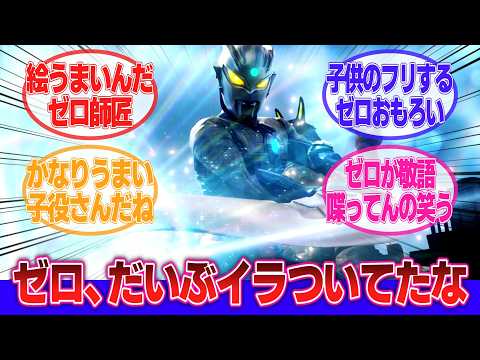
▶ Watch the original YouTube video
Why Ultraman Zero Got Angry: The Secret Revealed in His Battle with Teo
In Ultraman Teo Episode 11, Ultraman Zero displays a rare moment of genuine anger that signals far more than a simple battle frustration. This analysis explores the deeper psychological and narrative significance of Zero’s emotional outburst, revealing hints of a cosmic-scale conspiracy threatening Earth and the generational conflict between an experienced warrior and an inexperienced newcomer.
What Happened
In Episode 11 of Ultraman Teo, the titular hero encounters a monster named Dogulf while disguised as a child. Dogulf possesses the ability to manipulate emotions, and has been using Teo’s friend Ifuki as a tool to amplify its power. When Zero discovers that Teo has been unknowingly fighting this emotionally-manipulating creature without understanding the true nature of the threat, he becomes visibly angry. This marks a significant moment where Zero partially reveals his true identity to Teo by speaking the word “Ultraman” for the first time in their interaction.
Why It Matters
Zero’s anger in this episode is not a simple display of frustration. It represents a critical turning point in the series that signals the beginning of a mentor-student relationship between an experienced cosmic warrior and a new-generation Ultraman. The emotional outburst also hints at a larger, universe-scale conspiracy that extends beyond Earth’s immediate concerns. For long-time Ultraman fans, this moment carries significant weight because Zero’s emotional restraint is typically one of his defining characteristics. When such a composed warrior loses his temper, it indicates genuine danger and marks a narrative escalation.
Background
Ultraman Zero is one of the most developed characters in the entire Ultraman franchise, having appeared since 2009. He is the son of Ultraman Seven and has accumulated extensive combat experience across multiple cosmic threats, including battles against Belial, the Galactic Empire, Dark Locus Zero, the Hellish 40, and Absolutian. His character arc has consistently emphasized growth from a young warrior into a seasoned professional. In contrast, Teo represents a new generation of Ultraman, and the series appears designed to explore how Zero, as a veteran, guides this inexperienced newcomer through increasingly complex challenges. The decision to have Zero disguise himself as a child while secretly observing Teo’s development adds layers of complexity to their relationship.
Key Points
- Zero’s Disguise and Hidden Identity: Zero appears as a child on Earth while concealing his true nature from Teo, observing the young Ultraman’s actions and growth.
- Dogulf’s Emotional Manipulation: The monster encountered in Episode 11 is not a conventional physical threat but a psychological one, capable of manipulating emotions and amplifying its power through Teo’s friend Ifuki.
- The Core of Zero’s Anger: Zero’s rage stems not from the monster’s strength but from the realization that Teo has been unknowingly manipulated and forced to fight a cosmic-level threat without proper knowledge or preparation.
- Partial Identity Revelation: Zero breaks his cover by speaking the word “Ultraman,” introducing a concept that did not previously exist in Teo’s understanding of the world.
- Cosmic-Scale Implications: The presence of Dogulf and its connection to Yapool (a cosmic entity from the original Ultraman series) suggests that Earth faces threats operating at a universal scale, not merely local dangers.
- Generational Mentorship: The episode establishes that Ultraman Teo is entering a new phase where Zero will actively guide and protect him, moving beyond passive observation.
Comparative Analysis: Identity Concealment in Ultraman Series
The theme of hidden identities is central to the Ultraman franchise. Comparing Teo’s situation with previous series reveals a deliberate narrative choice:
| Series | Character | Concealment Duration | Identity Revelation Timing | Post-Revelation Development |
|---|---|---|---|---|
| Ultraman Mebius | Hikari | Throughout entire series | Near final episode | Complete trust established |
| Ultraman X | Daichi Ozora | Early to mid-series | Mid-series partial revelation | Gradual trust building |
| Ultraman Teo | Ifuki | Ongoing | Episode 11 partial revelation | In progress |
Notably, Teo’s series reveals identity information earlier than Mebius but follows a similar pattern to X. This suggests the creators are intentionally building a more complex trust dynamic than previous entries.
Perspectives
The Mentor’s Perspective: From Zero’s viewpoint, he is an experienced cosmic warrior who has faced universe-threatening entities. Discovering that Teo, an inexperienced newcomer, has been manipulated into fighting a dangerous creature without understanding the stakes represents a failure of protective oversight. His anger reflects both frustration at the situation and concern for Teo’s safety.
The Newcomer’s Perspective: Teo remains largely unaware of the larger cosmic threats and operates within a limited understanding of his own nature and purpose. His innocence in this scenario makes him vulnerable to manipulation, a fact that Zero recognizes and reacts to strongly.
The Narrative Perspective: The series appears designed to explore the tension between experience and inexperience, between cosmic-scale threats and local concerns, and between the need for secrecy and the necessity of knowledge. Zero’s anger serves as a catalyst for moving the story into a new phase where these tensions become more explicit.
The Dogulf Connection and Cosmic Conspiracy
Dogulf is not merely a monster-of-the-week threat. Its ability to manipulate emotions and amplify power through psychological means suggests a more sophisticated threat architecture. The reference to Yapool—a cosmic entity from the original Ultraman series known for controlling the universe’s strongest monsters—indicates that Earth faces dangers operating at a universal scale. Zero’s recognition of this connection explains why his anger transcends typical battle frustration. He understands that Teo has been caught in the web of a cosmic conspiracy, not merely a local monster attack.
Insights
Zero’s anger in Episode 11 marks a critical narrative inflection point. It signals that Ultraman Teo is transitioning from a story about a young hero’s local adventures into a saga involving cosmic-scale threats and generational conflict. The series deliberately positions Zero as a mentor figure whose extensive experience—accumulated through battles against Belial, the Galactic Empire, and other universe-threatening entities—makes him acutely aware of dangers that Teo cannot yet perceive.
The emotional manipulation aspect of Dogulf is particularly significant. By making the threat psychological rather than purely physical, the series emphasizes that Teo’s greatest vulnerability lies not in combat ability but in knowledge and understanding. This sets up a narrative arc where Zero’s role extends beyond physical protection to include education and preparation for larger cosmic conflicts.
The partial revelation of Zero’s identity through the word “Ultraman” represents a deliberate expansion of Teo’s world. Until this moment, Teo operated within a limited conceptual framework. Zero’s disclosure introduces the existence of a larger universe of beings and threats, fundamentally altering Teo’s understanding of reality.
Looking forward, Zero’s anger suggests several narrative developments: an intensification of Zero’s active mentorship, a gradual revelation of Earth’s true cosmic vulnerability, increased importance of Ifuki’s emotional connection to the larger plot, and the eventual emergence of more significant universe-scale antagonists. The series appears poised to explore how a seasoned warrior guides a new generation through increasingly complex moral and physical challenges while managing the tension between protective secrecy and necessary knowledge.
For viewers, this episode serves as a reminder that Ultraman Teo operates on multiple narrative levels simultaneously—as a coming-of-age story for a new hero, as a mentorship narrative between generations, and as the opening chapter of a larger cosmic conflict. Zero’s anger is the emotional anchor that ties these threads together, signaling that the story is about to become significantly more complex and consequential.