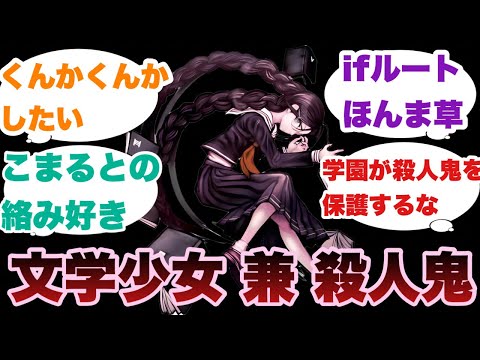
▶ Watch the original YouTube video
The Complex Psychology of Danganronpa’s Fuyuko Togazaki: A 15-Year Fan Analysis
Fuyuko Togazaki, a character from the visual novel game Danganronpa, has sparked intense debate among fans since her introduction in 2010. This deep analysis explores why her abrasive personality and hidden depth have made her one of gaming’s most polarizing yet compelling characters, drawing on 15 years of fan community observations and character design comparisons.
What Happened
Fuyuko Togazaki, the “Ultimate Literary Girl” from Danganronpa, has become the subject of extensive fan analysis and debate since the franchise’s debut on November 25, 2010. Her character design deliberately presents players with an initially unlikeable, sharp-tongued personality that undergoes significant psychological development as the narrative progresses. This intentional character arc has generated diverse reactions across online communities, ranging from strong appreciation to vocal criticism, making her one of the franchise’s most discussed characters.
Why It Matters
Fuyuko Togazaki represents a sophisticated approach to character design in visual novels and video games. Rather than employing conventional “tsundere” tropes that balance harshness with cuteness, her character explores the psychological mechanisms of defense mechanisms and trauma responses. Her design demonstrates how games can use character development to challenge player assumptions and create meaningful emotional engagement. The polarized reactions she generates indicate successful character design that prompts deep player reflection rather than passive consumption.
Background
Danganronpa, developed by Spike Chunsoft, launched on PlayStation Portable in November 2010. The game introduced Fuyuko Togazaki as a high school student with exceptional literary talent but a notoriously hostile demeanor. Her initial presentation emphasizes her caustic remarks, dismissive attitude toward other characters, and particularly her antagonistic behavior toward protagonist Makoto Naegi. However, as players progress through the narrative, her backstory and psychological motivations gradually emerge, revealing the trauma and isolation underlying her abrasive exterior.
The character’s design reflects Spike Chunsoft’s deliberate pursuit of unpredictable character development. Unlike traditional visual novel protagonists designed for immediate likability, Fuyuko was intentionally crafted to create initial discomfort, with the expectation that player perception would shift dramatically upon exposure to her character depth.
Key Points
- Intentional Design Strategy: Fuyuko’s abrasive personality is a calculated design choice meant to create initial player discomfort, followed by psychological reappraisal as her character develops.
- Defense Mechanism Representation: Her sharp tongue functions as a psychological defense mechanism, allowing her to wound others before they can wound her, reflecting realistic trauma responses.
- Literary Girl Significance: Her designation as the “Ultimate Literary Girl” directly connects to her verbal weaponization—her literary knowledge enables her to select words that inflict maximum emotional damage.
- Polarized Fan Reception: Online communities exhibit sharply divided opinions, with some praising her complexity while others find her irredeemably unlikeable, indicating successful engagement design.
- Evolution Beyond Tsundere: Unlike conventional tsundere characters that alternate between harshness and affection, Fuyuko’s emotional boundaries remain ambiguous, creating a more realistic portrayal of psychological struggle.
- Active Rejection vs. Passive Isolation: Unlike similar characters in other franchises, Fuyuko actively pushes people away rather than passively accepting isolation, demonstrating agency in her psychological defense.
Timeline
- November 25, 2010: Danganronpa releases on PlayStation Portable, introducing Fuyuko Togazaki to players.
- 2010-2015: Initial fan community formation; debates emerge regarding Fuyuko’s character design and likability.
- 2012: Danganronpa 2: Goodbye Despair releases, featuring new characters while Fuyuko assumes a secondary role, demonstrating character maturation.
- 2013-2016: Anime adaptations and spin-offs (including Danganronpa IF and Danganronpa 3) provide additional character perspectives and voice acting interpretations.
- 2010-2025: Sustained fan community engagement produces thousands of secondary works, fan theories, and character analyses across multiple platforms.
Perspectives
Player Experience Variation: Initial player reactions to Fuyuko depend heavily on progression stage. Early-game players frequently report genuine discomfort with her behavior, while post-narrative players often express appreciation for her psychological complexity. This variance indicates successful narrative pacing in character revelation.
Psychological Authenticity: Mental health professionals and psychology-informed fans recognize Fuyuko’s behavior patterns as realistic representations of trauma responses and defensive isolation. Her character avoids romanticizing mental health struggles while maintaining narrative engagement.
Comparative Character Design: When compared to similar characters in other franchises—such as Annie Leonhart from Attack on Titan or Sakura Matou from Fate/stay night—Fuyuko’s design distinguishes itself through her active, verbal defense mechanisms rather than passive suffering or hidden virtue.
Fan Community Interpretation: Secondary fan works reveal three distinct interpretive frameworks: the “genuinely kind Fuyuko” narrative that emphasizes her hidden compassion; the “committed to her nature” interpretation that celebrates her sharp personality; and the “conflicted Fuyuko” approach that mirrors canonical complexity. The coexistence of these interpretations demonstrates character depth sufficient to support multiple valid readings.
Insights
Fuyuko Togazaki’s sustained relevance across 15 years of fan engagement demonstrates that character complexity and psychological authenticity generate deeper player investment than conventional likability. Her design successfully challenges the assumption that protagonists and sympathetic characters must be immediately appealing, instead suggesting that meaningful emotional engagement emerges through confrontation with uncomfortable psychological realities.
The polarized fan reception—simultaneously generating passionate advocacy and vocal criticism—indicates successful character design that transcends passive consumption. Rather than achieving universal approval, Fuyuko prompts active interpretation and debate, encouraging players to examine their own responses to defensive behavior and trauma manifestation.
Fuyuko’s evolution across multiple Danganronpa installments suggests a character designed for ongoing development rather than narrative completion. Her secondary role in subsequent games, rather than representing diminished importance, may indicate character maturation and the confidence to occupy less central narrative positions. This approach contrasts with characters designed for maximum impact in single appearances.
The character’s influence on fan communities extends beyond simple preference metrics. Fuyuko has generated sustained analytical discourse examining psychological defense mechanisms, trauma responses, and the relationship between verbal aggression and emotional vulnerability. This intellectual engagement suggests that her design successfully achieves Spike Chunsoft’s apparent goal of creating characters that prompt deep player reflection rather than superficial emotional responses.
Fuyuko Togazaki ultimately represents a significant evolution in visual novel character design, demonstrating that psychological complexity and initial unlikability need not diminish character appeal. Instead, they can deepen engagement by requiring players to confront uncomfortable emotional truths and examine their own defensive mechanisms. Her 15-year legacy suggests that gaming audiences increasingly value authenticity and complexity over conventional charm, marking a meaningful shift in interactive narrative design priorities.