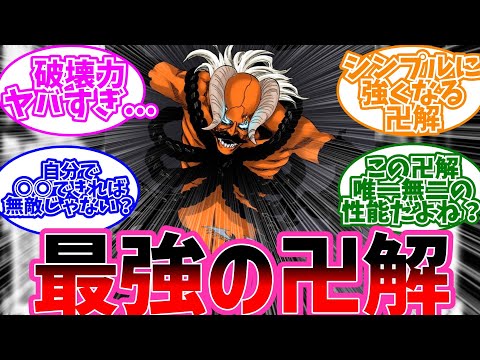
▶ Watch the original YouTube video
After 15 years of following Bleach, fans have identified a peculiar creative paradox: the Bankai—the series’ most powerful ability—paradoxically limits character development and battle prominence. This analysis explores why the strongest power in the series becomes a narrative constraint, examining how creators balance overwhelming strength with compelling storytelling.
What Happened
Bleach introduced the Bankai as the ultimate technique available to Soul Reapers, representing the pinnacle of combat power. However, as the series progressed, characters who mastered the Bankai found themselves with fewer opportunities to demonstrate their strength in meaningful battles. This phenomenon has sparked widespread discussion among fans about whether the series’ most celebrated power system is being underutilized due to narrative constraints.
Why It Matters
This creative dilemma reflects a fundamental challenge in long-running shonen anime and manga: how to maintain narrative tension when characters possess overwhelming power. The Bankai paradox reveals the tension between establishing a character’s strength and keeping stories compelling. Understanding this dynamic provides insight into how successful series balance power scaling, character development, and plot progression—issues that affect not only Bleach but the entire shonen genre.
Background
Bleach debuted in the mid-2000s and quickly became a cornerstone of shonen anime. The Bankai system was designed as a complete power framework: a technique that only Soul Reapers who fully master their zanpakuto (spiritual sword) can access. Early in the series, when protagonist Ichigo first achieved Bankai, it represented a genuine turning point—the moment he gained overwhelming advantage against enemies. The ability was portrayed as the ultimate trump card, capable of decisively shifting any battle.
As the narrative progressed through multiple arcs, however, a pattern emerged. Characters like Byakuya Kuchiki with his “Senbonzakura Kageyoshi” and Toshiro Hitsugaya with his “Daiguren Hyorinmaru” achieved Bankai mastery, yet their opportunities to deploy these abilities in significant battles diminished. Simultaneously, enemies grew exponentially stronger, rendering even the most powerful techniques insufficient against new threats.
Key Points
- Bankai is theoretically the strongest Soul Reaper ability, yet characters who master it experience reduced battle prominence as the series progresses
- Multiple characters’ Bankai transformations are narratively restricted despite their immense power, suggesting intentional creative limitation
- Fan reactions are divided: some appreciate the restraint for maintaining tension, while others criticize underutilization of the established power system
- Creators appear to deliberately constrain Bankai usage through time limits, physical costs, and enemy power scaling to preserve narrative balance
- The paradox reflects a universal creative challenge: the strongest abilities inherently threaten story tension and character development opportunities
- Comparable series like Dragon Ball, Naruto, and Jujutsu Kaisen employ different strategies—power inflation, hierarchical power systems, and ability costs—to address this same problem
The Core Paradox: Maximum Power, Minimum Narrative Function
The Bankai represents a fundamental creative contradiction. As the ultimate expression of a Soul Reaper’s power, it should guarantee victory. Yet if characters could consistently win through Bankai, battles would become predictable and tension would evaporate. The series’ creators faced an unavoidable choice: either limit Bankai’s effectiveness or reduce opportunities for its use.
Bleach adopted a multifaceted approach. First, the series introduced usage restrictions: Bankai cannot be maintained indefinitely. Second, physical costs were established—certain Bankai transformations exact a toll on the user’s body. Hitsugaya’s ice-based Bankai, for instance, risks freezing his own body. Third, and most significantly, enemies were systematically scaled to exceed Bankai-level threats, making even the strongest techniques insufficient against increasingly powerful adversaries.
Comparative Analysis: How Other Series Handle Maximum Power
Dragon Ball employs continuous power inflation: whenever a character reaches maximum strength, a stronger enemy appears, rendering previous achievements obsolete. This maintains constant escalation but sacrifices the permanence of achievement.
Naruto implements hierarchical power systems: even after mastering the Sharingan’s ultimate form, characters discover higher-tier abilities like the Rinnegan, ensuring perpetual growth opportunities. This preserves character development but dilutes the significance of earlier milestones.
Jujutsu Kaisen emphasizes ability costs: powerful techniques accumulate curses within the user’s body, creating strategic decision-making. This maintains tension through consequence rather than artificial limitation.
Bleach combines elements of all three approaches, creating a unique but imperfect solution. The result is the Bankai paradox: a power system celebrated in concept but constrained in execution.
Fan Perspectives
Community reactions reveal the tension between creative necessity and fan expectations. Supporters argue that unlimited Bankai usage would destroy narrative tension and make battles predictable. They appreciate the restraint as evidence of sophisticated storytelling.
Critics contend that the Bankai system, as initially established, is being betrayed by narrative convenience. They note that characters feel stagnant after achieving Bankai—no new power levels emerge, and their role in the story diminishes. Some observe that the lack of post-Bankai growth creates a sense of character stagnation, contrasting with series like Naruto where power tiers continue ascending.
A third perspective focuses on the protagonist’s centrality: other characters’ Bankai may be deliberately limited to preserve Ichigo’s narrative importance. This interpretation suggests the paradox serves the story’s structural needs rather than representing a flaw.
The Creator’s Dilemma: Balancing Strength and Narrative Function
The Bankai paradox likely reflects deliberate creative choices rather than oversight. Creators face three interconnected problems:
Problem One: Narrative Tension — Maximum power eliminates uncertainty. If a character can reliably win through Bankai, stakes disappear. Restricting usage preserves dramatic tension.
Problem Two: Character Ensemble — If Bankai-wielders dominated every battle, supporting characters would become irrelevant. Limiting Bankai usage ensures multiple characters remain narratively significant.
Problem Three: Protagonist Centrality — Ichigo’s Bankai must remain the series’ focal point. Overexposing other characters’ Bankai would dilute the protagonist’s importance.
These constraints are not flaws but structural necessities. The paradox represents the cost of establishing a power system so complete that it threatens the narrative framework itself.
Implications for Bleach’s Future
The series faces inevitable escalation. Continuous enemy power scaling cannot continue indefinitely—eventually, a new power tier must emerge. Bleach may eventually introduce abilities that transcend Bankai, similar to how Naruto introduced the Rinnegan beyond the Sharingan.
Alternatively, the series could reframe Bankai’s significance: rather than raw power, emphasis could shift to unique properties and strategic applications. This would preserve Bankai’s importance while changing how it functions narratively.
A third possibility involves deeper exploration of Bankai’s spiritual and thematic dimensions. Each Bankai reflects a character’s inner nature—examining this aspect could provide character development without requiring constant combat deployment.
Insights
The Bankai paradox is not a flaw but a revelation of fundamental creative tensions in long-form storytelling. When a power system becomes too complete, it threatens narrative flexibility. Bleach’s creators chose to constrain their most celebrated mechanic to preserve story coherence—a pragmatic but imperfect solution.
This paradox demonstrates that the strongest abilities are often the most narratively dangerous. Unlimited power creates unlimited problems for storytellers. The series’ handling of this challenge—through usage restrictions, physical costs, and enemy scaling—represents a calculated approach to a universal creative problem.
For viewers, recognizing this paradox enriches appreciation of the series. Rather than viewing Bankai limitations as failures, they can be understood as evidence of sophisticated structural thinking. The Bankai paradox reveals that Bleach is not merely a power-fantasy series but a work genuinely grappling with the creative constraints of its own ambitions.