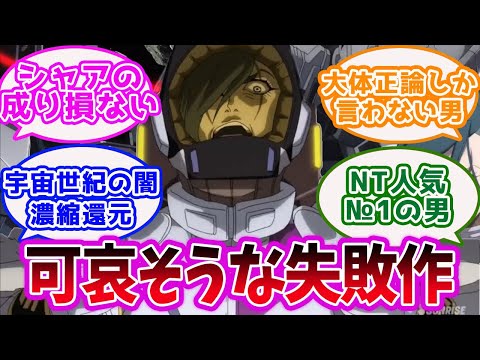
▶ Watch the original YouTube video
Since its 2018 theatrical release, Mobile Suit Gundam NT has sparked intense debate among fans about its antagonist Zoltan Akkanen, with many dismissing him as a failed character. However, a deeper analysis reveals that his apparent complexity and ambiguous motivations may actually represent a deliberate creative choice reflecting contemporary themes of communication breakdown and the evolution of Newtype philosophy.
What Happened
Mobile Suit Gundam NT introduced Zoltan Akkanen as its primary antagonist, a character whose motivations and psychological depth have become one of the most divisive topics in the Gundam community. Online discussions across Twitter, Reddit, and 2channel forums reveal a sharp split in fan opinion: some view him as poorly developed with unclear motivations, while others argue his complexity represents a sophisticated character design that reflects modern storytelling sensibilities.
Why It Matters
The debate surrounding Zoltan Akkanen is more than just fan discourse—it reflects fundamental differences in how audiences evaluate character writing in long-running anime franchises. The division between those expecting traditional villain archetypes and those embracing narrative ambiguity highlights generational shifts in anime fandom and raises important questions about authorial intent versus audience expectation. Understanding this character’s reception provides insight into how contemporary anime addresses complex psychological themes and the evolution of the Newtype concept across the Gundam franchise.
Background
The Gundam franchise has evolved significantly since its 1979 debut, with each era reinterpreting the concept of Newtypes—humanity’s next evolutionary stage. The original Mobile Suit Gundam presented Newtypes as a potential solution to ending warfare. Zeta Gundam framed them as evidence of human evolution, while Gundam Unicorn portrayed them as humanity’s hope. Mobile Suit Gundam NT, released in 2018, fundamentally shifts this paradigm by depicting Newtype abilities as a source of psychological complexity and relational difficulty rather than straightforward power or salvation.
Zoltan Akkanen, positioned as the film’s central antagonist, pursues what he calls “the perfect Newtype”—a quest that initially appears to be simple villainy but reveals deeper layers upon examination. His character emerges during a period when the Gundam franchise was actively deconstructing its own established conventions, following works like Iron-Blooded Orphans and Gundam Reconguista in G.
Key Points
- Online fan communities widely criticize Zoltan Akkanen for unclear motivations and insufficient character development, labeling him a “failed character”
- A significant minority of fans defend his complexity as intentional, arguing his ambiguity reflects contemporary narrative sophistication
- Zoltan’s pursuit of “the perfect Newtype” functions as a metaphor for seeking complete understanding and communication rather than mere power acquisition
- Comparative analysis with similar characters like Full Frontal (Gundam UC) and Haman Karn (ZZ Gundam) reveals that clarity of motivation directly correlates with audience acceptance
- The character’s reception differs significantly across generational lines, with younger fans more accepting of psychological complexity than longtime franchise followers
- Zoltan’s emotional core—a fundamental desire to be understood—parallels complex protagonists in Neon Genesis Evangelion and Gundam 00, suggesting intentional psychological depth
Timeline
- November 2018: Mobile Suit Gundam NT releases in Japanese theaters
- Post-release: Online communities immediately begin debating Zoltan Akkanen’s character quality and narrative purpose
- 2018-2024: Ongoing discourse continues, with some fans predicting eventual re-evaluation similar to Full Frontal’s trajectory
Perspectives
The Critical View: Many established Gundam fans expect antagonists to possess clearly defined motivations and logical action patterns. From this perspective, Zoltan’s ambiguous psychology and seemingly irrational behavior represent poor character writing. Critics point to superior antagonist designs in Full Frontal and Char Aznable as examples of how complex villains should maintain narrative clarity.
The Analytical View: Supporters argue that Zoltan’s apparent lack of clarity is precisely the point. His emotional core—a desperate need to be understood—mirrors contemporary psychological themes. His pursuit of “the perfect Newtype” functions as a metaphor for seeking complete communication in an era of digital fragmentation and relational complexity. This interpretation positions him as a forward-thinking character design rather than a failure.
The Generational Divide: Fans who discovered Gundam through recent series like Gundam 00 and Iron-Blooded Orphans demonstrate greater tolerance for psychologically complex, contradictory characters. Conversely, longtime fans from the original series through Gundam UC era tend to prefer antagonists with transparent motivations and coherent ideological frameworks.
Comparative Character Analysis
Examining Zoltan alongside similar antagonists reveals important patterns:
| Character | Series | Motivation Clarity | Psychological Complexity | Fan Reception Stability |
|---|---|---|---|---|
| Zoltan Akkanen | Gundam NT | Moderate | High | Low (Divided) |
| Full Frontal | Gundam UC | High | High | High (Positive) |
| Haman Karn | ZZ Gundam | High | Moderate | Moderate |
| Char Aznable | Char’s Counterattack | High | High | High (Positive) |
This comparison demonstrates a clear correlation: characters with explicit motivations receive more stable, positive reception. However, this pattern also suggests that Zoltan’s ambiguity may be intentional rather than accidental—a deliberate choice to challenge audience expectations.
The Evolution of Newtype Philosophy
Across the Gundam franchise’s history, the Newtype concept has continuously evolved to reflect contemporary concerns. The original series addressed post-war anxieties about human potential. Zeta Gundam reflected concerns about societal progress and generational conflict. Gundam 00 engaged with globalization and terrorism. Mobile Suit Gundam NT addresses 2010s-era preoccupations with digital communication complexity and the difficulty of genuine human connection.
Zoltan’s obsession with “the perfect Newtype” functions within this framework as a manifestation of modern alienation—the desire for complete understanding in an era where communication has become simultaneously ubiquitous and superficial. His psychological emptiness and need to be understood reflect contemporary anxieties about authentic connection in digitally mediated societies.
Production Intent vs. Audience Expectation
The divide in Zoltan’s reception likely stems from a fundamental mismatch between what the production intended and what audiences expected. The Gundam NT creative team appears to have deliberately constructed an antagonist whose motivations resist easy categorization, inviting viewers to engage with psychological ambiguity rather than narrative clarity.
This approach aligns with broader trends in 2020s anime production, where psychologically complex, contradictory characters increasingly receive critical appreciation. However, it directly contradicts the expectations of fans accustomed to Gundam’s traditional villain archetypes, where ideological clarity and logical motivation drive antagonistic action.
Understanding Zoltan: A Practical Framework
For viewers seeking deeper engagement with Zoltan’s character, several approaches enhance comprehension:
Comparative Study: Watching Gundam UC before or after Gundam NT provides crucial context. Comparing Full Frontal’s Newtype philosophy with Zoltan’s reveals the deliberate philosophical shift the production intended.
Psychological Focus: Rather than analyzing Zoltan’s logical consistency, examining his emotional needs proves more rewarding. His actions become comprehensible when viewed as expressions of psychological need rather than ideological conviction.
Thematic Preparation: Prior exposure to psychologically complex characters in Neon Genesis Evangelion or Gundam 00 cultivates interpretive frameworks applicable to Zoltan’s characterization.
Online Community Reception
Twitter discussions immediately following Gundam NT’s release predominantly featured criticism of Zoltan’s unclear motivations and insufficient character development. However, concurrent positive commentary praised his psychological complexity as the film’s central strength.
2channel Gundam forums repeatedly emphasized “insufficient character setup,” yet this criticism itself may reflect viewer expectations rather than objective character quality. The production may have deliberately withheld explicit backstory to encourage interpretive engagement.
This generational divide in reception suggests that younger fans, accustomed to narrative ambiguity through series like Gundam 00 and Iron-Blooded Orphans, demonstrate greater tolerance for Zoltan’s psychological opacity than longtime fans expecting traditional antagonist frameworks.
Insights and Future Trajectory
Zoltan Akkanen represents a deliberate creative choice rather than a character writing failure. His apparent deficiencies—ambiguous motivation, insufficient exposition, emotional opacity—function as intentional design elements reflecting contemporary storytelling approaches and thematic concerns about communication breakdown in digitally mediated societies.
The character’s reception parallels Full Frontal’s initial critical reception. Upon Gundam UC’s release, Full Frontal was frequently criticized as confusing and poorly developed. Contemporary analysis, however, recognizes him as one of the franchise’s most sophisticated antagonists. Zoltan likely follows a similar trajectory, with future critical reassessment potentially recognizing his psychological complexity as intentional sophistication rather than narrative failure.
The broader implication extends beyond single character evaluation: Zoltan’s divisive reception reflects fundamental shifts in how anime audiences evaluate character writing, with generational differences in narrative expectation becoming increasingly pronounced. As the Gundam franchise continues evolving, characters like Zoltan—psychologically complex, ideologically ambiguous, emotionally driven—may represent the franchise’s future direction rather than aberrations from established tradition.
The question “Is Zoltan a failed character?” ultimately reveals more about audience expectations than production quality. His complexity, rather than representing failure, may constitute the most successful aspect of Mobile Suit Gundam NT’s thematic ambitions.