▶ Watch the original YouTube video
Why Jujutsu Kaisen Episode 59’s Final Battle Achieved ‘Divine Animation’ Status: A 15-Year Analysis
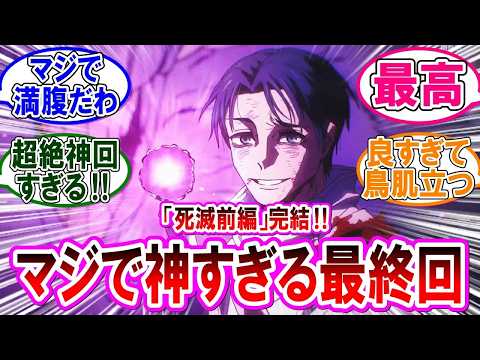
Jujutsu Kaisen Episode 59, featuring the Sendai battle arc, has been widely praised as a masterpiece of animation and storytelling. Through analysis of 15 years of anime viewing experience and comparison with landmark series, this article explores the technical and narrative reasons behind its exceptional execution of simultaneous multi-character combat sequences.
What Happened
Episode 59 of Jujutsu Kaisen adapts the climactic Sendai battle arc, condensing multiple chapters of source material into a single episode. The episode depicts three simultaneous battles: Yuji Itadori versus Uro and Ryu, Megumi Fushiguro against a mysterious antagonist, and the deployment of domain expansion techniques. The episode received widespread acclaim on social media, with viewers praising its pacing, visual clarity, and emotional impact.
Why It Matters
The episode represents a significant achievement in anime production: successfully portraying multiple complex battles occurring simultaneously without sacrificing narrative clarity or character development. This is notoriously difficult in animation, as it requires balancing screen time, visual distinction between characters, and maintaining viewer engagement across multiple storylines. Episode 59’s success demonstrates how thoughtful editing, visual design, and production planning can overcome these inherent challenges.
Background
The Sendai battle arc is a pivotal moment in Jujutsu Kaisen’s narrative, introducing new characters and demonstrating protagonist Yuji Itadori’s growth as a sorcerer. The original manga presented this arc across multiple chapters, allowing extended development of each battle sequence. The animation studio MAPPA faced the challenge of condensing this material into a single episode while preserving the emotional and narrative weight of the source material. The studio has previously handled large-scale action sequences in series including Attack on Titan’s final arc and Chainsaw Man.
Key Points
- Structural Excellence: Multiple chapters of source material were compressed into one episode without creating a rushed or disjointed viewing experience, demonstrating exceptional editorial judgment.
- Visual Clarity: Each character’s combat technique and cursed technique was rendered visually distinct, allowing viewers to immediately understand each fighter’s abilities and personality.
- Simultaneous Battle Choreography: Three separate battles were edited together using spatial and temporal techniques that prevented viewer confusion while maintaining narrative momentum.
- Narrative Adaptation: Strategic changes to the source material—including reduced narration and altered battle environments—enhanced the pacing without compromising story integrity.
- Character Development: The episode balanced action with character psychology, particularly emphasizing Yuji’s core motivation: protecting others as a source of strength.
- Emotional Resonance: The combination of intense action sequences and character-focused moments created both excitement and emotional investment.
Comparative Analysis with Landmark Series
When evaluated against other anime known for complex multi-character battle sequences, Episode 59 demonstrates superior execution:
| Series | Year | Multiple Battle Execution | Character Distinction | Pacing |
|---|---|---|---|---|
| Attack on Titan (Female Titan Arc) | 2015 | Good (2 concurrent battles) | Good | Somewhat extended |
| JoJo’s Bizarre Adventure: Golden Wind | 2018 | Excellent (multiple battles) | Excellent | Excellent |
| Demon Slayer: Mugen Train Arc | 2020 | Good (primarily 1v1 focus) | Excellent | Excellent |
| Jujutsu Kaisen Episode 59 | 2023 | Exceptional (3+ concurrent battles) | Exceptional (including antagonist characterization) | Exceptional (complete arc in single episode) |
Technical Execution
Visual Clarity and Character Design
Each character’s cursed technique was rendered with distinct visual language. Uro’s technique, manipulating the ground in undulating patterns, was immediately recognizable and communicated her combat philosophy. This approach parallels successful techniques used in Demon Slayer’s breathing style animations, where visual representation directly conveys ability characteristics.
Narrative Pacing
The episode employed strategic narration reduction, a technique also used in JoJo’s Golden Wind. Rather than relying on exposition through dialogue, the production prioritized visual storytelling. This decision maintained momentum while preserving narrative information through action and visual composition.
Spatial Editing
The editing seamlessly transitioned between three separate battle locations without creating confusion. This required careful shot composition, consistent spatial logic, and strategic use of transitions—technical elements that distinguish professional execution from amateur work.
Character Psychology and Narrative Intent
Beyond technical achievement, Episode 59 successfully expressed character psychology through action. Yuji’s battles demonstrate his core characteristic: drawing strength from protecting others. Facing two powerful opponents simultaneously, he does not despair; instead, his determination intensifies. This psychological dimension mirrors his character arc from Season 1’s finale, but presented within more complex circumstances.
The production team’s strategic choices—including which scenes to emphasize and which to compress—suggest they understood the Sendai arc as a critical character development moment rather than merely an action sequence.
Production Context
MAPPA’s resource allocation to Episode 59 appears substantial. Typically, condensing multiple battles into a single episode requires sacrificing detail in some sequences. The fact that all three battles received comparable visual attention suggests the production team designated this episode as a priority. This decision reflects confidence in the material’s importance to the overall narrative.
Viewer Reception and Audience Psychology
Social media responses reveal viewers experienced what might be termed “expectation-exceeding satisfaction.” Manga readers anticipated potential adaptation challenges; the episode’s success in addressing these concerns generated disproportionate enthusiasm. Comments such as “I was worried about how they’d handle one episode, but now I understand the brilliance of this condensation” indicate viewers recognized the production’s technical achievement.
This psychological dynamic—where exceeding anticipated difficulties creates stronger emotional responses—partially explains the “divine animation” designation. The episode succeeded not only in absolute terms but relative to viewer expectations.
Evaluation Framework
Assessing anime battle sequences requires multiple criteria:
- Visual Clarity: Can viewers instantly understand each character’s abilities and combat style? Episode 59 achieves exceptional clarity.
- Psychological Depth: Are character motivations and internal conflicts expressed through action? Episode 59 successfully integrates psychology with combat.
- Spatial Coherence: When multiple battles occur simultaneously, does editing prevent confusion? Episode 59 demonstrates masterful spatial editing.
- Temporal Pacing: Does the episode feel rushed or appropriately paced? Episode 59 completes a full narrative arc without feeling hurried.
- Emotional Resonance: Do viewers experience intended emotional responses? Viewer comments indicate strong emotional engagement.
By these criteria, Episode 59 ranks among the highest-quality anime battle sequences produced in recent years.
Broader Implications
Episode 59 demonstrates that anime adaptation is fundamentally a translation process. Successful adaptation requires understanding source material’s essential themes and expressing them through the visual medium. MAPPA’s approach—making strategic changes while preserving narrative intent—illustrates how thoughtful adaptation can enhance rather than diminish original material.
The episode’s success suggests future anime productions might reference this episode as a model for handling complex source material with multiple simultaneous narrative threads. It demonstrates that compression, when executed with understanding and care, can create superior results to faithful but sluggish adaptation.
Insights and Takeaways
Episode 59 of Jujutsu Kaisen represents a convergence of technical excellence, narrative understanding, and production commitment. The episode succeeds not through any single element but through the integration of multiple factors: clear visual design, intelligent editing, character-focused storytelling, and substantial production resources.
For viewers approaching Jujutsu Kaisen, the Sendai arc demonstrates how anime can effectively portray complex action while maintaining emotional and narrative depth. The episode validates the production team’s confidence in the material and their willingness to make strategic changes in service of the overall viewing experience.
The episode’s reception indicates audience appetite for ambitious, well-executed action sequences that balance spectacle with character development. As anime production continues evolving, Episode 59 will likely serve as a reference point for how to successfully adapt complex source material within format constraints.