▶ Watch the original YouTube video
Death Knight: Why Overlord’s Perfect Subordinate Has Become a Fan Favorite
Death Knight, a character from the anime series Overlord, has emerged as one of the most beloved subordinate characters in modern anime despite—or perhaps because of—his seemingly flawless loyalty and competence. An analysis of fan reactions and the character’s role within the series reveals how Death Knight represents a new archetype in anime storytelling: the perfectly obedient subordinate who paradoxically captures viewers’ hearts through his unwavering devotion.
What Happened
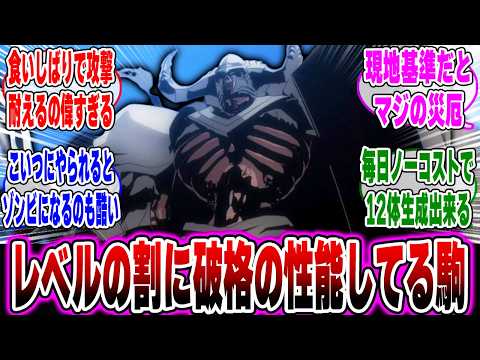
A recent video compilation analyzing fan reactions to Death Knight, a key character in the anime series Overlord, has sparked renewed discussion about the character’s significance within the show and the broader anime industry. The video highlights how Death Knight functions as one of Ainz Ooal Gown’s most reliable and versatile subordinates, and how the online community has responded overwhelmingly positively to the character despite his seemingly emotionless demeanor.
Why It Matters
Death Knight represents a significant shift in how anime portrays power dynamics and leadership. Rather than focusing exclusively on the protagonist’s individual strength, Overlord emphasizes how a powerful leader effectively commands and utilizes subordinates. Death Knight embodies this new narrative pattern, which has influenced numerous subsequent anime series. Understanding Death Knight’s appeal reveals broader trends in anime storytelling and audience preferences, particularly the growing interest in how strong protagonists build and maintain hierarchical organizations.
Background
Overlord, which began airing in 2015, introduced a novel approach to the isekai (alternate world) fantasy genre by depicting the protagonist Ainz Ooal Gown as an overwhelmingly powerful being whose subordinates—the inhabitants of Nazarick—are equally formidable. Death Knight serves as a particularly important member of this hierarchy, functioning as a versatile and reliable executor of Ainz’s will. The character’s design and role represent a deliberate choice by the production team to establish a new archetype: the “perfect subordinate” who maintains absolute loyalty while remaining emotionally compelling to viewers.
Key Points
- Versatility and Reliability: Death Knight functions as one of the most adaptable pieces in Ainz’s arsenal, capable of handling diverse situations with consistent competence.
- Overwhelming Fan Support: Online communities across Twitter, YouTube, and discussion forums express predominantly positive reactions to Death Knight, praising his loyalty and execution ability.
- Symbolic Importance: Death Knight embodies Ainz’s absolute authority and control, serving as a visual representation of Nazarick’s overwhelming power to viewers.
- Emotional Depth Through Loyalty: Despite appearing emotionless, Death Knight captures viewer sympathy through moments where his joy at receiving Ainz’s commands becomes visible, revealing humanity within his perfection.
- Narrative Stability: In a cast of individually-minded characters like Albedo and Shalltear, Death Knight provides a stable, trustworthy presence that reassures both Ainz and viewers.
- Game-World Representation: Death Knight reinforces Overlord’s game-like world mechanics, where subordinates follow commands with perfect obedience—a core element of the series’ conceptual framework.
Comparative Analysis
When compared to similar “perfect subordinate” characters in other anime, Death Knight stands apart in several ways. Unlike Levi from Attack on Titan, who maintains independent judgment, or the subordinates in That Time I Got Reincarnated as a Slime, who often act independently, Death Knight exhibits complete subordination to Ainz’s will without internal conflict. This distinction is crucial: while most anime portray character depth through emotional struggle or conflicting motivations, Death Knight’s humanity emerges from his absolute devotion itself. His undead nature allows viewers to accept his loyalty as fundamental to his existence rather than viewing it as servitude, a narrative solution that would be problematic if applied to a human character.
Industry Trends
Death Knight’s prominence reflects a broader shift in anime storytelling over the past decade. Early 2010s anime typically centered on protagonists who directly solved all major conflicts, exemplified by One Punch Man’s approach to overwhelming power. Overlord advanced this concept by introducing a protagonist whose strength lies not only in personal power but in commanding an equally formidable organization. This narrative pattern has since influenced numerous subsequent works, establishing what might be called the “perfect subordinate” archetype. Death Knight serves as the pioneering example of this character type, demonstrating how to make a seemingly one-dimensional character—the perfectly obedient follower—genuinely compelling to audiences.
Fan Community Response
Across multiple online platforms, Death Knight receives consistently positive reception. Twitter users frequently praise his loyalty and competence, while YouTube comments express desire for expanded Death Knight scenes. Discussion forums on 5channel and similar platforms feature comments like “Death Knight is truly excellent” and “I wish I had a subordinate like this,” suggesting that viewers project ideals of perfect reliability onto the character. This phenomenon reflects a gap in real-world experience: completely trustworthy subordinates are rare in actual society, making Death Knight’s fictional perfection particularly appealing. While a minority of viewers criticize Death Knight as lacking personality or being uninteresting, these opinions remain marginal compared to the overwhelming positive consensus.
Production Intent and Narrative Function
The production team’s decision to expand Death Knight’s role in the anime adaptation compared to the original light novels suggests deliberate emphasis on the character’s importance. Death Knight serves three primary narrative functions: First, he symbolizes Ainz’s absolute dominion, making the protagonist’s authority visually and narratively concrete. Second, he provides narrative stability within a cast of unpredictable characters, offering viewers reassurance through his reliability. Third, he reinforces the game-world mechanics central to Overlord’s conceptual framework, where player-controlled subordinates execute commands with perfect fidelity. These functions work together to make Death Knight essential to the series’ thematic and structural coherence.
Character Psychology and Emotional Resonance
A key to understanding Death Knight’s appeal lies in how the series portrays his emotional life. While Death Knight appears emotionless, careful observation reveals subtle moments where joy registers in his expression upon receiving Ainz’s commands. This deliberate production choice—showing humanity within apparent perfection—proves crucial to viewer engagement. Most anime characters achieve depth through internal conflict or emotional volatility, but Death Knight achieves it through the purity of his devotion. The fact that he is undead rather than human makes this approach work narratively; his loyalty reads as existential rather than oppressive, allowing viewers to celebrate rather than pity his subordination.
Future Prospects and Speculation
As Overlord progresses through subsequent seasons, Death Knight’s role appears poised to expand further. With Ainz making fewer direct appearances in combat, Death Knight increasingly serves as the primary representation of Nazarick’s power. The original source material suggests potential evolution of Death Knight from mere subordinate to something approaching Ainz’s “alter ego”—a trajectory similar to Levi’s development in Attack on Titan from supporting character to central figure. Additionally, deeper exploration of Death Knight’s relationships with other Nazarick inhabitants, particularly Shalltear and Albedo, could further develop the character’s complexity. The revelation of Death Knight’s backstory—how he became such a perfect subordinate—remains a compelling narrative possibility that could deepen the character significantly.
Practical Viewing Recommendations
For viewers new to Overlord, beginning with Season 1, Episode 1 is essential to understanding how Ainz’s control structure develops and why Death Knight’s role proves so crucial. When observing Death Knight’s actions, viewers should focus on understanding the reasoning behind each decision, as all his choices derive from Ainz’s intentions. Reading the original light novels provides additional insight into Death Knight’s internal perspective, revealing psychological depth not fully expressed in the anime adaptation. Comparative viewing of similar series like That Time I Got Reincarnated as a Slime and The Demon Lord Retry! offers useful context for appreciating Overlord’s unique approach to the protagonist-and-subordinates dynamic.
Insights
Death Knight represents more than a single character; he embodies a fundamental shift in how modern anime conceptualizes power, leadership, and character development. His emergence as a fan favorite despite—or because of—his apparent lack of traditional character flaws suggests that audiences increasingly value competence and reliability as sources of emotional resonance. The character demonstrates that perfection need not be boring when that perfection is grounded in genuine devotion to something larger than oneself. In the context of Overlord’s broader narrative, Death Knight serves as the linchpin holding together the series’ exploration of absolute power and its exercise. His unwavering loyalty makes Ainz’s authority tangible and his subordinates’ obedience believable, transforming what could be a one-dimensional power fantasy into a more nuanced examination of hierarchical organization and effective leadership. As anime continues evolving, Death Knight may well be remembered as the character who proved that the “perfect subordinate” could be not just functional but genuinely beloved.