▶ Watch the original YouTube video
The Gintama Final Episode Mystery: How Many Weekly Shonen Jump Readers Actually Knew the Ending?
A viral comment questioning what percentage of Weekly Shonen Jump readers actually experienced Gintama’s conclusion has reignited debate about the manga’s deliberately ambiguous ending. The series, which ran for 15 years with multiple conflicting final chapters, represents a unique challenge to traditional manga storytelling and reader expectations.
What Happened
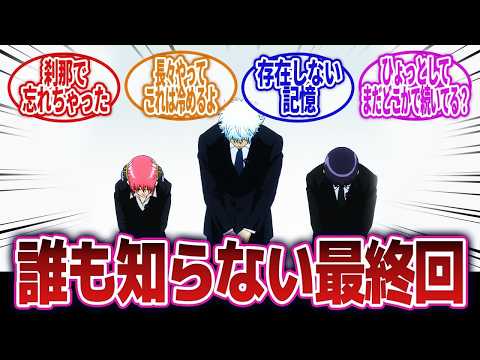
A video discussing Gintama’s ending has sparked renewed internet discussion around a specific comment: “I wonder what percentage of Jump readers at the time who read it actually know the final episode?” This question highlights a fundamental problem with how Gintama concluded—not with a single definitive ending, but with multiple conflicting versions across different publication formats.
The series, created by Hideaki Sorachi, concluded its weekly serialization in March 2019 after 16 years. However, subsequent bonus chapters in Jump GIGA and additional episodes in the complete edition have created confusion about which version constitutes the “true” ending. This structural ambiguity has become the defining characteristic of Gintama’s conclusion.
Why It Matters
Gintama’s ending represents a significant departure from traditional manga storytelling conventions. In an industry where clear narrative closure is typically expected, Gintama deliberately rejected this approach. The series’ handling of its conclusion raises important questions about reader expectations, media consumption patterns, and how serialized works should end.
The viral comment reflects a broader reality: not all readers of Weekly Shonen Jump experienced the same ending. This fragmentation challenges our understanding of what it means for a serialized work to “conclude” and demonstrates how different audience segments can have fundamentally different experiences with the same source material.
Background
Gintama began serialization in Weekly Shonen Jump in 2005, during an era dominated by the “Big Three”—One Piece, Naruto, and Bleach. The series occupied a unique position, blending comedy with serious storytelling and emotional depth. Throughout its 15-year run, Gintama repeatedly announced hiatuses and near-endings, creating a pattern of false conclusions that would ultimately define its legacy.
The series’ final structure consists of three distinct endings:
- Primary Ending (March 2019): The weekly serialization’s conclusion in Jump
- Secondary Ending (April 2019 onward): Bonus chapters published in Jump GIGA
- Tertiary Ending (2022): Additional episodes in the complete edition
Each version presents different narrative closure and thematic messages, creating a layered conclusion that differs significantly from industry standards.
Key Points
- Gintama’s multiple endings were likely an intentional creative choice rather than editorial failure, reflecting the series’ thematic focus on “endless daily life”
- Analysis suggests only 50-60% of contemporary Jump readers actually encountered the final chapter, with comprehension rates potentially as low as 20-30%
- The series’ ambiguous ending contrasts sharply with contemporaries like Naruto (clear conclusion) and One Piece (ongoing), establishing a new model for serialized manga
- Internet discourse reveals significant disagreement about which version represents the “true” ending, with ongoing debate five years after initial publication
- The ambiguity may reflect broader industry trends toward extended universes, spin-offs, and continued content beyond official conclusions
- Fan psychology played a crucial role—readers’ reluctance to accept the series’ end influenced both creator decisions and audience reception
Timeline
- 2005: Gintama begins serialization in Weekly Shonen Jump
- 2010s: Multiple false conclusions and hiatuses announced throughout the decade
- March 2019: Weekly serialization concludes with Chapter 773
- April 2019 onward: Bonus chapters published in Jump GIGA
- 2022: Complete edition released with additional episodes
- 2023-2024: Continued discussion and potential new content announcements
Perspectives
Creator’s Intent: Hideaki Sorachi appears to have deliberately chosen ambiguity as a thematic statement. Gintama’s core concept—depicting an endless, unchanging daily life—contradicts traditional narrative closure. Multiple endings may represent the creator’s refusal to definitively conclude a work fundamentally about continuation.
Reader Interpretation: Internet responses reveal two dominant viewpoints. Some readers appreciate the ambiguity as respectful to the series’ themes and accommodating to diverse audience experiences. Others criticize it as confusing and unsatisfying, arguing that clear closure would have provided necessary emotional resolution.
Industry Analysis: The multiple-ending approach anticipated broader trends in contemporary media—extended universes, spin-offs, and continued content beyond official conclusions. Gintama may have pioneered a model now common across entertainment properties.
Audience Segmentation: The viral comment accurately identifies that Jump’s readership was heterogeneous. Core readers who followed from the beginning, mid-period readers who joined during the 2010s, anime-influenced readers, and casual readers all experienced different versions of the conclusion, if they experienced any conclusion at all.
Insights
Gintama’s “final episode mystery” reveals fundamental tensions in serialized storytelling. The series demonstrates that when a work becomes part of readers’ daily routines over 15 years, its conclusion cannot satisfy everyone equally. Different audience segments, having encountered the series at different points, naturally expect different endings.
The ambiguous conclusion may not represent failure but rather sophisticated acknowledgment of this reality. By providing multiple endings across different formats, Sorachi accommodated diverse reader needs—those seeking closure, those preferring continuation, and those who had already moved on.
The viral comment’s core insight—that many Jump readers never encountered the final chapter—highlights how serialized media consumption differs from traditional narrative consumption. Not all readers experience the same text, and this fragmentation is perhaps inevitable in weekly publications with rotating readership.
Gintama’s legacy may ultimately rest not on achieving definitive closure, but on demonstrating that serialized works can embrace ambiguity as thematic consistency rather than editorial failure. The ongoing debate five years after publication suggests this approach has created lasting cultural engagement, even if it has not provided the clear resolution some readers desired.