▶ Watch the original YouTube video
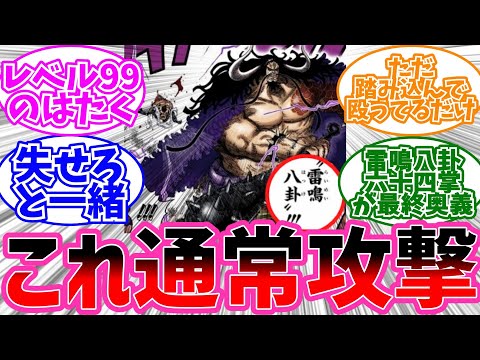
Kaido’s signature technique “Raimei Hakka” (Thundering Eight Trigrams) has captivated One Piece viewers worldwide, becoming a benchmark for how anime can visually and sonically convey overwhelming power. Through meticulous sound design, environmental effects, and character psychology, the animation team created a scene that transcends typical battle choreography and establishes a new standard for depicting supreme strength in anime.
What Happened
During the One Piece anime’s adaptation of the Wano arc, Kaido’s devastating attack “Raimei Hakka” was animated with unprecedented technical sophistication. The scene combines layered sound design, visual distortion effects, and environmental destruction to create an overwhelming sense of power. Upon broadcast, the sequence immediately trended on social media, with viewers praising its visceral impact and technical execution. The animation demonstrated how anime can enhance source material through the unique capabilities of the medium.
Why It Matters
This scene represents a significant evolution in how anime depicts “overwhelming strength.” Rather than relying solely on speed or technique variety—the dominant approach in earlier anime—modern productions like One Piece now emphasize physical weight, environmental impact, and psychological presence. Kaido’s “Raimei Hakka” exemplifies this shift and has become a reference point within the animation industry. The scene demonstrates that meticulous craftsmanship in sound, visuals, and character expression can elevate a single moment into a culturally resonant piece of animation.
Background
Kaido is established in One Piece as one of the Four Emperors and is widely regarded as the strongest creature in the series. While the original manga depicted his techniques effectively, the anime adaptation chose to significantly enhance the visual and auditory presentation of his signature move. This decision reflects a broader industry trend toward more immersive, technically advanced battle sequences. The animation team allocated premium resources to this scene, assigning top-tier animators to ensure maximum impact.
Key Points
- Layered Sound Design: The technique employs a three-tier audio structure combining thunder sounds, mechanical elements, and deep bass frequencies to subconsciously signal an “abnormal” power level to viewers.
- Visual Weight Expression: Background distortion and environmental warping create the impression of immense physical force affecting the surrounding space, a technique also seen in works like Jojo’s Golden Wind.
- Character Psychology Alignment: The animation perfectly visualizes Kaido’s established traits—supreme confidence, contempt for opponents, and imperial bearing—making the technique feel authentically connected to his character.
- Environmental Impact: The scene shows the technique affecting the entire environment: air distortion, ground tremors, and cloud separation, emphasizing that the power influences the world itself.
- Anime Enhancement Over Source Material: The anime version significantly expands the original manga’s depiction, leveraging the medium’s audio-visual capabilities to create greater impact.
- Industry Recognition: Animation professionals have cited this sequence as a reference-level example of contemporary power visualization techniques.
Timeline
- 2018 and Earlier: Anime typically expressed “strength” through speed and technique variety, exemplified by characters like Beerus in Dragon Ball Super.
- 2019 Onward: Industry shift toward expressing power through physical weight and environmental effects, seen in Demon Slayer and Jujutsu Kaisen.
- 2020–2023: One Piece anime intensifies this trend, with particular emphasis on Four Emperor-related scenes.
- Broadcast Date: “Raimei Hakka” airs and immediately generates significant social media engagement and industry discussion.
Perspectives
Viewer Reception: Social media responses overwhelmingly praised the scene’s impact, with many calling it among the most powerful battle moments in One Piece’s entire anime run. Viewers appreciated both the technical execution and how effectively it communicated Kaido’s strength.
Comparative Analysis: When evaluated against similar “overwhelming power” scenes from other major anime—including Demon Slayer’s Rengoku sequence, Jujutsu Kaisen’s Gojo technique, and Attack on Titan’s Colossal Titan transformation—”Raimei Hakka” ranks highest in combined sound design and visual expression, though some scenes exceed it in psychological depth.
Source Material Adaptation: Some viewers noted that the anime significantly enhanced the original manga depiction. Rather than criticism, this observation was generally framed as appreciation for the animation team’s creative judgment and technical skill in leveraging the medium’s unique strengths.
Production Intent: The animation team’s clear objective was to instantaneously establish Kaido’s status as a supreme force through sensory impact, successfully achieving perfect alignment between creative intent and viewer perception.
Insights
The success of “Raimei Hakka” reveals fundamental truths about contemporary anime production. First, the medium’s power lies not in merely reproducing source material but in enhancing it through audio-visual sophistication. Second, viewer impact is maximized when technical execution, character psychology, and narrative context align perfectly. Third, the animation industry has developed increasingly sophisticated techniques for conveying abstract concepts like “overwhelming strength” through concrete sensory experiences.
The scene also demonstrates strategic resource allocation in anime production: by concentrating premium talent on pivotal moments, studios create memorable peaks that define entire series. This approach explains why “Raimei Hakka” resonates so powerfully—it represents the convergence of artistic intent, technical mastery, and psychological understanding of viewer perception.
Looking forward, this sequence establishes expectations for how Kaido’s final confrontation with Luffy should be animated. The animation team has set a high standard that future scenes will be measured against, suggesting that the industry’s technical capabilities and ambitions continue to expand.