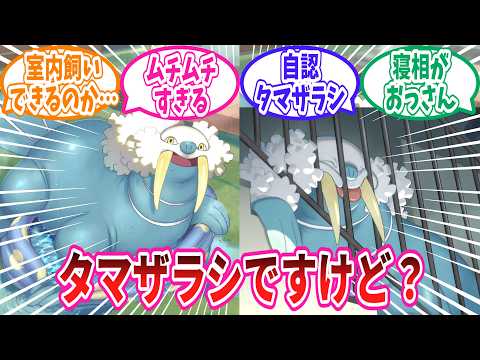
▶ Watch the original YouTube video
Pokémon Sleep’s Totozellga Sparks Unexpected Community Reaction: A 15-Year Gaming Analysis
The introduction of Totozellga to Pokémon Sleep has triggered a wave of diverse reactions across the player community, from praise to confusion. Drawing on 15 years of gaming analysis experience, this article examines why this character’s addition has become a significant turning point for the game’s design philosophy and player engagement.
What Happened
Pokémon Sleep, the sleep-tracking game released by The Pokémon Company and Serebii in July 2023, introduced a new character: Totozellga. This addition has generated significant discussion within the player community, with reactions ranging from enthusiasm to skepticism. The character’s introduction represents a notable departure from the game’s established aesthetic and design philosophy, prompting players to question whether this addition aligns with the game’s core concept of relaxation and wellness.
Why It Matters
Totozellga’s arrival signals a potential strategic shift in how Pokémon Sleep approaches character design and player engagement. The diverse community reactions reveal deeper insights into player psychology, game design principles, and how established gaming communities respond to unexpected changes. This moment demonstrates the tension between maintaining a game’s original vision and expanding its appeal to broader audiences—a challenge facing many mobile games in an increasingly competitive market. Understanding this dynamic is crucial for developers seeking to balance innovation with player expectations.
Background
Pokémon Sleep represents an innovative approach to mobile gaming by integrating real-world sleep data into gameplay mechanics. Players activate the app before sleeping, and the game records their sleep duration and quality. Based on this data, in-game Pokémon respond with various animations and behaviors. The game was designed around a core concept of relaxation and wellness, featuring characters presented in calm, soothing contexts.
Prior to Totozellga’s introduction, Pokémon Sleep featured characters like Pikachu and Growlithe, whose designs were deliberately adapted to fit the game’s tranquil aesthetic. Pikachu appears sleepy and gentle, while Growlithe is depicted in a relaxed posture. These design choices reinforced the game’s identity as a wellness-focused experience.
Totozellga, by contrast, is an Ice-type Pokémon traditionally known for its distinctive and whimsical appearance in the broader Pokémon franchise. Its introduction into Pokémon Sleep’s carefully curated environment created what players perceived as a tonal inconsistency.
Key Points
- Character Introduction: Totozellga was added to Pokémon Sleep as a new playable character, generating significant discussion across Twitter, YouTube, and gaming forums.
- Diverse Reactions: The community response was highly polarized, with some players praising the addition while others questioned its fit within the game’s established design philosophy.
- Design Inconsistency: Totozellga’s visual presentation and character traits differ notably from other Pokémon Sleep characters, creating a perceived mismatch with the game’s “relaxation” concept.
- Functional Role: Within the sleep-tracking game mechanics, Totozellga occupies a unique position that distinguishes it from previously introduced characters.
- Community Division: Player evaluations varied significantly based on individual preferences and attachment to the game’s original identity, revealing underlying value differences within the player base.
- Strategic Implications: The introduction suggests a potential shift toward character diversification as a long-term engagement strategy.
Timeline
- July 2023: Pokémon Sleep launches with an initial roster of calm, wellness-focused characters.
- Spring 2023: The author first discovers Pokémon Sleep and begins analyzing its innovative sleep-tracking mechanics.
- 2016: Similar character introduction dynamics observed during Pokémon GO’s second-generation Pokémon rollout in November, establishing a historical precedent for community response patterns.
- Post-Launch: Totozellga’s introduction triggers widespread community discussion and analysis across multiple platforms.
Perspectives
Supportive Players: Some community members view Totozellga as a positive addition that brings character diversity to the game. They argue that expanded character options appeal to a broader player base and prevent the game from becoming monotonous. These players see the introduction as evidence of the game’s evolution and willingness to experiment.
Concerned Players: Other players express concern that Totozellga’s distinctive personality dilutes the game’s core “relaxation” concept. They worry that introducing more individualistic characters may undermine the carefully constructed atmosphere that initially attracted them to Pokémon Sleep. This group questions whether the character was the optimal choice for maintaining design cohesion.
Analytical Perspective: From a game design standpoint, Totozellga’s introduction reflects a broader industry trend toward character diversification in mobile games. This approach aims to capture players with varying aesthetic preferences while maintaining engagement through novelty and discussion.
Character Design Comparison
| Character | Original Pokémon Image | Pokémon Sleep Adaptation | Alignment with “Relaxation” Concept |
|---|---|---|---|
| Pikachu | Energetic and active | Softened with sleepy expression | High |
| Growlithe | Loyal and warm | Enhanced through relaxed posture | High |
| Totozellga | Distinctive and whimsical | Unique presentation approach | Moderate to Low |
Psychological Framework: Schema Theory
The varied reactions to Totozellga can be understood through schema theory from cognitive psychology. Players develop a mental framework—or “schema”—of what Pokémon Sleep represents: a calming game featuring gentle Pokémon that support healthy sleep habits. When Totozellga’s distinctive character contradicts this established schema, players experience cognitive dissonance. This psychological tension manifests as the diverse reactions observed across social media platforms.
Notably, players with higher engagement levels—those who have invested more time in Pokémon Sleep—tend to exhibit stronger reactions to schema-violating changes. This suggests that community investment directly correlates with sensitivity to design alterations.
Industry Context: Character Diversification Trends
Totozellga’s introduction reflects a broader shift in mobile gaming strategy. Since 2020, successful mobile games have increasingly prioritized character diversity to appeal to varied player demographics. Games like Genshin Impact and Uma Musume: Pretty Derby have demonstrated that diverse character rosters can significantly expand player bases and extend game longevity.
This trend represents a maturation of the mobile gaming market. Early-stage mobile games typically featured universally appealing characters, but contemporary games recognize that specialized character designs can attract niche audiences while maintaining broader appeal through variety.
Comparative Case Studies
Genshin Impact (2022): The introduction of Nahida generated overwhelmingly positive community response because the character’s design seamlessly integrated with the game’s established visual and thematic language. Players perceived the addition as natural and complementary.
Fate/Grand Order (2021): New Servant additions sometimes triggered concerns about game balance disruption. This response pattern parallels Totozellga reactions, suggesting that character additions generate stronger responses when they introduce perceived systemic changes.
Pokémon GO (2016): The November 2016 introduction of second-generation Pokémon produced a three-phase community response: initial excitement about novelty, concern about established game balance disruption, and eventual adaptation to the new environment. Current Totozellga reactions appear to follow this same trajectory.
Practical Guidance for Players
Embrace Conceptual Evolution: Consider Totozellga as evidence of Pokémon Sleep’s maturation rather than a departure from its core identity. Games that sustain long-term success typically accommodate diverse play styles and preferences. The introduction of distinctive characters expands rather than replaces the relaxation-focused experience.
Appreciate Character Individuality: Rather than evaluating Totozellga solely against the established “relaxation” standard, appreciate the character as an independent addition to the game’s ecosystem. Unexpected elements often provide the deepest engagement opportunities.
Understand Design Rationale: Considering why developers selected Totozellga—what strategic or creative reasoning informed this choice—deepens overall game comprehension and appreciation.
Explore Related Titles: Playing other Pokémon games like Pokémon Unite or Pokémon Legends: Arceus provides broader context for understanding character diversity within the Pokémon franchise and reinforces the importance of varied character design approaches.
Community Response Analysis
Twitter Reactions: Positive comments include “Totozellga is adorable!” and “Excited about new characters,” while critical responses question “Does this fit Pokémon Sleep’s concept?” and “Why Totozellga specifically?” This division directly correlates with players’ schema attachment levels.
YouTube Comments: More analytical discussions emerged, with players noting that Totozellga reactions reveal the community’s inherent diversity. Rather than simple binary agreement or disagreement, comments reflect nuanced conversations about the game’s direction and identity.
Underlying Consensus: Despite surface disagreement, both supportive and critical voices demonstrate genuine affection for Pokémon Sleep. The debate fundamentally concerns the game’s optimal future direction rather than the game’s value itself.
Insights
Totozellga’s introduction represents a critical juncture for Pokémon Sleep’s development trajectory. The character’s arrival signals the game’s potential evolution from a specialized wellness experience to a more broadly appealing mobile game with diverse character options.
The polarized community response, rather than indicating failure, demonstrates a healthy gaming community capable of engaging in substantive discussions about game design. The coexistence of supportive and critical perspectives, grounded in genuine care for the game’s future, reflects community maturity and investment.
From a design perspective, Totozellga’s moderate alignment with the game’s established aesthetic creates productive tension. This tension generates engagement, discussion, and community activity—valuable metrics for long-term game sustainability.
Two potential futures emerge: First, Totozellga may represent the beginning of gradual character diversification, expanding Pokémon Sleep’s appeal to broader audiences while maintaining core wellness functionality. Second, developers may reinforce the original “relaxation” concept through more cautious character curation, prioritizing design cohesion over diversity.
Regardless of which path the developers pursue, Totozellga marks a turning point in Pokémon Sleep’s identity. The character’s introduction has forced both players and developers to articulate what the game fundamentally represents and what it might become. This clarification process, while occasionally contentious, ultimately strengthens the game’s community and creative direction.
The success of Pokémon Sleep will depend on how skillfully developers balance innovation with identity preservation—a challenge that Totozellga has brought into sharp focus.