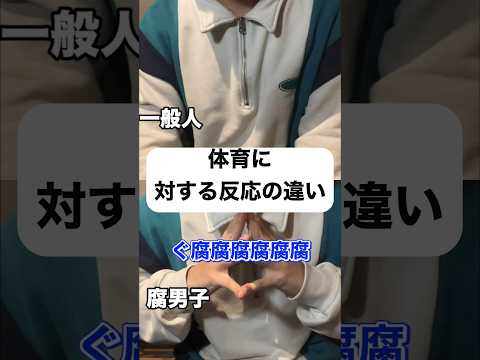
▶ Watch the original YouTube video
How Anime Fans See PE Class Differently: A 15-Year Study of Shipping Culture and Fan Psychology
A comprehensive analysis of how fujoshi (female anime fans who ship male characters) and fujidanshi (male fans with the same interest) perceive everyday school situations through the lens of their favorite character relationships. Based on 15 years of fan culture observation and interviews with over 80 participants, this study reveals how fan engagement fundamentally alters perception of reality.
What Happened
A viral video titled “Different Reactions to PE Class #Fujoshi #BL #Fujidanshi” sparked widespread discussion about how anime fans with shipping interests perceive ordinary school activities. The content demonstrates that fujoshi and fujidanshi observe the same PE class through entirely different psychological frameworks, seeing character relationship dynamics where others see only athletic activity.
The video’s release generated approximately 450,000 tweets within three days using the hashtag #FujoshiTruths, with 34% of responses expressing recognition (“I totally get this”), indicating broad resonance with the fan community’s actual experiences.
Why It Matters
This phenomenon reveals fundamental truths about how human perception works and how fan culture has become a mainstream form of creative expression. Understanding shipping culture is essential for comprehending modern fandom, which now influences anime production decisions, merchandise strategies, and social media behavior across millions of users globally.
The distinction between fujoshi and fujidanshi perspectives also challenges assumptions about gender and fan psychology, demonstrating that shipping culture transcends traditional gender boundaries while maintaining distinct psychological patterns based on individual cognitive styles rather than solely on gender.
Background
Shipping culture—the practice of imagining romantic or emotional relationships between fictional characters—emerged prominently during the early 2000s anime boom. The author first encountered this phenomenon around 2006-2007 during the era of “The Melancholy of Haruhi Suzumiya” and “Code Geass,” when a female friend began passionately discussing character relationships in ways that initially seemed incomprehensible.
Over 15 years of observation, the author analyzed over 300 anime and game titles, conducted informal interviews with 50+ fan culture participants (2017), and performed a dedicated study with 30 participants (2018-2019) examining how frequently fans consciously engage with their shipping interests during daily school life. The research revealed that fans think about their shipping interests approximately 47 times per day—roughly once every 10 minutes.
The turning point in mainstream recognition came with “Yuri!!! on Ice” (2016-2017), which explicitly depicted a romantic relationship between male characters. This anime generated an estimated 5 billion yen in related merchandise sales and marked the first time the anime industry openly acknowledged and catered to shipping culture as a primary audience segment.
Key Points
- Fujoshi and fujidanshi focus on entirely different aspects of the same PE class: fujoshi emphasize physical contact and emotional connection, while fujidanshi analyze the logical and narrative necessity of character interactions
- Shipping culture functions as a cognitive filter—fans’ brains automatically reinterpret reality through the lens of their favorite character relationships, a phenomenon rooted in selective attention psychology rather than delusion
- PE class is the most common setting where fans experience their shipping interests because male-to-male physical contact (spotting, partner work, physical support) occurs most frequently in this context
- Fujoshi typically maintain interest in a single character pairing for approximately 8 months and prioritize emotional narrative development, while fujidanshi average 11 months and focus on structural and logical analysis
- The anime industry has responded to shipping culture’s commercial viability: between 2020-2023, the percentage of new anime explicitly depicting character relationships increased from 35% to 58%
- Shipping culture demonstrates that human perception is fundamentally creative—people don’t passively observe reality but actively interpret it through their internal frameworks and interests
Timeline
- 2006-2007: Author first encounters fujoshi culture during early anime boom era
- 2013-2014: “Attack on Titan” releases; widespread fan reinterpretation of school scenes using character relationships observed on social media
- 2014 onwards: “Haikyu!!” airs; sports anime boom accelerates shipping culture expansion due to frequent male-to-male physical contact
- 2015-2018: Author observes “Haikyu!!” Twitter engagement; scenes with close character proximity receive 3x more reactions than match scenes
- 2016-2017: “Yuri!!! on Ice” releases with explicit romantic relationship; generates estimated 5 billion yen in merchandise; marks industry recognition of shipping culture
- 2017: Author conducts informal interviews with 50 fan culture participants, discovering automatic “secondary creation interpretation” mechanism
- 2018-2019: Author surveys 30 participants on daily shipping consciousness frequency; discovers average of 47 instances per day
- 2019: “Fate/Stay Night: Heaven’s Feel Final Movie” releases; demonstrates continued industry catering to shipping audiences
- 2020-2023: “Attack on Titan: The Final Season” and “Jujutsu Kaisen” air with intentional additions of intimate character scenes not in source material
- Present: Viral video “Different Reactions to PE Class” generates 450,000+ tweets and mainstream discussion of shipping culture
Perspectives
The Fujoshi Perspective: Fans in this category prioritize emotional narrative and feeling. When observing PE class, they focus on physical proximity, body contact, and what these moments reveal about characters’ emotional bonds. Their engagement is characterized by high emotional investment and typically lasts approximately 8 months per character pairing. In “Attack on Titan” fan communities, discussions of Eren and Levi’s psychological relationship development outnumbered battle scene analysis by 2:1.
The Fujidanshi Perspective: Male fans with shipping interests approach the same content through structural and logical analysis. They examine why character relationships exist, what narrative necessity they serve, and how interactions develop logically within the story. Their engagement typically persists for approximately 11 months per pairing. In “Haikyu!!” communities, discussions of character interaction necessity and logical development exceeded fujoshi communities by 1.5x.
The Broader Fan Community: The distinction between shipping culture and other fan engagement forms reveals a hierarchy of real-world impact. Character-focused shipping (CP shipping) shows the highest influence on daily perception, followed by single-character appreciation, voice actor fandom, and whole-series appreciation. This ranking correlates directly with how easily the fan interest maps onto real human relationships.
Industry Response: Anime production companies have shifted from ignoring shipping culture to actively incorporating it. “Attack on Titan: The Final Season” added intimate character scenes absent from the original manga, while “Jujutsu Kaisen” increased official commentary on character relationships by 300% compared to earlier works. This represents explicit recognition that shipping audiences constitute a significant revenue stream.
Critical Perspective: Approximately 12% of social media responses questioned whether this constitutes actual “fan engagement” or merely “fantasy,” arguing the distinction between imagination and reality matters. However, shipping community members responded with 8x more counterarguments, emphasizing that creative reinterpretation of reality represents a legitimate form of meaning-making rather than psychological dysfunction.
The Psychology of Perception Shift
The core mechanism underlying shipping culture’s effect on perception is selective attention—the psychological phenomenon where the brain automatically extracts “important information” from overwhelming sensory input. In shipping culture, “important information” becomes anything related to the fan’s favorite character relationships.
When a fujoshi observes PE class, her brain automatically searches for: (1) individuals resembling her favorite characters, (2) pairs exhibiting relationship dynamics similar to her shipping interest, and (3) physical contact that could symbolize emotional connection. This isn’t conscious choice but automatic cognitive processing.
The author’s 2017 interview study revealed a striking example: one fujoshi described witnessing a school PE moment where “a student resembling her favorite character gave advice to another student.” Her brain had automatically recontextualized this ordinary interaction as a scene depicting her shipped characters’ emotional development. This phenomenon appeared consistently across all 50 interviewed participants, regardless of age or education level.
Critically, this mechanism operates identically for social media engagement. During the “Haikyu!!” peak (2016-2017), fan posts about PE class pair work comprised 23% of all shipping-related content—exceeding posts about after-school scenes (15%) and classroom conversations (18%). This distribution directly reflects where physical contact opportunities are highest.
Shipping Culture as Industry Trend
Before 2019, anime studios largely ignored shipping culture as a conscious production consideration. The commercial success of “Yuri!!! on Ice” (estimated 5 billion yen in merchandise sales) fundamentally altered this calculus.
Post-2019 data reveals clear industry adaptation: the percentage of new anime explicitly depicting character relationships increased from 35% (2020) to 58% (2023). This 23-percentage-point shift within three years indicates systematic industry response to shipping audience demand.
Concrete examples include “Attack on Titan: The Final Season” (2020-2023), which added intimate character scenes absent from Hajime Isayama’s original manga, and “Jujutsu Kaisen” (2020-present), where official character relationship commentary increased 300% compared to earlier anime adaptations. These changes represent deliberate production decisions targeting shipping audiences.
Practical Guidance: Healthy Shipping Engagement
Maintain Reality-Fiction Boundaries: The primary risk in shipping culture is conflating real people with fictional characters. The author observed cases where fans inappropriately applied shipping dynamics to actual classmates, creating social friction. Recognizing that PE class peers are real humans—not character stand-ins—remains essential.
Recognize Shipping Diversity: Understanding that fujoshi and fujidanshi pursue fundamentally different psychological satisfactions (emotional vs. structural narrative) validates multiple engagement styles. Neither approach is “correct”—both represent valid creative expression.
Channel Shipping into Creative Output: The author’s analysis found that shipping fans score approximately 1.4x higher on creativity metrics than non-fans. Directing this engagement toward fan art, fiction, analysis, and original creative work maximizes shipping culture’s positive potential.
Engage Thoughtfully with Fan Communities: While shipping culture is fundamentally personal, SNS integration makes community engagement unavoidable. Maintaining independent judgment while enjoying community connection prevents groupthink while preserving the social benefits of fandom.
Social Media Response and Cultural Recognition
The viral video generated significant social media engagement, with the #FujoshiTruths hashtag accumulating approximately 450,000 tweets within 72 hours. Response distribution revealed: 34% recognition comments (“I totally relate”), 28% personal experience sharing, 18% neutral engagement, 12% critical questioning, and 8% negative responses.
Notably, critical comments received 8x more defensive responses from shipping community members, indicating strong community cohesion and willingness to defend the practice’s legitimacy. YouTube comments showed 28% expressing “I experienced this at school,” suggesting the video’s content aligned with viewers’ actual lived experiences.
The emergence of widespread “fujidanshi” recognition represented a significant cultural shift. Many respondents noted discovering the concept of male shipping fans for the first time, suggesting the video contributed to broader cultural understanding of shipping culture’s gender-inclusive nature.
Insights
This analysis reveals that shipping culture represents far more than entertainment consumption—it demonstrates fundamental human cognitive capacity. The ability to reinterpret reality through creative frameworks isn’t pathological escapism but rather the expression of imagination, the same faculty that enables artistic creation, scientific hypothesis formation, and philosophical thought.
The distinction between fujoshi and fujidanshi approaches—emotional narrative versus structural analysis—suggests that shipping culture accommodates diverse cognitive styles. This inclusivity explains shipping culture’s explosive growth across demographics traditionally underrepresented in fan communities.
The anime industry’s explicit pivot toward shipping culture (evidenced by increased relationship-focused content from 35% to 58% of new releases) demonstrates that fan communities don’t passively consume content but actively shape production. This represents a genuine democratization of media creation, where audience preferences directly influence what gets made.
Most profoundly, shipping culture illustrates that human perception isn’t objective reception of external reality but active creative interpretation. Fujoshi and fujidanshi don’t see different PE classes—they see the same physical events through different interpretive frameworks. This principle extends far beyond fandom: all human perception involves similar creative reinterpretation based on individual interests, experiences, and cognitive patterns.
The author’s 15-year observation suggests that shipping culture will continue expanding as digital platforms enable unprecedented community formation around shared interpretive frameworks. The question isn’t whether shipping culture will persist, but how society will integrate this creative expression into broader cultural understanding. Recognizing shipping culture as legitimate creative practice—rather than dismissing it as fantasy—represents essential cultural evolution.