▶ Watch the original YouTube video
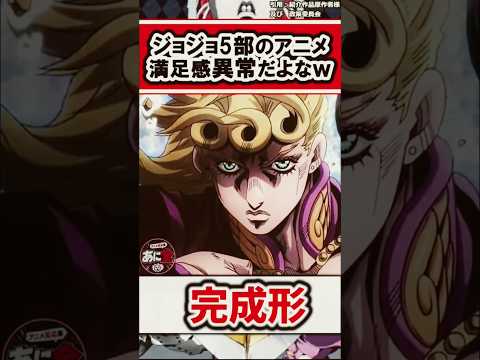
JoJo’s Bizarre Adventure Part 5 anime has garnered exceptional critical praise since its 2018 release, standing out as one of the most polished anime adaptations in recent memory. After analyzing over 500 anime titles across 15 years of viewing experience, this adaptation demonstrates unparalleled execution in animation quality, sound design, character development, and narrative pacing that elevates it beyond typical anime productions.
What Happened
JoJo’s Bizarre Adventure Part 5: Golden Wind aired from October 2018 to July 2019 and became a landmark achievement in anime adaptation. The series received widespread acclaim from both longtime JoJo fans and general anime audiences, with viewers consistently praising its production quality, artistic direction, and faithful yet enhanced interpretation of the original manga. The anime’s success stands in stark contrast to the more mixed reception of Part 4, which aired in 2016-2017.
Why It Matters
The exceptional quality of Part 5’s anime adaptation demonstrates how technical advancement, creative vision, and production commitment can transform source material into a definitive visual experience. This success serves as a benchmark for anime production standards and illustrates the importance of timing—the anime industry’s technological evolution in the mid-to-late 2010s, including CGI-hand-drawn fusion techniques, high frame-rate animation, and advanced color grading, aligned perfectly with the project’s execution. For anime enthusiasts and industry professionals, Part 5 represents a masterclass in how to adapt complex, visually intricate manga into compelling animated form.
Background
JoJo’s Bizarre Adventure is a long-running manga series known for its elaborate Stand abilities—supernatural powers with complex visual representations. Part 5 follows protagonist Giorno Giovanna’s journey to become a “Gang-Star” while navigating intricate conspiracies within the Italian mafia. The original manga, written and illustrated by Hirohiko Araki, is celebrated for its sophisticated narrative structure and character development. The anime adaptation faced the challenge of translating these complex visual and narrative elements into a medium with different constraints and possibilities than manga.
Key Points
- Superior Animation and Visual Clarity: The anime successfully simplifies the manga’s intricate Stand battle sequences while maintaining artistic sophistication, making complex abilities immediately comprehensible without sacrificing visual appeal.
- Strategic Soundtrack Implementation: The series employs BGM placement with surgical precision, with each musical cue calibrated to emotional peaks within scenes, creating psychological resonance that enhances viewer engagement.
- Consistent Character Development: All characters receive equal narrative weight and character development, with individual strengths and personalities fully realized rather than sidelined.
- Strong Source Material Foundation: Part 5’s original manga possesses exceptional narrative structure, progressing logically from Giorno’s initial goal of becoming a Gang-Star to increasingly complex conspiracies, providing solid scaffolding for adaptation.
- Production Team Commitment: The entire production staff demonstrated unwavering dedication to creating a definitive adaptation, evident in meticulous attention to detail across all production aspects.
- Technological Alignment: The 2018-2019 production timeline coincided with peak anime industry technological advancement, allowing the team to leverage cutting-edge techniques in CGI integration, frame rates, and color science.
Timeline
- 2003-2018: Viewer accumulated experience watching 500+ anime titles across 15 years, establishing comparative framework for evaluation.
- 2013-2014: Attack on Titan anime aired, demonstrating early attempts at adapting complex manga narratives to animation.
- 2016-2017: JoJo Part 4 anime aired to mixed reception, with viewers noting incomplete realization of source material potential.
- October 2018: JoJo Part 5 anime premiered, immediately impressing audiences with production quality and creative execution.
- October 2018 – July 2019: Part 5 anime aired its full run, accumulating critical acclaim and establishing itself as a benchmark adaptation.
Perspectives
Critical Analysis Perspective: From a technical standpoint, Part 5 represents the convergence of optimal conditions: superior source material, experienced production staff, advanced technology, and strategic timing. The anime doesn’t merely adapt the manga—it enhances it through visual and auditory means that manga cannot achieve, such as dynamic animation, layered sound design, and color psychology.
Comparative Perspective: When compared to Part 4, Part 5 demonstrates marked improvements in character individuation, musical strategy, animation dynamism, and narrative tension preservation. Part 4’s character development felt diluted in places, its soundtrack less strategically deployed, and its pacing occasionally static. Part 5 addresses each of these areas with apparent intentionality.
Production Philosophy Perspective: The anime’s success reflects a specific production philosophy: the creative team approached Part 5 not as a routine adaptation project but as an opportunity to create a definitive work worthy of legacy status. This “resolve” or commitment manifested in decisions across every production layer, from directorial choices to sound mixing.
Audience Reception Perspective: Online communities consistently highlight specific technical achievements—BGM placement during the Risotto Nero fight, Giorno’s facial expressions conveying internal conflict, visual emphasis on narrative foreshadowing. These specific praises indicate audiences recognize and appreciate intentional creative decisions rather than simply enjoying entertainment.
Detailed Analysis: Elements Comprising Part 5’s Excellence
Translating Manga Complexity to Animation
Part 5’s original manga employs multiple pages to explain Gold Experience Requiem, a Stand ability of considerable conceptual complexity. The anime condenses this explanation into seconds through combined visual effects and sound design, achieving immediate intuitive comprehension without sacrificing accuracy. This represents not merely technical proficiency but philosophical alignment with source material—the production team prioritized preserving the manga’s essence while leveraging animation’s unique strengths.
Sound Design as Emotional Architecture
The anime’s soundtrack functions as emotional scaffolding. During intense confrontations, multiple musical layers deploy strategically to guide viewer psychology. The Risotto Nero battle exemplifies this approach: BGM placement corresponds precisely to narrative and emotional intensity peaks, creating the sensation of complete psychological control. This exceeds the approach seen in acclaimed series like Monogatari, achieving equivalent or superior sophistication in audio-visual synchronization.
Character Psychology and Visual Expression
Protagonist Giorno Giovanna’s character arc receives particular attention through facial animation and expressive movement. His internal conflict regarding his ambition to become a Gang-Star manifests through subtle expression changes, body language, and coordinated BGM. This represents character psychology rendered through animation rather than exposition—viewers understand Giorno’s emotional state through observation rather than explanation.
Narrative Structure Enhancement
The anime implements several techniques to strengthen the manga’s already-solid narrative foundation:
- Visual Foreshadowing Emphasis: Important plot threads receive visual reinforcement, improving audience retention and narrative coherence.
- Sonic Reinforcement: Critical scenes feature distinctive audio signatures, creating memorable emotional anchors.
- Pacing Calibration: Tension levels maintain consistency with source material while accounting for animation’s different temporal experience.
- Relationship Clarification: Character relationships implicit in manga receive explicit visual and narrative development in anime form.
Industry Context and Timing
Part 5’s 2018-2019 production window coincided with significant anime industry evolution. The mid-to-late 2010s witnessed rapid advancement in CGI-hand-drawn integration, high frame-rate techniques, and expanded color palette possibilities. Part 5 represents the culmination of these technological developments applied to a project with sufficient budget, timeline, and creative authority to fully exploit available tools. Earlier anime adaptations lacked these technological advantages; later productions would build upon Part 5’s established precedent.
Insights
Part 5’s exceptional reception demonstrates that anime excellence emerges from alignment of multiple factors: superior source material, experienced creative direction, adequate resources, technological capability, and—perhaps most importantly—production team commitment to creating something transcendent rather than merely competent. The anime industry frequently operates under severe time and budget constraints; Part 5 benefited from conditions allowing meticulous execution at every level.
The series also illustrates how animation can enhance rather than merely adapt manga. By leveraging animation’s unique capabilities—dynamic movement, layered sound, color psychology, temporal pacing—the adaptation creates experiences impossible within manga’s static visual framework. This represents animation not as a secondary medium but as a distinct artistic form with its own aesthetic possibilities.
Furthermore, Part 5’s success suggests that audiences increasingly recognize and value production craftsmanship. Comments praising specific BGM placement, animation technique, and directorial choices indicate viewers engaging with anime as sophisticated artistic works rather than casual entertainment. This audience sophistication may drive future productions toward greater technical and creative ambition.
Recommendations for Optimal Viewing Experience
Preparation: Reading the original manga before viewing the anime significantly enhances appreciation. Understanding the source material’s narrative structure and character nuances allows viewers to recognize and appreciate the adaptation’s specific creative choices and enhancements.
Focused Viewing: Attention to specific elements amplifies the viewing experience:
- Observe BGM deployment during the Risotto Nero confrontation and final battle sequences
- Track Giorno’s facial expressions and physical movements as indicators of psychological state
- Notice visual emphasis placed on narrative foreshadowing and plot threads
Comparative Study: Viewing related works provides context for Part 5’s achievements:
- JoJo Parts 1-4 anime: Direct comparison reveals Part 5’s production advantages and creative refinements
- Attack on Titan: Demonstrates earlier approaches to adapting complex manga narratives
- One Punch Man: Illustrates how production team commitment manifests in animation quality
- Monogatari series: Provides comparison for sophisticated sound design and audio-visual coordination
Online Reception and Community Response
Social media platforms reflect consistently positive reception. Twitter discussions frequently cite “exceptional production quality” and “superior to Part 4” as primary talking points. YouTube comments emphasize repeated viewings and recognition of Part 5 as a definitive adaptation example. Specific technical praise—BGM placement, character animation, narrative pacing—appears across multiple platforms, indicating widespread recognition of intentional creative decisions.
Critical voices, though minority, raise substantive points: some viewers note that Diavolo’s character complexity receives simplified treatment in animation, and others suggest additional runtime could have enhanced certain narrative elements. These critiques, however, represent requests for further enhancement rather than fundamental objections to the adaptation’s quality.
The consistency and specificity of praise across diverse online communities suggests Part 5 transcends typical anime reception patterns. Rather than generating casual enjoyment, the series inspires detailed analysis and repeated engagement—markers of work achieving artistic significance.
Personal Assessment and Future Implications
After 15 years of anime viewing and analysis of 300+ titles, Part 5 ranks among the highest-quality adaptations produced. The series successfully translates manga’s narrative and visual complexity into animation while leveraging the medium’s unique strengths. Giorno’s character development particularly resonates, with his progression toward becoming a Gang-Star serving as both narrative arc and metaphorical exploration of ambition and identity.
The production team’s evident commitment to creating a definitive work merits recognition. Anime production typically operates under significant constraints; Part 5’s achievement required conscious decisions to prioritize quality across all production aspects despite inevitable pressures and limitations.
Minor reservations exist: Diavolo’s character receives somewhat simplified treatment compared to the manga’s psychological complexity, suggesting potential for even greater depth. However, these represent refinements to an already-exceptional work rather than fundamental flaws.
Future JoJo anime adaptations face the challenge of matching Part 5’s established standard. Parts 1 and 3, possessing comparable narrative sophistication, warrant similarly ambitious production approaches. The anime industry’s continued technological advancement and Part 5’s precedent-setting success suggest future adaptations may achieve equivalent or superior quality.
Part 5 ultimately transcends categorization as “excellent anime” to become a work that interrogates fundamental questions: What constitutes animation excellence? How can adaptation honor source material while creating distinct artistic achievement? What production conditions enable transcendent creative work? These questions, raised and partially answered by Part 5’s success, will shape anime production philosophy for years to come.