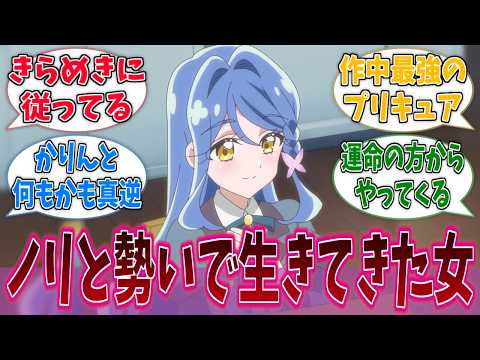
▶ Watch the original YouTube video
Detective Precure’s Kurea Defies Expectations: How Fans Discovered the Character’s Surprising Carefree Nature
Fans of the anime series “Detective Precure!” have discovered an unexpected side to the character Kurea, whose carefree and spontaneous personality contrasts sharply with her intellectual appearance. Through social media reactions and detailed character analysis, viewers have identified a significant gap between Kurea’s initial impression and her actual behavior, revealing how modern Precure series are evolving their character design beyond traditional archetypes.
What Happened
Fans watching “Detective Precure!” began noticing that Kurea, a character who appears calm and intellectual on the surface, actually exhibits a surprisingly carefree and impulsive personality. This observation gained traction on social media, with fans commenting that “Kurea lives more by impulse than we initially imagined.” The realization sparked widespread discussion in the Precure fan community about how the character’s behavior contradicts her initial presentation, leading to a collective reassessment of her character throughout the series.
Why It Matters
This character discovery reflects a broader shift in modern anime production, particularly within the long-running Precure franchise. Rather than adhering to traditional character archetypes—where blue Precures are calm and logical, red ones are passionate, and so forth—contemporary series are introducing characters with contradictory traits that feel more realistic and complex. Kurea’s case demonstrates how intentional character design can subvert viewer expectations, creating deeper engagement and appreciation for nuanced storytelling. This evolution in character writing represents a significant departure from earlier Precure series and indicates how the franchise is adapting to contemporary audience preferences.
Background
“Detective Precure!” is the latest installment in the long-running Precure magical girl anime franchise, which has been producing series for over 15 years. The series introduces mystery-solving elements alongside traditional magical girl action, creating a unique premise that combines detective work with superhero narratives. Kurea is one of the main characters, initially presented as an intelligent, composed individual suited to solving mysteries. However, as the series progressed, viewers observed that her actual behavior frequently contradicted this initial characterization, revealing a more spontaneous and emotionally-driven personality.
Key Points
- Kurea appears intellectually composed and level-headed but frequently acts on impulse and emotional whim, creating a significant gap between appearance and behavior
- This character design breaks traditional Precure archetypes, which typically assign fixed personality traits to characters based on their color and role
- Fan communities have collectively recognized this contradiction, with social media discussions revealing widespread awareness of Kurea’s dual nature
- The character’s design may represent an intentional strategy to subvert viewer expectations and deepen character engagement
- Kurea’s carefree nature creates an interesting tension with her role in mystery-solving, which typically requires logical thinking
- This character evolution reflects a broader trend in recent Precure series toward depicting characters with multiple, sometimes contradictory traits rather than single defining characteristics
Character Analysis: The Duality of Kurea
Kurea’s character presents a fascinating study in contradictory characterization. Her intellectual appearance and initial calm demeanor led viewers to categorize her as a logical, measured character—a classification reinforced by her role in the mystery-solving aspects of the narrative. However, repeated instances throughout the series reveal her tendency to make decisions based on immediate feelings rather than careful analysis. She frequently acts on whims, demonstrates strong emotional responses, and prioritizes her current mood over rational deliberation.
This pattern distinguishes Kurea from previous Precure characters who maintained consistent personality traits. For comparison, Yuri Tsukikage from “Heartcatch Precure!” appeared perfect and composed but was revealed to harbor internal doubts—yet her fundamental calm nature remained unchanged. Similarly, Kakyuya Kogetsu from “Star Twinkle Precure!” seemed like an ideal student but prioritized her emotions, though her core identity as an overachiever persisted. Kurea, by contrast, presents a more fundamental contradiction: she appears intellectual but fundamentally operates on emotional impulse.
The Evolution of Precure Character Design
The shift evident in Kurea’s characterization reflects a larger transformation within the Precure franchise. Earlier series (from “Futari wa Precure” through “Smile Precure!”) assigned clear roles to each character: red Precures were passionate, blue ones were calm, yellow ones were gentle. This formula provided predictability and allowed viewers to understand characters through their designated archetypes.
Recent Precure series, particularly since “Healin’ Good Precure,” have begun dismantling these rigid role assignments. Characters now display multiple, sometimes conflicting traits that create more authentic and complex personalities. Kurea exemplifies this trend perfectly: her intellectual appearance serves as a surface-level characteristic that masks her emotionally-driven core. This approach aligns with contemporary animation practices that prioritize character depth and psychological realism over archetypal simplicity.
The introduction of detective work as a central plot element in “Detective Precure!” further emphasizes this character complexity. Mystery-solving typically demands logical thinking, yet Kurea’s impulsive nature creates an inherent tension. Rather than resolving this contradiction, the series appears to embrace it, suggesting that characters can be multifaceted and that their contradictions contribute to their authenticity.
Fan Reception and Community Insights
Social media reactions reveal that fans have collectively identified and appreciated Kurea’s contradictory nature. Twitter discussions frequently praise her carefree attitude and light-footed approach to situations, contrasting these observations with her initial appearance. YouTube comments note that Kurea’s character evolves noticeably as the series progresses, with viewers speculating whether this shift was intentional or a natural byproduct of the storytelling.
This fan engagement demonstrates an important principle in character perception: initial impressions strongly influence how viewers interpret characters, but significant contradictions to those impressions create memorable moments and deeper investment. The fan community’s recognition of Kurea’s duality suggests that the production team successfully employed a strategy of subverting expectations to generate interest and discussion.
Some viewers have raised questions about whether Kurea’s impulsive nature fully aligns with her detective role, noting potential inconsistencies in her characterization. However, others argue that these apparent contradictions actually enhance her realism, as real people often display conflicting traits and motivations.
Comparative Character Analysis
Yuri Tsukikage (Heartcatch Precure!): Appears perfect and composed; revealed to harbor doubts and insecurities. However, her fundamental calm nature remains consistent. Her character arc focuses on reconciling her public image with her private struggles.
Kakyuya Kogetsu (Star Twinkle Precure): Seems like an ideal student but prioritizes personal emotions. Her character conflict centers on the tension between her overachiever identity and her desire for emotional authenticity.
Kurea (Detective Precure!): Appears intellectual and composed but fundamentally operates on emotional impulse and spontaneity. Unlike previous examples, her contradiction is not a hidden struggle but rather her core operating principle. Her character is defined by the gap itself rather than by resolving it.
The Psychology of Character Perception
The “surprise” fans experience regarding Kurea’s personality relates to cognitive psychology principles, particularly confirmation bias. Viewers form initial impressions based on early episodes and visual design, then interpret subsequent actions through that lens. When characters behave in ways that contradict established impressions, the discrepancy creates a memorable impact.
Production teams can strategically exploit this psychological principle by deliberately presenting characters in ways that invite misinterpretation, then gradually revealing contradictory information. This technique deepens viewer engagement by transforming passive observation into active reinterpretation. Kurea’s characterization appears to employ this strategy deliberately, suggesting that the production team understood how initial impressions would shape fan perception and designed her character to challenge and ultimately expand those perceptions.
Broader Implications for Anime Character Design
Kurea’s character represents a significant evolution in how modern anime approaches character development. Rather than assigning characters fixed traits and maintaining consistency, contemporary series increasingly embrace contradiction and complexity. This shift reflects changing audience preferences and a broader cultural movement toward depicting characters as multifaceted individuals rather than archetypal representatives.
The success of Kurea’s characterization within the fan community suggests that audiences appreciate and actively seek out this complexity. Fans are not merely passive consumers but active analysts who notice subtle character shifts and engage in detailed discussions about character motivation and consistency. This level of engagement indicates that character depth has become a significant factor in determining series quality and fan loyalty.
Furthermore, Kurea’s case demonstrates how character contradictions can enhance rather than diminish narrative coherence. Her impulsive nature creates tension with her detective role, but this tension generates dramatic interest and makes her problem-solving approach distinctive. Rather than resolving the contradiction, the series leverages it as a source of character authenticity and narrative complexity.
Conclusion
Kurea’s characterization in “Detective Precure!” exemplifies the evolution of character design in contemporary anime. By presenting a character whose appearance contradicts her actual behavior, the production team created an opportunity for fan discovery and reinterpretation. The widespread recognition of this contradiction within the fan community demonstrates that audiences are increasingly sophisticated in their character analysis and appreciate nuanced, multifaceted personalities.
The gap between Kurea’s intellectual appearance and her impulsive nature is not a flaw but rather a deliberate design choice that reflects modern storytelling priorities. As the Precure franchise continues to evolve, characters like Kurea signal a shift away from rigid archetypes toward more complex, psychologically realistic individuals. This evolution suggests that future series will continue to prioritize character depth and contradiction as tools for creating memorable, engaging narratives that resonate with contemporary audiences.