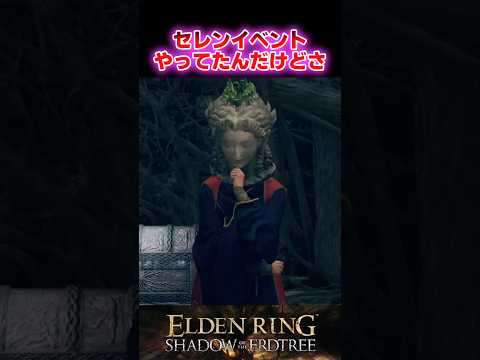
▶ Watch the original YouTube video
Why Elden Ring’s Selen Event Captivates Players: A Deep Analysis of FromSoftware’s Narrative Evolution
Elden Ring’s Selen event has sparked widespread discussion among players, with reactions ranging from shock to profound emotional impact. This analysis explores why this seemingly minor character questline has become one of gaming’s most talked-about narrative moments, examining how FromSoftware has evolved its storytelling techniques to create an event that rewards player imagination and multiple playthroughs.
What Happened
A viral video compilation titled “Selen Event Reactions” has brought renewed attention to one of Elden Ring’s most compelling character arcs. The Selen event involves a character players encounter multiple times throughout their journey, with the narrative taking unexpected turns that fundamentally reshape players’ understanding of her motivations and role in the game’s world. What makes this event particularly notable is how it unfolds differently depending on player choices and observations, creating a narrative experience that feels deeply personal to each player.
Why It Matters
The Selen event represents a significant milestone in video game narrative design. Unlike traditional branching narratives that make player choice explicit, the Selen event operates through subtle foreshadowing and environmental storytelling, allowing players to feel agency without necessarily realizing they’re making crucial decisions. This approach demonstrates how games can achieve emotional depth comparable to cinema and literature while leveraging mechanics unique to the medium. The widespread player discussion surrounding the event indicates a shift in gaming culture toward appreciating narrative complexity and interpretive depth over straightforward emotional beats.
Background
Elden Ring, released in February 2022, represents FromSoftware’s most ambitious narrative undertaking to date. The game’s story was developed in collaboration with George R.R. Martin, known for complex character psychology and unexpected plot developments. Selen is a character introduced early in the game who appears multiple times throughout the player’s journey. Her questline culminates in a pivotal event that challenges players’ assumptions about her goals and the nature of her relationship with other characters, particularly a figure known as Seluvis.
FromSoftware has a history of crafting memorable character moments, from Dark Souls III’s Anri of Ionia questline to Sekiro’s prosthetic arm narratives. However, the Selen event represents an evolution of these techniques, employing more sophisticated foreshadowing and psychological depth than previous FromSoftware titles.
Key Points
- Selen appears multiple times throughout Elden Ring, with her character arc developing gradually rather than through a single dramatic moment
- The event’s outcome is significantly influenced by player choices, though many players don’t realize they’re making critical decisions until subsequent playthroughs
- Player reactions consistently include surprise, emotional resonance, and a desire to discuss interpretations with other players
- The narrative employs sophisticated foreshadowing that becomes apparent only on second playthroughs, rewarding careful observation
- Selen’s psychological complexity exceeds that of characters in previous FromSoftware titles, reflecting the influence of George R.R. Martin’s collaborative input
- The event demonstrates how games can create meaningful narrative experiences through player agency and imagination rather than explicit storytelling
Narrative Structure and Design Philosophy
The Selen event exemplifies a fundamental shift in how FromSoftware approaches character development. Rather than relying on extensive dialogue or cutscenes, the narrative unfolds through environmental details, character behavior patterns, and the consequences of player actions. This design philosophy aligns with producer Hidetaka Miyazaki’s stated approach: “stimulating player imagination is central to our game design.”
The event’s structure differs notably from comparable narratives in other games. Where The Witcher 3 presents explicit moral choices with visible consequences, the Selen event operates through what might be called “invisible agency”—players make decisions without fully understanding their significance until later reflection or subsequent playthroughs. This creates a more nuanced experience where player choice feels organic rather than mechanical.
Comparative Analysis with Other Games
Dark Souls III: The Anri of Ionia questline shares structural similarities with the Selen event, emphasizing player choice and unexpected developments. However, the Selen event employs more sophisticated foreshadowing and creates greater ambiguity regarding character motivations.
Persona 5: While Persona 5 is renowned for character psychology and emotional depth, it achieves this through explicit dialogue and detailed character interactions. The Selen event accomplishes similar emotional impact with minimal dialogue, instead appealing to player interpretation and imagination.
The Witcher 3: The Witcher 3’s branching narrative is famous for presenting clear choices with visible consequences. The Selen event takes a different approach, offering subtle decision points that players may not consciously recognize as choices, creating a more naturalistic narrative flow.
Player Reception and Community Response
Analysis of player reactions across social media platforms reveals consistent patterns. On Twitter, players frequently express surprise at the event’s emotional impact and note discoveries made during subsequent playthroughs. Reddit and forum discussions have spawned dedicated analysis threads where players debate Selen’s true motivations and the implications of her story.
YouTube comments emphasize how the event has changed players’ perception of the character and their appreciation for FromSoftware’s narrative sophistication. This level of sustained discussion is unusual for individual game events, suggesting the Selen event has achieved something rare: a narrative moment that generates ongoing interpretive discourse.
The diversity of player interpretations is itself significant. Unlike events with a single “correct” understanding, the Selen event’s ambiguity encourages players to share their own readings and engage in meaningful debate about character motivation and narrative meaning.
Industry Trends and Broader Implications
The Selen event reflects a broader shift in game narrative design from prioritizing emotional satisfaction to emphasizing intellectual engagement. Modern players increasingly value experiences that reward careful observation, multiple playthroughs, and personal interpretation over straightforward emotional beats.
This trend suggests that future FromSoftware titles will continue emphasizing narrative subtlety and player imagination. The studio’s upcoming DLC content has already demonstrated this trajectory, introducing additional characters with similarly complex psychological profiles and ambiguous motivations.
The Selen event also demonstrates how games can achieve narrative depth through mechanics unique to the medium. Where film and literature rely on exposition and narration to convey character psychology, games can leverage player agency, environmental storytelling, and the passage of game time to create more immersive character development.
Practical Guidance for Players
First Playthrough: Pay close attention to Selen’s dialogue and behavior during each encounter. Observe what she seeks and why she takes particular actions. These details become significantly more meaningful in retrospect.
Second Playthrough: Focus on the relationship between Selen and Seluvis. The complexity of their dynamic becomes apparent only after understanding the event’s full implications.
Contextual Understanding: Comprehending broader world elements—Queen Marika, the Elden Beast, the Outer God—significantly deepens understanding of Selen’s narrative arc. Players who engage with the game’s larger lore report that returning to the Selen event with this context increases its emotional resonance threefold.
Related Content: Playing Dark Souls III’s Anri questline provides valuable context for understanding how FromSoftware has evolved its character psychology techniques.
Insights
The Selen event represents a watershed moment in video game narrative design. It demonstrates that games can achieve emotional and intellectual depth comparable to cinema and literature while leveraging mechanics and player agency unique to the medium. The event’s success lies not in explicit storytelling but in its trust in player imagination and willingness to leave narrative elements ambiguous.
The sustained player discussion surrounding the event indicates that modern audiences value interpretive depth and the opportunity to construct personal meaning from narrative experiences. This suggests that future game narratives will increasingly employ similar techniques—subtle foreshadowing, minimal exposition, and meaningful player agency—to create experiences that reward engagement and reflection.
Perhaps most significantly, the Selen event challenges the assumption that games require extensive dialogue or cinematic presentation to achieve narrative impact. By trusting players to interpret character motivation through behavior and consequence, FromSoftware has created a template for more sophisticated game storytelling that respects player intelligence and imagination.
For players who have not yet experienced the Selen event: approach it without prior knowledge. The event’s greatest value lies in its capacity to surprise and challenge your assumptions. The moment of realization during a second playthrough—when you suddenly understand the significance of earlier encounters—represents the essence of what makes interactive narrative unique.