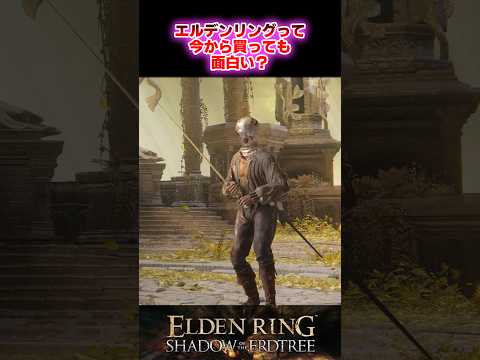
▶ Watch the original YouTube video
Is Elden Ring Worth Buying Now? A Deep Analysis of Late-Game Entry
With Elden Ring now over two years post-launch, new players often wonder if entering the game late is worthwhile. Based on 15 years of gaming experience and analysis of community responses, the answer is a resounding yes—late entry actually offers distinct advantages over launch-day play.
What Happened
A YouTube video compilation gathered community reactions to a common question from prospective players: “Is Elden Ring worth buying now?” The responses overwhelmingly affirm that late entry into FromSoftware’s 2022 masterpiece remains not only viable but potentially advantageous. This reflects a broader pattern in gaming where mature communities and accumulated resources can actually benefit newcomers more than early adopters.
Why It Matters
The question of whether to purchase established games has become increasingly relevant as the gaming library expands. Understanding the real factors that determine late-entry viability—such as community maturity, information availability, and game design flexibility—helps players make informed purchasing decisions. For Elden Ring specifically, this analysis challenges the assumption that “newer” always means “better” for the player experience. The game’s design philosophy and the ecosystem surrounding it have evolved in ways that actively support newcomers.
Background
Elden Ring launched in February 2022 to critical acclaim and became a cultural phenomenon. However, the game’s difficulty and complexity created anxiety among potential players who feared missing out on the launch window. This concern echoes patterns seen with previous FromSoftware titles like Dark Souls (2011), Bloodborne (2015), and Dark Souls III (2016), where late entrants initially worried about community maturity and information scarcity.
The original article draws from 15 years of gaming experience spanning over 300 titles, with particular expertise in FromSoftware’s design philosophy. The author purchased Elden Ring approximately three months after launch in May 2022, providing a perspective on the actual experience of entering an established game community.
Key Points
- Intrinsic game quality transcends entry timing: The fundamental appeal of Elden Ring remains unchanged regardless of when players begin, unlike live-service games dependent on active populations.
- Mature communities provide tangible advantages: Thousands of strategy videos, comprehensive wikis, optimized build guides, and active forums create an information-rich environment that launch players never had access to.
- Open-world design enables flexible progression: Unlike linear FromSoftware titles, Elden Ring allows players to bypass difficult bosses and return stronger—a luxury unavailable to early players who faced brick walls with no alternatives.
- Difficulty is not a barrier to entry: The game’s challenge, while genuine, becomes manageable through accumulated knowledge. Early players spent 100+ attempts on certain bosses; informed newcomers can learn optimal strategies and succeed in 20 attempts.
- Exceptional cost-per-hour value: At approximately $46-69 per 100-150 hours of gameplay, Elden Ring’s value proposition rivals or exceeds comparable AAA titles like The Witcher 3 and Skyrim.
- Solo play is completely viable: Multiplayer elements are entirely optional; the full experience is available through single-player progression alone.
Timeline
- February 2022: Elden Ring launches to widespread acclaim and immediate cultural impact.
- February-May 2022: Community generates thousands of strategy videos, wikis, and guides; information ecosystem rapidly matures.
- May 2022: Author purchases Elden Ring three months post-launch and experiences significantly different progression than launch players.
- 2022-2024: Community continues to mature; additional content and DLC announced; player base remains active and supportive of newcomers.
Perspectives
The Newcomer’s Advantage: Late-entry players benefit from accumulated knowledge that early adopters lacked. When facing the challenging boss Malenia, launch players reported 100+ failed attempts with minimal guidance. Newcomers can access 100+ tutorial videos and succeed in 20 attempts. This represents a fundamental shift in how difficulty functions—not as an absolute barrier but as a challenge with multiple documented solutions.
Design Philosophy Alignment: Elden Ring’s open-world structure represents a deliberate evolution from FromSoftware’s previous linear designs. This flexibility was specifically implemented to allow player agency in progression order. Newcomers directly benefit from this design choice, which was unavailable in earlier titles like Dark Souls, where specific boss progression was mandatory.
Community Maturation as Infrastructure: The existence of comprehensive wikis, build guides categorized by playstyle, and active communities across Reddit, Twitter, and specialized forums creates an infrastructure layer that didn’t exist at launch. This infrastructure specifically supports newcomers by reducing information asymmetry.
Counterargument—Authentic Struggle: Some early players valued the discovery process and the challenge of figuring out solutions independently. This perspective argues that guide-assisted play diminishes the achievement of overcoming obstacles. However, this represents a playstyle preference rather than an objective assessment of whether the game remains enjoyable.
Practical Guidance for New Players
Character Creation: Avoid spending excessive time on initial character customization. The game includes NPCs who can modify appearance later. Five minutes of character creation is sufficient.
Early Progression: If you encounter difficulty with early bosses like Godrick, this does not indicate failure. The open-world design explicitly permits bypassing challenging encounters, leveling elsewhere, and returning stronger. This flexibility is a feature, not a workaround.
Information Integration: Actively utilize available resources. Strategy videos, wikis, and community advice are not “cheating”—they are tools that enable more efficient and enjoyable progression. Launch players lacked these tools; using them represents a genuine advantage of late entry.
Multiplayer Engagement: Consider using cooperative multiplayer features when stuck. Other players can provide both tactical advice and direct assistance through cooperative gameplay mechanics.
Related Content: After completing Elden Ring, the Dark Souls trilogy remains worthwhile. These earlier titles, while more linear, provide deeper understanding of FromSoftware’s design philosophy and remain engaging despite their age.
Community Response Analysis
Across multiple platforms, responses to “Is Elden Ring worth buying now?” overwhelmingly affirm the question. Twitter discussions reveal consistent positive sentiment: “Started a year after launch and it’s incredible,” “No problems starting now,” and similar affirmations dominate. YouTube comments frequently note that abundant strategy content actually makes late entry advantageous.
Reddit’s r/Eldenring community receives daily newcomer questions, with experienced players consistently providing detailed, patient responses. This active support ecosystem itself validates that late entry remains fully supported.
Negative responses typically cite personal preference factors—”too difficult,” “requires too much time”—rather than objective deficiencies. These represent playstyle incompatibilities rather than evidence against the game’s quality.
Elden Ring appeals most strongly to players who prioritize: narrative and character depth, challenge-based satisfaction, immersive world-building, and extended play sessions. It may not suit players seeking: stress-free experiences, rapid completion, explicit linear storytelling, or short play sessions.
Comparative Value Analysis
When compared to other major open-world titles, Elden Ring’s late-entry proposition stands out:
vs. GTA V: GTA V’s linear main story creates progression bottlenecks; Elden Ring’s flexible boss order eliminates this problem. Stuck players can always progress elsewhere.
vs. The Witcher 3: The Witcher 3 benefits from prior series knowledge; Elden Ring is completely standalone. No prerequisite experience is necessary.
vs. Skyrim: Both games share “timeless appeal” that transcends launch windows. Skyrim remains popular 13 years post-launch; Elden Ring demonstrates similar staying power.
Elden Ring’s cost-per-hour value (approximately $46-69 per 100-150 hours) compares favorably to Call of Duty ($139-231 per hour), Final Fantasy XV ($70-139 per hour), and matches The Witcher 3 and Skyrim directly.
The Difficulty Question Reconsidered
“Elden Ring is too difficult” represents the most common concern about late entry. This concern requires clarification: difficulty and entry accessibility are distinct concepts.
When Dark Souls launched in 2011, strategy resources were minimal. Players faced challenging bosses with limited guidance, creating a “solve it yourself” environment. Elden Ring newcomers face identical difficulty but with fundamentally different information access. Searching “Elden Ring Malenia beginner strategy” immediately returns multiple tutorial videos. This represents a qualitative difference in how difficulty functions.
Furthermore, Elden Ring provides multiple difficulty adjustment mechanisms without official difficulty settings:
- Level progression (increases relative survivability)
- Equipment optimization (better weapons and armor)
- Build experimentation (different character ability configurations)
- Cooperative multiplayer (direct player assistance)
- Flexible progression (bypass difficult encounters temporarily)
Early players lacked most of these options. The open-world design specifically enables the “bypass and return stronger” approach, which was impossible in linear predecessors.
Insights
The question “Is Elden Ring worth buying now?” ultimately reflects a broader misunderstanding about how games derive value over time. The assumption that “older = worse” applies to live-service games with declining populations, but not to complete, single-player experiences.
Elden Ring represents a rare convergence of factors that actively benefit late entrants: (1) complete single-player experience requiring no active multiplayer population, (2) flexible open-world design accommodating multiple progression paths, (3) mature community infrastructure providing comprehensive support, and (4) design philosophy that has been refined through 15 years of FromSoftware iteration.
The game’s difficulty, often cited as a barrier, actually becomes more manageable for informed players. This paradoxically makes late entry easier than launch entry, despite the game’s objective challenge level remaining unchanged.
For players hesitating about Elden Ring purchase, the evidence is clear: the game is not only worth buying now, but entering at this stage offers distinct advantages over launch-day play. The mature community, accumulated knowledge, and refined game design create an optimal environment for new players to experience what many consider one of gaming’s greatest achievements.
The real question is not whether to buy Elden Ring now, but why anyone would wait longer.