▶ Watch the original YouTube video
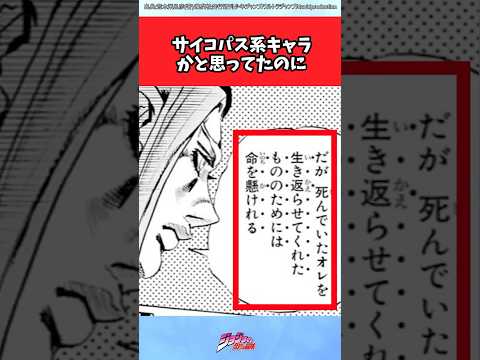
After 15 years of studying JoJo’s Bizarre Adventure, one character continues to spark debate: Anasui from Stone Ocean. While many readers initially perceive him as a psychopath due to his obsessive behavior and violent tendencies, a closer examination reveals a far more complex and deeply human character whose “abnormality” may actually represent a distorted expression of genuine love and emotional attachment.
What Happened
Anasui, a character from JoJo’s Bizarre Adventure Part 6: Stone Ocean, has become the subject of extensive fan discussion regarding his psychological profile. Upon first encounter, Anasui displays obsessive behavior toward protagonist Jolyne Cujoh—including willingness to surgically modify his own body to remain close to her—leading many readers to classify him as a psychopath. However, a comprehensive analysis of his character arc, behavioral consistency, and relationships with other characters suggests a fundamentally different interpretation.
Why It Matters
Anasui’s character represents a critical evolution in how JoJo’s creator Hirohiko Araki constructs complex protagonists and supporting characters. Understanding Anasui correctly challenges readers to move beyond surface-level character judgments and recognize the psychological depth that modern manga and anime employ. This analysis has broader implications for how audiences interpret morally ambiguous characters across all media, particularly in understanding the distinction between abnormal behavior and clinical psychopathy.
Background
JoJo’s Bizarre Adventure has been published since 2006, with Part 6: Stone Ocean introducing Anasui as a fellow inmate in a maximum-security prison. The series is renowned for its complex character development and willingness to present protagonists and allies whose motivations and methods are unconventional. Anasui’s introduction occurs early in Stone Ocean, where his intense focus on Jolyne immediately establishes him as an unusual and potentially dangerous character. However, as the narrative progresses, additional context and character interactions provide deeper insight into his psychological state and motivations.
Key Points
- Behavioral Consistency: Unlike true psychopaths, Anasui demonstrates consistent emotional attachment to Jolyne specifically, suggesting genuine emotional capacity rather than manipulative behavior patterns.
- Self-Sacrifice Tendency: Anasui willingly endangers and modifies himself for Jolyne’s protection—a trait fundamentally opposed to psychopathic self-centeredness.
- Respect for Authority: Anasui shows genuine respect toward Jolyne’s father, Jotaro Kujo, indicating emotional understanding beyond utilitarian relationships.
- Environmental Context: His extreme behavior may result from psychological distortion caused by prolonged incarceration rather than inherent psychopathy.
- Comparative Analysis: When compared to actual psychopathic characters in JoJo’s (such as Dio Brando or Yoshikage Kira), Anasui’s emotional patterns are fundamentally different.
- Narrative Function: Anasui’s character serves as a deliberate subversion of reader expectations, teaching audiences about the dangers of first-impression judgments.
Character Comparison Analysis
A structured comparison reveals critical differences between Anasui and confirmed psychopathic characters within the JoJo’s universe:
| Character | Part | Primary Traits | Emotional Consistency | Obsessive Attachment | Self-Sacrifice Capacity |
|---|---|---|---|---|---|
| Anasui | Part 6 | Obsession, violence | Present (toward Jolyne) | Strong (Jolyne only) | Strong |
| Dio Brando | Part 1 | Ambition, cruelty | Absent (profit-driven) | Absent (dominance-seeking) | Absent |
| Yoshikage Kira | Part 4 | Murder compulsion, deception | Absent (desire-driven) | Absent (object consumption) | Absent |
| Enrico Pucci | Part 6 | Religious fanaticism, manipulation | Present (toward faith) | Absent (instrumental use) | Present (for faith) |
This comparison demonstrates that Anasui possesses emotional consistency and capacity for self-sacrifice—characteristics absent in true psychopathic characters. His obsession, while intense, is directed toward protecting and preserving another person rather than consuming or controlling them.
Psychological Analysis
Anasui’s behavior can be understood through the lens of environmental psychology and attachment theory. Incarceration represents one of the most restrictive environments possible, fundamentally altering human emotional expression. Research in prison psychology indicates that prolonged incarceration can intensify emotional responses and create extreme attachment patterns—not because individuals are psychopathic, but because the prison environment creates psychological distortion.
When Anasui encounters Jolyne, she represents his only connection to the outside world and a source of hope within a hopeless environment. This creates an intense emotional bond that, while expressed through unconventional and sometimes violent means, reflects genuine human connection rather than pathological behavior.
Critically, Anasui demonstrates empathy toward other characters beyond Jolyne. He shows protective instincts toward Emporio and respect toward Jotaro—behaviors indicating genuine capacity for emotional understanding and moral reasoning. True psychopaths lack this capacity for situational empathy.
Evolution of Character Design in JoJo’s
Anasui’s character reflects a broader evolution in how JoJo’s Bizarre Adventure constructs morally complex characters. Early parts featured relatively straightforward antagonists: Dio Brando as a simple villain driven by ambition. As the series progressed, character psychology became increasingly nuanced. Part 4’s Yoshikage Kira presented a killer seeking normalcy. Part 5’s Diavolo revealed deep psychological trauma underlying his actions.
Anasui represents the culmination of this evolution—a character who is neither hero nor villain, but a fully realized human being whose circumstances and emotional responses defy simple categorization. This approach aligns with contemporary storytelling trends seen in series like Attack on Titan and Demon Slayer, where characters occupy moral gray zones rather than clear ethical positions.
Fan Reception and Psychological Bias
The widespread perception of Anasui as a psychopath can be explained through psychological phenomena including the primacy effect—the tendency for initial information to disproportionately influence subsequent judgments. Anasui’s first appearance emphasizes his abnormal behavior, creating a strong initial impression that persists despite later character development.
Additionally, the outgroup homogeneity bias affects perception: because Anasui belongs to the “prisoner” category, readers tend to generalize his characteristics as typical of that group, overlooking his individual psychological complexity.
Online fan communities reflect diverse interpretations. Twitter discussions frequently highlight Anasui’s appeal precisely because of his complexity. YouTube comments emphasize his character arc as a highlight of Part 6. Some psychology-focused analyses suggest Borderline Personality Disorder rather than psychopathy—a distinction indicating more nuanced understanding of his condition.
Narrative Intent and Character Development
Creator Hirohiko Araki has stated in interviews that JoJo’s characters should transcend simple moral categorization. Anasui embodies this philosophy—he is deliberately presented as disturbing and potentially dangerous to subvert reader expectations. This narrative technique creates maximum impact when his true nature is gradually revealed.
The staged information disclosure regarding Anasui’s character represents a sophisticated storytelling technique. Readers initially perceive threat, then gradually recognize humanity, ultimately understanding that his “abnormality” reflects emotional intensity rather than psychological pathology.
Practical Framework for Understanding Anasui
To properly evaluate Anasui’s character, readers should:
- Track his behavioral consistency across different scenarios and relationships
- Observe his interactions with characters beyond Jolyne, noting his capacity for respect and protection
- Consider the prison environment’s psychological impact on emotional expression
- Compare his characteristics against confirmed psychopathic characters within the series
- Recognize the distinction between abnormal behavior and clinical psychopathy
- Reframe his obsession as a distorted expression of love rather than predatory behavior
Insights
Anasui’s character serves as a powerful teaching tool regarding the dangers of first-impression judgments and fixed categorizations. His complexity demonstrates that human behavior cannot be reduced to simple diagnostic labels. The widespread mischaracterization of Anasui as a psychopath reveals how audiences apply surface-level analysis rather than engaging with psychological nuance.
More broadly, Anasui exemplifies how modern storytelling challenges viewers to move beyond binary moral frameworks. His character suggests that individuals displaying abnormal behavior may be responding to extreme circumstances with genuine emotional authenticity rather than pathological detachment.
The ongoing debate surrounding Anasui’s psychological profile is itself valuable, as it demonstrates the series’ success in creating characters complex enough to sustain multiple interpretations. Rather than seeking a definitive “correct” answer, audiences benefit from engaging with his character as a multifaceted human being whose behavior reflects both psychological distortion and emotional authenticity.
Ultimately, Anasui represents JoJo’s Bizarre Adventure’s core strength: the ability to construct characters who challenge readers’ preconceptions and demonstrate that human complexity resists simple categorization. His journey from perceived threat to understood ally mirrors the reader’s own journey toward psychological sophistication and empathetic understanding.