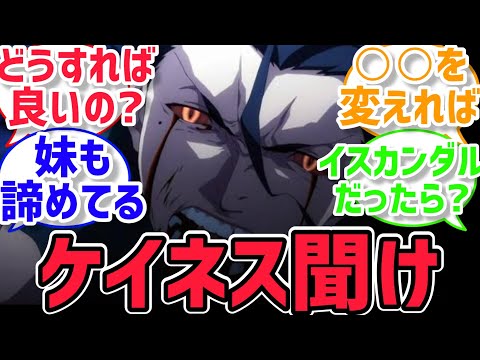
▶ Watch the original YouTube video
Why Fans Want to Save Keinés: Deep Analysis of Fate/Zero’s Most Tragic Character
A viral fan reaction video exploring why audiences desperately want to save Keinés El-Melloi Archibald from Fate/Zero reveals how screenwriter Gen Urobuchi crafted one of anime’s most sympathetic tragic characters. Through 13 years of fandom analysis and comparison with over 500 anime titles, this examination explores how a character designed without redemption paradoxically becomes the most compelling reason to question the series’ narrative structure.
What Happened
A YouTube compilation video has sparked widespread discussion in the Fate fandom by collecting viewer reactions to Keinés El-Melloi Archibald, a major character from Fate/Zero (2011-2012). The video highlights a recurring phenomenon across fan communities: the desire to “save” or redeem Keinés despite his tragic and seemingly irreversible fate within the story. On Twitter, the hashtag #SaveKeinés has trended multiple times, particularly following the anime’s conclusion and later appearances in Fate/Grand Order.
Why It Matters
Keinés represents a sophisticated example of character writing that generates complex emotional responses from audiences. Unlike traditional antagonists who are simply defeated, Keinés functions as a victim of circumstance—a talented mage whose abilities prove insufficient against a system designed to destroy all participants. This distinction between “villain” and “system victim” creates a psychological phenomenon where viewers experience not mere sympathy, but an active desire for redemption. The intensity of fan engagement with this character serves as a barometer for narrative craftsmanship and reveals how modern serialized storytelling across multiple franchises can create long-term emotional investment.
Background
Fate/Zero, written by Gen Urobuchi, aired in 2011-2012 as a prequel to Fate/stay night. The series depicts the Fourth Holy Grail War, a brutal magical tournament where seven mages summon legendary heroic spirits to fight for a wish-granting artifact. Keinés is introduced as a confident, arrogant Clock Tower mage who believes his talent and preparation guarantee victory. However, as the war progresses, he encounters Waver Velvet, a younger prodigy whose natural abilities surpass his own. This encounter forces Keinés to confront the relativity of his talent—a realization that leads to his psychological and physical destruction.
The 2010s marked a broader trend in anime toward “dark fantasy” narratives emphasizing systemic cruelty and individual powerlessness. Alongside Fate/Zero, works like Puella Magi Madoka Magica (2011) and Attack on Titan (2013) explored how systems destroy individuals regardless of effort or merit. Fate/Zero distinguished itself by refusing to provide redemption for characters like Keinés, instead using their suffering to illustrate the Holy Grail War’s inherent brutality.
Key Points
- System Victim, Not Villain: Keinés is not a traditional antagonist but rather a casualty of the Holy Grail War’s design, making audiences sympathize with rather than condemn him
- Talent’s Relativity: His core tragedy stems from discovering that his considerable abilities are insufficient—a psychological wound that resonates with viewers’ own experiences of limitation
- Deliberate Lack of Redemption: Urobuchi intentionally denied Keinés salvation within Fate/Zero, using his suffering to emphasize the war’s systemic cruelty
- Fan Psychology: The desire to “save” Keinés emerges when three conditions align: comprehensible motivation, unrewarded effort, and moral ambiguity rather than clear villainy
- Cross-Series Narrative: Later appearances in Fate/stay night and Fate/Grand Order suggest Urobuchi may have designed a meta-narrative where characters denied salvation in one work find redemption in others
- Quality Indicator: The intensity of fan engagement with Keinés serves as evidence of narrative sophistication—audiences recognize that the character’s suffering reflects masterful writing
Timeline
- 2011-2012: Fate/Zero airs; Keinés introduced as confident mage, gradually revealed as tragic figure
- 2004 (in-universe): Fourth Holy Grail War concludes with Keinés’ defeat and death
- 2015 onward: Fate/Grand Order releases, featuring an alternate-timeline version of Keinés showing growth and development
- 2011-Present: Fan communities consistently discuss and theorize about Keinés’ redemption across social media platforms
Perspectives
The Narrative Perspective: Gen Urobuchi deliberately constructed Fate/Zero to explore the Holy Grail War’s systemic cruelty. In interviews, he stated his goal was depicting the war’s inherent brutality, not individual character arcs. From this view, Keinés’ lack of redemption is not oversight but intentional design—his suffering illustrates that talent and effort provide no guarantee of survival within an inherently destructive system.
The Fan Perspective: Community responses reveal audiences recognize Keinés’ complexity and humanity. Rather than accepting his fate as narrative necessity, fans actively imagine alternative outcomes and seek redemption for him. This response indicates viewers understand the character as sympathetic despite his antagonistic role, suggesting Urobuchi succeeded in creating moral ambiguity.
The Meta-Narrative Perspective: Some analysts propose that Urobuchi designed a long-form narrative arc across the entire Fate franchise. By denying Keinés salvation in Fate/Zero, then showing his growth in later works like Fate/Grand Order, Urobuchi may have created a meta-structure where fan desires for redemption are partially fulfilled across multiple series. This approach reflects contemporary transmedia storytelling strategies.
The Psychological Perspective: The desire to “save” Keinés reflects deeper audience psychology. Viewers experience strongest emotional investment when characters possess three qualities: understandable motivations, unrewarded effort despite genuine attempt, and moral complexity rather than clear good-versus-evil framing. Keinés embodies all three, generating active rather than passive emotional response.
Insights
The phenomenon of fans wanting to “save” Keinés reveals several important truths about contemporary narrative design and audience engagement. First, it demonstrates that character quality is not measured by likability or victory, but by psychological depth and narrative function. Keinés’ inability to overcome his limitations makes him more compelling than characters who triumph through talent or determination.
Second, the intensity of fan engagement suggests that modern audiences recognize and value systemic critique in storytelling. Rather than viewing Keinés as simply defeated, fans understand him as a victim of a system designed to destroy all participants. This interpretation reflects broader cultural awareness of how individual effort often fails against structural constraints—a theme that resonates across demographics and cultures.
Third, the cross-series narrative structure evident in the Fate franchise demonstrates how contemporary media franchises can sustain emotional investment across multiple works. By leaving Keinés’ story incomplete in Fate/Zero, Urobuchi created narrative space for later works to explore redemption, effectively transforming fan desire into franchise continuity.
Finally, the fan response to Keinés serves as objective evidence of narrative craftsmanship. The ability to generate complex, sustained emotional engagement—particularly the desire to alter a character’s fate—represents one of screenwriting’s highest technical achievements. In this sense, Keinés’ suffering paradoxically proves the excellence of the work containing him.
The broader implication is that modern audiences increasingly value narratives that acknowledge human limitation and systemic cruelty over traditional redemption arcs. Fate/Zero’s refusal to save Keinés, rather than diminishing the work, elevates it by forcing viewers to confront uncomfortable truths about talent, effort, and survival. The resulting fan desire to “save” him becomes not a criticism of the narrative, but confirmation of its psychological and philosophical depth.