▶ Watch the original YouTube video
Why Anime Adaptations Fail: A 15-Year Analysis of Wasted Potential in Popular Series
After watching over 500 anime series and analyzing countless adaptations, industry observers have identified a persistent problem: many beloved manga and light novel series lose their core appeal when adapted to animation. The culprits range from severe time constraints and budget limitations to fundamental misunderstandings of source material by production teams.
What Happened
A widespread conversation has emerged across social media platforms about anime adaptations that fundamentally fail to capture the essence of their source material. Fans on Twitter, Reddit, and YouTube consistently report that beloved manga and light novel series are stripped of crucial character development, psychological depth, and narrative nuance when adapted into 12-13 episode anime seasons. The problem is not isolated to a few titles—it represents a systemic issue within the anime production industry.
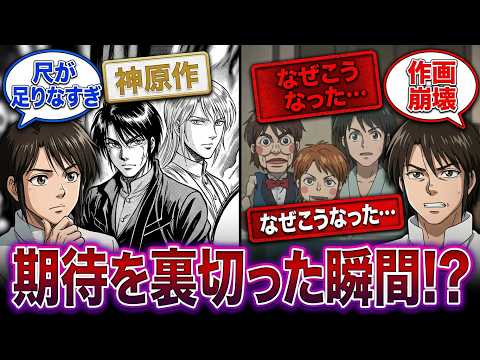
The core issue stems from a simple mathematical problem: compressing 12+ volumes of manga or light novel content into 12-13 episodes of animation requires cutting 70% or more of the original material. This forced compression inevitably eliminates the psychological depth and character motivation that made the source material compelling in the first place.
Why It Matters
For the anime industry, this represents a critical challenge to long-term audience engagement. When adaptations disappoint original fans, they damage the reputation of both the source material and the adaptation medium itself. This creates a paradoxical situation where successful anime adaptations can boost manga sales, but failed adaptations can permanently alienate dedicated fan communities.
The issue also reflects broader questions about how visual media should approach literary source material. Should adaptations prioritize faithful reproduction, or should they embrace creative reinterpretation? The answer has significant implications for how studios approach future projects and how audiences evaluate adaptation quality.
Background
The phenomenon of disappointing anime adaptations is not new, but it has become increasingly visible due to social media amplification. A 2015 fantasy anime adaptation serves as a notable example: the source material spanned 12 volumes with complex character backstories and intricate psychological development. The anime adaptation compressed the first four volumes into 12 episodes, eliminating almost all character backstory and motivation. As a result, viewers had no understanding of why characters made crucial decisions, rendering the narrative incomprehensible to anyone unfamiliar with the source material.
This pattern repeats across multiple genres and source types. Light novel adaptations like “My Little Sister Can’t Be This Cute” and “Sword Art Online” have faced similar criticism, with fans noting that crucial psychological depth was sacrificed for plot progression. Even successful franchises like “Sword Art Online” received criticism for later seasons that suffered from insufficient runtime to properly develop important story arcs.
The anime production industry operates under severe constraints. Standard broadcast slots allocate 13 episodes per season, with production timelines of approximately three weeks per episode. Within this window, scriptwriters, storyboard artists, animators, colorists, and editors must complete all work. These structural limitations make faithful adaptation of lengthy source material nearly impossible.
Key Points
- Time constraint crisis: Compressing multi-volume source material into 12-13 episodes requires cutting 70% or more of content, inevitably eliminating crucial character development and psychological depth
- Production timeline pressure: Modern anime production allocates only three weeks per episode, leaving insufficient time for detailed scriptwriting that honors source material complexity
- Streaming platform influence: Netflix and Amazon Prime’s “binge-watch” model has pressured studios to complete stories in single seasons rather than planning multi-season arcs
- Staff expertise gaps: Failed adaptations often result from scriptwriters who lack deep understanding of source material, leading to surface-level interpretation rather than thematic fidelity
- Successful adaptations share common traits: “Attack on Titan” Season 1 and “Monogatari” series succeeded by combining deep source material understanding with creative visual storytelling that compensates for cuts
- Audience expectations mismatch: Original fans expect validation of their interpretation through adaptation, while studios must balance original fan satisfaction with attracting new viewers unfamiliar with source material
Timeline
- 2009: Early experience with disappointing light novel adaptation establishes awareness of adaptation quality problems
- 2010s: Pattern of failed adaptations becomes increasingly visible across multiple genres and source types
- 2015: Notable fantasy anime adaptation demonstrates extreme compression of 12-volume source into 12-episode season
- 2020s: Streaming platform influence accelerates pressure for single-season story completion
- 2022 onwards: Shift toward multi-season planning becomes evident as studios recognize single-season completion failures
- 2025+: Expected improvement in adaptation quality due to increased production budgets and multi-season planning
Perspectives
Original Fans’ Viewpoint
Original source material fans approach adaptations with specific expectations rooted in their reading experience. They have invested significant time developing mental images of characters, understanding complex motivations, and following intricate plot threads. When adaptations eliminate this depth, fans experience genuine disappointment—not from nostalgia or gatekeeping, but from the loss of narrative elements that made the original compelling. Social media analysis reveals that fan criticism typically includes specific scene references and time codes, indicating analytical engagement rather than emotional reaction.
Production Studio Perspective
Animation studios operate within genuine structural constraints that make faithful adaptation mathematically impossible. The decision to cut content is not malicious but pragmatic. Studios must balance multiple competing demands: maintaining broadcast schedules, managing limited budgets, attracting new viewers unfamiliar with source material, and delivering commercially viable products within strict timelines. Some studios successfully navigate these constraints through creative visual storytelling that compensates for narrative cuts, while others resort to simple compression that loses thematic depth.
New Viewer Perspective
Audiences encountering adaptations without source material familiarity often find simplified narratives accessible and entertaining. This creates a fundamental tension: adaptations that satisfy new viewers by simplifying complex narratives inevitably disappoint original fans who valued that complexity. Studios must decide whether to prioritize existing fan satisfaction or audience expansion.
Comparative Analysis: Success and Failure Cases
| Title | Source Material | Adaptation Result | Key Factor |
|---|---|---|---|
| “A Certain Scientific Railgun” | Manga | Success | Excellent supplementary material and character expansion |
| “Attack on Titan” Season 1 | Manga | Success | Deep source understanding and maximized visual storytelling |
| “My Little Sister Can’t Be This Cute” | Light Novel | Failure | Severe psychological depth reduction and character modification |
| “Sword Art Online” | Light Novel | Partial Failure | Later seasons suffered from insufficient runtime for important arcs |
What Makes Adaptations Succeed or Fail
Analysis of successful versus failed adaptations reveals five critical evaluation criteria:
- Thematic Understanding: Does the production team accurately grasp the source material’s core themes and messages?
- Justified Modifications: Are cuts and changes necessary consequences of visual adaptation, or simply shortcuts?
- New Viewer Accessibility: Does the adaptation balance original fan satisfaction with newcomer enjoyment?
- Production Craftsmanship: Is creative effort evident within resource constraints, or does the work feel rushed?
- Respectful Dialogue: Does the adaptation honor source material while creating independent artistic value, or merely compress the original?
“Attack on Titan” Season 1 approaches perfection on these criteria. Most failed adaptations score poorly on criteria one and five—demonstrating insufficient source understanding and failing to create independent artistic value while maintaining respect for the original.
Industry Structural Issues
The “Completion in One Season” Trap
A significant industry shift occurred as streaming platforms gained dominance. Netflix and Amazon Prime optimized for “binge-watch” experiences, pressuring studios to complete narratives within single seasons. This contradicts the traditional multi-season model that allowed gradual, faithful adaptation of lengthy source material. Studios increasingly face pressure to compress years of storytelling into 12-13 episodes, guaranteeing narrative loss.
Recent Positive Developments
Since 2022, a countertrend has emerged. Studios increasingly plan multi-season projects from inception, acknowledging that single-season completion of lengthy source material inevitably fails. This represents industry recognition that rushed adaptation damages both immediate reception and long-term franchise value. Increased production budgets and improved scheduling practices suggest the industry is correcting course.
How to Approach Anime Adaptations
Reframe Your Expectations
Treating adaptations as independent works rather than source material reproductions significantly improves viewing experience. An adaptation is not a failed original—it is a new creative work that borrows source material’s world and characters while pursuing different artistic goals. This perspective shift allows appreciation of creative choices rather than disappointment over inevitable cuts.
Viewing Order Matters
Watching adaptations before reading source material creates a superior experience. Anime viewed first becomes the foundation, with source material subsequently providing enriching detail rather than highlighting omissions. Conversely, reading source material first inevitably creates awareness of cuts and modifications, generating frustration regardless of adaptation quality.
Analytical Engagement
Approaching adaptations analytically—asking why specific scenes were cut, how character arcs were modified, what constraints influenced decisions—transforms passive viewing into intellectual engagement. This analysis reveals production team creativity and problem-solving rather than focusing on perceived failures.
Comparative Study
Watching multiple adaptations of similar source material types reveals different creative strategies. Comparing light novel adaptations like “Sword Art Online” with “The Melancholy of Haruhi Suzumiya” or “A Certain Magical Index” demonstrates how different production approaches yield different results, deepening understanding of adaptation craft.
Online Community Response
Social media platforms reveal consistent patterns in fan responses to failed adaptations. Twitter discussions frequently feature specific scene references and timestamps, indicating fans conduct detailed comparative analysis rather than emotional reactions. These discussions regularly accumulate thousands of retweets, demonstrating widespread community agreement about specific adaptation failures.
Reddit and 4chan anime communities engage in extended discussions questioning whether specific modifications were necessary, with fans providing detailed scene-by-scene comparisons. YouTube comment sections feature timestamps and episode references, showing viewers systematically document adaptation changes.
Notably, alongside criticism exists appreciation for adaptations that succeed despite constraints. Fans increasingly evaluate “adaptation quality” separately from “entertainment value,” recognizing that flawed adaptations can still be enjoyable. This suggests audience sophistication in distinguishing between different evaluation criteria.
Insights
After analyzing over 500 anime adaptations, several fundamental truths emerge about the adaptation process. First, successful adaptations are not those that most faithfully reproduce source material—they are those that understand source material’s thematic core while creating independent artistic value through visual storytelling. “Attack on Titan,” “Monogatari,” and “Yuri on Ice” share this characteristic: they respect source material while pursuing distinct creative visions.
Second, the anime industry’s structural problems are not primarily about staff incompetence but about systemic constraints. Production timelines, broadcast slot limitations, and streaming platform pressure create mathematical impossibilities that no amount of talent can fully overcome. The industry is gradually recognizing this reality and shifting toward multi-season planning.
Third, audience expectations have evolved. Original fans no longer demand perfect reproduction—they demand evidence that production teams understood and respected source material while making deliberate creative choices. Failed adaptations typically fail because they appear to compress source material without artistic purpose, not because they deviate from the original.
Finally, the future outlook is genuinely optimistic. Improving production technology, increased budgets, and multi-season planning approaches suggest that 2025 and beyond will produce more successful adaptations. The industry has learned from failures and is implementing structural changes that address root causes rather than symptoms.
The fundamental lesson is this: anime adaptation is not reproduction—it is translation. Successful translation requires deep understanding of source material, creative problem-solving within constraints, and respect for both original work and new medium. When studios approach adaptation with this philosophy, the results satisfy both original fans and new audiences.