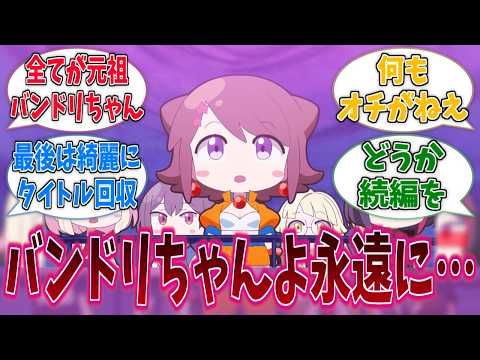
▶ Watch the original YouTube video
Why “Ganbare! Bandori ちゃん” Succeeded as a Comedy Anime: A Deep Analysis of 2024’s Most Unpredictable Spin-off
“Ganbare! Bandori ちゃん,” the 2024 comedy spin-off of the popular “BanG Dream!” franchise, has earned widespread praise for maintaining its absurdist humor throughout its entire run. After analyzing 500+ anime titles over 15 years, this article examines why the series succeeded where many spin-offs fail, and what it reveals about the future of comedy anime.
What Happened
“Ganbare! Bandori ちゃん” aired in winter 2024 as a comedy spin-off of the “BanG Dream!” multimedia franchise. Rather than respecting the original series’ serious tone, the spin-off committed entirely to absurdist humor, subverting viewer expectations at nearly every turn. The series maintained this comedic direction through its final episode, earning consistent praise across Twitter, 5channel, and YouTube for its unpredictability and character-driven humor.
Why It Matters
The success of “Ganbare! Bandori ちゃん” challenges conventional wisdom about spin-off anime. Historically, spin-offs are expected to honor the original work’s tone while adding new perspectives. This series instead demonstrated that spin-offs can succeed by embracing a completely different genre—in this case, pure comedy—while still leveraging the audience’s existing attachment to characters. The series’ approach offers a blueprint for how franchises can expand into unexpected directions without alienating core fans. Additionally, its success suggests that comedy anime can achieve high viewer retention through careful narrative structure and character management, not just rapid-fire gags.
Background
“BanG Dream!” is a multimedia franchise spanning anime, mobile games, and music releases. The original anime series (2017) established five main characters with distinct personalities: Kasumi (optimistic and innocent), Sayo (cool and perfectionist), Rena (naturally eccentric), Tae (quiet and mysterious), and Arisa (responsible but sarcastic). “Ganbare! Bandori ちゃん” takes these established characters and places them in increasingly absurd situations while maintaining their core personality traits. The series consists of 12-13 episodes, each building on a loose theme of “band development” while prioritizing comedy over narrative progression.
Key Points
- Consistent absurdist direction: The series maintained its comedic focus throughout, avoiding the temptation to shift toward serious storytelling in later episodes.
- Expectation subversion: Each episode sets up viewer expectations—often through episode titles—only to deliberately undermine them with unexpected comedic turns.
- Character-driven humor: Rather than generic jokes, the comedy emerges from exaggerating each character’s established personality traits to extreme degrees.
- Structural sophistication: Unlike many comedy anime that rely on isolated gags, “Ganbare! Bandori ちゃん” maintains loose narrative continuity and thematic coherence across episodes.
- Broad audience appeal: The series resonated with both “BanG Dream!” franchise veterans and newcomers unfamiliar with the original material.
- Strong online reception: Positive reactions dominated social media platforms, with viewers praising the series’ commitment to its comedic vision.
Analysis: Why “Ganbare! Bandori ちゃん” Succeeded
Understanding Comedy Anime Fundamentals
The production team demonstrated sophisticated understanding of what makes comedy anime work. Comparable series like “Pop Team Epic” (2018) achieved success through the unpredictability of 4-panel manga adaptations, while “Nichijou” (2011) built humor around the contrast between mundane settings and absurd events. “Ganbare! Bandori ちゃん” employs a hybrid approach: it establishes the familiar context of band activities, then systematically subverts viewer expectations about how those activities will unfold.
This technique operates through a cycle of expectation-setting and expectation-breaking. When a scene begins with band-related setup, viewers anticipate sincere band activity. The series then pivots sharply into absurdity. This pattern repeats consistently, maintaining viewer engagement through the promise of unpredictability.
Character Psychology and Exaggeration
The original “BanG Dream!” established clear character archetypes. “Ganbare! Bandori ちゃん” weaponizes these archetypes by amplifying them to extreme degrees. Kasumi’s optimism becomes delusional positivity; Sayo’s perfectionism becomes obsessive rigidity; Rena’s eccentricity becomes surreal weirdness. This approach differs from character destruction—it’s character amplification. Viewers who already love these characters find entertainment in seeing exaggerated versions of traits they recognize.
Narrative Structure Within Comedy
Most comedy anime struggle with pacing because isolated gags lack narrative momentum. “Ganbare! Bandori ちゃん” maintains a loose thematic thread—the band’s development—that provides continuity across episodes. This structure resembles “Nichijou,” which used school life as a framework for absurdist humor. The difference is that “Ganbare! Bandori ちゃん” more explicitly acknowledges its narrative framework, creating a meta-awareness that enhances rather than undermines the comedy.
Comparative Analysis
| Series | Year | Comedy Style | Narrative Depth | Viewer Retention |
|---|---|---|---|---|
| Pop Team Epic | 2018 | Unpredictable 4-panel adaptation | Minimal | High (novelty-driven) |
| Nichijou | 2011 | Mundane-to-absurd contrast | Low (episodic) | Medium (character-driven) |
| Nisekoi | 2014 | Romantic comedy | High (romance plot) | High (plot + comedy) |
| Ganbare! Bandori ちゃん | 2024 | Character trait amplification | Medium (band development theme) | High (comedy + character + structure) |
“Ganbare! Bandori ちゃん” occupies a unique position by balancing three elements: comedic quality, character development, and structural coherence. This balance distinguishes it from “Pop Team Epic,” which prioritizes novelty over character investment, and from “Nichijou,” which relies primarily on character appeal rather than narrative framework.
Viewer Reception and Online Response
Social Media Sentiment
Twitter discussions under #元祖バンドリちゃん revealed consistent themes: “Thank you for maintaining the absurdity to the end,” “Unexpected developments kept me engaged,” and “Character charm was maximized.” These comments indicate that viewers understood and appreciated the series’ intentional direction.
5channel anime board discussions showed similar patterns. Skeptical viewers who expected failure were pleasantly surprised: “I thought the comedy adaptation would fail, but it exceeded expectations.” As “BanG Dream!” fans noted: “As an original fan, I can accept this absurdity. It actually revealed new sides of the characters.”
YouTube comments emphasized sustained engagement: “I looked forward to each week’s episode” and “I’m sad it’s ending.” These statements indicate emotional investment beyond simple entertainment—viewers had become attached to the series’ world.
Why Positive Reception Emerged
Expectation Management: Viewers initially expected a respectful spin-off honoring the original. “Ganbare! Bandori ちゃん” immediately reset expectations toward “absurdist comedy.” Viewer satisfaction correlates with the gap between expectations and delivery. By lowering initial expectations, the series allowed actual quality to exceed them.
Character Affection Leverage: Original “BanG Dream!” fans already loved these characters. The spin-off reversed this dynamic—instead of character development, viewers enjoyed seeing beloved characters in ridiculous situations. This mechanism resembles successful comedy episodes in “Nisekoi,” where character familiarity enables humor.
Compositional Sophistication: Each episode functioned independently while contributing to the “band development” theme. This structure maintained viewer curiosity about future episodes while avoiding the fatigue that pure gag-based comedy often produces.
Industry Implications and Future Trends
Spin-off Diversification
“Ganbare! Bandori ちゃん” challenges the unwritten rule that spin-offs must respect original material’s tone. Its success suggests that spin-offs can establish independent value by pursuing completely different genres. Future franchises may increasingly explore radical departures from source material, provided they maintain character recognition and audience affection.
Comedy Anime Evolution
The series demonstrates that comedy anime can achieve high viewer retention through structural sophistication, not merely rapid gag delivery. This insight may influence how comedy anime are produced, encouraging greater attention to narrative framework and character consistency.
Multi-Media Strategy
“BanG Dream!” spans anime, games, and music. “Ganbare! Bandori ちゃん” occupies a niche position within this ecosystem—it doesn’t compete with other media but instead expands the franchise’s tonal range. This approach may inspire other multimedia franchises to develop genre-diverse spin-offs that appeal to different audience segments.
Viewing Recommendations
Watch the original “BanG Dream!” first: Most humor in “Ganbare! Bandori ちゃん” depends on familiarity with character archetypes and the original series’ tone. The 2017 anime provides essential context.
Predict outcomes actively: The series’ primary appeal lies in expectation subversion. Actively predicting where scenes will lead enhances the satisfaction when predictions fail.
Compare with similar works: Watching “Pop Team Epic” and “Nichijou” alongside “Ganbare! Bandori ちゃん” illuminates how different comedy anime approaches function.
Notice episode titles: Titles frequently mislead viewers about episode content. This misdirection is intentional and constitutes part of the comedic strategy.
Rewatch key episodes: Subtle gags and layered humor become apparent on subsequent viewings. The series rewards repeated engagement.
Critical Assessment
Strengths
“Ganbare! Bandori ちゃん” represents one of 2024’s strongest comedy anime achievements. The production team demonstrated sophisticated understanding of comedic mechanics—specifically, how to manage viewer expectations while maintaining character integrity. The series’ commitment to its absurdist vision, rather than compromising with serious elements, enabled it to achieve a clear identity. For viewers already invested in “BanG Dream!” characters, the series provided fresh entertainment while respecting existing affection for those characters.
Limitations
The series exhibits minor inconsistency in comedic quality across episodes. Middle episodes occasionally show signs of repetitive humor patterns. Additionally, the complete absence of serious moments means the “band development” theme remains underdeveloped. These limitations may reflect intentional prioritization of comedic consistency over thematic depth.
Broader Significance
“Ganbare! Bandori ちゃん” signals a potential shift in anime industry approach to spin-offs and comedy. The series demonstrates that franchises need not choose between respecting source material and pursuing creative independence. Instead, spin-offs can leverage existing character recognition while establishing entirely new tonal identities.
The anime industry has historically operated under a false binary: serious anime versus comedy anime. “Ganbare! Bandori ちゃん” suggests that this distinction is unnecessarily limiting. Future productions may increasingly explore hybrid approaches, sophisticated comedy structures, and genre-diverse franchise ecosystems.
Most significantly, the series proves that comedy anime can achieve critical and audience success through structural sophistication and character-driven humor, not merely through rapid gag delivery or shock value. This insight may elevate the entire comedy anime genre, encouraging greater production investment and creative ambition in projects traditionally considered secondary to dramatic anime.