▶ Watch the original YouTube video
The Doctor and Nahida Theory: How Genshin Impact’s Mystery Sparks Deep Community Analysis
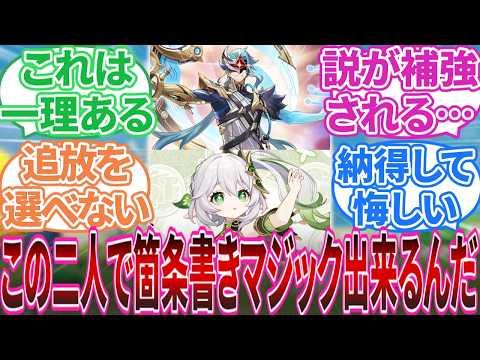
A compelling theory circulating in the Genshin Impact community suggests that the Doctor, a high-ranking Fatui executive, and Nahida, the Dendro Archon, may be the same person. This speculation has ignited extensive debate among players, revealing how sophisticated game narrative design can inspire profound fan analysis and community engagement.
What Happened
Within the Genshin Impact community, players have developed an intriguing hypothesis: the Doctor (Dottore), a mysterious antagonist and high-ranking member of the Fatui, may actually be Nahida, the Dendro Archon of Sumeru, in a different form or timeline. This theory has gained significant traction on social media platforms including YouTube, Twitter, and Reddit, generating hundreds of detailed analyses and counter-arguments from the player base.
The theory emerged from careful observation of both characters’ dialogue, knowledge levels, ethical ambiguity, and their notable absence of direct confrontation in the game’s narrative. Players have compiled extensive evidence comparing the two characters’ behavior patterns, intellectual capabilities, and their respective roles within Genshin Impact’s overarching storyline.
Why It Matters
This phenomenon demonstrates how modern game design—particularly the deliberate withholding of narrative information—can cultivate sophisticated fan communities and extend player engagement far beyond active gameplay. The Doctor-Nahida theory exemplifies how developers like HoYoverse strategically leave mysteries unsolved to encourage player speculation and foster meaningful discussion.
The theory’s emergence also reflects broader trends in contemporary gaming, where narrative ambiguity and player-driven interpretation have become valued design elements. This approach contrasts with traditional storytelling that provides complete explanations, instead creating space for community-wide collaborative analysis similar to phenomena seen in works like “Attack on Titan” and “Fate/stay night.”
Background
The Doctor is introduced as a mysterious, highly intelligent antagonist serving as a high-ranking executive within the Fatui organization. His true identity, motivations, and past remain deliberately obscured throughout the game’s narrative. He possesses knowledge that far exceeds what ordinary humans could reasonably acquire, suggesting deeper involvement in the world’s fundamental secrets.
Nahida, by contrast, is presented as the Dendro Archon—a divine being who has existed for millennia and accumulated vast knowledge about the world. Despite her position as a seemingly benevolent deity, her actions and decisions frequently exist in moral gray areas, and her true objectives are not always transparent to other characters or players.
Both characters demonstrate exceptional intellectual capabilities, maintain ambiguous ethical positions, and influence major story events without direct confrontation. Notably, they never appear in scenes together, and their spheres of influence rarely overlap directly—a narrative choice that has not gone unnoticed by observant players.
Key Points
- Shared Characteristics: Both the Doctor and Nahida possess abnormal levels of knowledge, demonstrate complex moral frameworks, and exercise significant influence over world events from positions of relative obscurity.
- Intellectual Anomaly: The knowledge possessed by both characters exceeds what their apparent roles and lifespans should logically allow, suggesting access to secrets or extended existence.
- Narrative Absence: The two characters never directly confront each other despite their significant roles in overlapping story arcs, a deliberate design choice that invites speculation.
- Player Response Diversity: The community’s reaction splits into three camps—supporters citing specific evidence, skeptics arguing for character independence, and moderates awaiting further narrative revelation.
- Design Strategy Success: Whether the theory proves accurate or not, the mystery has successfully stimulated high-quality community discourse and sustained player engagement with the game’s narrative.
- Temporal Complexity: Genshin Impact’s world contains hints of multiple timelines or temporal layers, which could theoretically allow the same entity to manifest as different characters across different timeframes.
Timeline
- 2020: Genshin Impact launches; the Doctor is introduced as a mysterious Fatui executive.
- 2021: Game expands with additional story content; player speculation about character identities increases.
- 2022: Sumeru region releases; Nahida is introduced as the Dendro Archon, sparking initial comparisons with the Doctor.
- 2023-Present: The Doctor-Nahida theory gains prominence across social media platforms; community analysis reaches peak engagement levels.
Perspectives
Supporters of the Theory: Players advocating for the Doctor-Nahida connection point to concrete textual evidence. They emphasize the parallel knowledge levels, the characters’ similar approaches to achieving their goals through indirect means, and the narrative significance of their never meeting directly. Some theorists suggest that if the Doctor and Nahida are the same entity, their apparent opposition could represent different temporal manifestations or strategic personas designed to influence events from opposing sides.
Skeptics and Critics: Players opposing this theory argue that Genshin Impact’s narrative design deliberately establishes multiple independent factions and actors. They contend that Nahida’s role as an Archon—a being fundamentally tied to a specific region and element—makes her distinct from the Doctor, whose origins and nature remain intentionally vague. These players emphasize that the game’s complexity derives from multiple competing interests rather than hidden identities.
Cautious Observers: A substantial portion of the community maintains that insufficient information currently exists to make definitive judgments. These players acknowledge the theory’s internal logic while recognizing that only HoYoverse’s developers possess the complete narrative picture. They advocate for awaiting official story revelations before committing to interpretations.
Comparative Analysis: Historical Precedent
This phenomenon parallels similar speculation cycles in other narrative-driven media. “Attack on Titan” (2013-2019) generated extensive fan theories about character identities and hidden relationships, with many predictions ultimately confirmed by the official narrative. “Fate/stay night” has maintained mystery elements across decades, with gradual revelations sustaining community engagement. “Life is Strange” and other narrative games have similarly benefited from player-driven speculation that extended the work’s cultural relevance beyond its initial release period.
Genshin Impact appears to employ the same strategy deliberately. By withholding complete narrative information and maintaining character ambiguity, HoYoverse creates conditions favorable for sustained community analysis. This approach generates multiple benefits: it stimulates player agency through interpretive freedom, activates community discourse, and extends the game’s engagement lifecycle through ongoing speculation about future revelations.
Insights
The Doctor-Nahida theory’s prominence reveals fundamental truths about contemporary game design and player expectations. Modern audiences increasingly value narrative complexity and interpretive space over complete exposition. The theory’s existence—regardless of its accuracy—demonstrates that HoYoverse has successfully created a world rich enough to support sophisticated fan analysis.
The high quality of community discourse surrounding this theory indicates that Genshin Impact has cultivated an unusually thoughtful player base. The respectful debate between supporters and skeptics, the careful citation of textual evidence, and the willingness to revise interpretations based on new information all suggest a community engaged in genuine collaborative analysis rather than mere speculation.
Furthermore, this phenomenon illustrates how narrative mysteries function as long-term engagement tools. Rather than diminishing player interest through unanswered questions, the deliberate withholding of information sustains curiosity and encourages repeated engagement with existing content as players search for overlooked clues.
As Genshin Impact continues expanding with new regions and characters, the eventual revelation of the Doctor’s true nature will either confirm the theory, refute it, or introduce entirely unexpected information that recontextualizes existing evidence. Regardless of the outcome, the community’s analytical journey represents a successful model for how game narratives can inspire meaningful player engagement extending far beyond the game client itself.