▶ Watch the original YouTube video
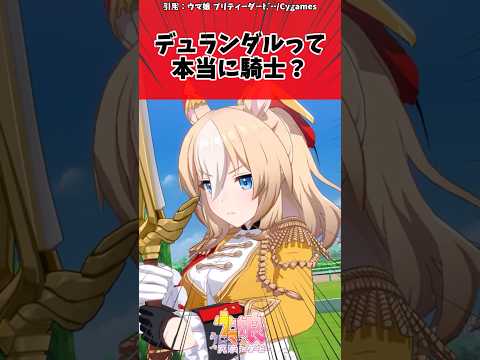
Is Durandal Really a Knight? Exploring Character Contradiction in Uma Musume
A deep analysis of how Uma Musume’s Durandal character embodies the contradiction between her knight-like image and actual behavior, revealing sophisticated character design that resonates with players through intentional narrative complexity.
What Happened
Within the Uma Musume Pretty Derby community, players have begun questioning whether the character Durandal truly embodies the “knight” archetype her name and initial presentation suggest. This inquiry has sparked widespread discussion among trainers (players), with many noting a significant gap between her surface-level knight imagery and her actual in-game behavior and interactions. The question “Is Durandal really a knight?” has become a recurring topic in community forums and social media, generating diverse player reactions and interpretations of her character design.
Why It Matters
Durandal’s character represents a broader trend in modern game design: the intentional use of character contradiction as a sophisticated storytelling technique. Rather than presenting players with archetypal characters that fit neatly into expected roles, contemporary games increasingly feature complex characters whose contradictions drive emotional investment and deeper engagement. Understanding Durandal’s design reveals how Uma Musume transcends being a simple horse racing game to become a nuanced character-driven experience. This approach reflects industry-wide recognition that mature players seek psychological depth and thematic complexity in their gaming experiences.
Background
Uma Musume Pretty Derby launched in 2021 and has since established itself as a game that prioritizes intricate character development alongside its core racing mechanics. The game features characters based on real racehorses, each with distinct personalities and story arcs. Durandal, presented with knight-like imagery and nomenclature, initially appears to embody traditional chivalric virtues. However, as players progress through her community events and story content, they discover that her actual behavior frequently diverges from conventional knight archetypes. This deliberate mismatch between expectation and reality forms the foundation of her character appeal.
The phenomenon of character contradiction as a design tool is not unique to Uma Musume. Games like Persona 5, NieR: Automata, and Fire Emblem: Three Houses have all employed similar techniques, using internal character contradictions to deepen thematic resonance and player attachment. In Persona 5, protagonists balance dual identities as students and phantom thieves. In NieR: Automata, androids grapple with the contradiction between mechanical nature and human-like consciousness. These examples demonstrate that contradiction-based character design has become a hallmark of sophisticated game narrative.
Key Points
- Durandal’s character design features an intentional gap between her “knight” image and her actual behavioral patterns, creating a compelling contradiction that drives player engagement
- The contradiction is not a flaw but a calculated psychological technique designed to deepen emotional investment and encourage player analysis
- Uma Musume community discussions reveal that players actively embrace and celebrate this contradiction rather than viewing it as inconsistent characterization
- Durandal’s character reflects the broader industry trend toward complex, psychologically nuanced character design that appeals to mature audiences
- The character’s contradiction mirrors Uma Musume’s central theme: characters striving toward idealized goals while navigating the gap between aspiration and reality
- Future story updates are likely to further explore the origins of Durandal’s knight ideal and the experiences that shaped her pursuit of this identity
Character Analysis: The Layers of Durandal’s Knight Identity
Durandal’s character operates on multiple interpretive layers. The first layer presents the surface-level “knight” archetype: visual design, character descriptions, and initial impressions all reinforce this identity. However, the second layer—revealed through actual gameplay interactions, community events, and story content—demonstrates behavior that frequently contradicts traditional knight expectations. This layered structure is intentional, serving to prompt players to question what “knight” truly means within Durandal’s context.
Rather than viewing Durandal as already being a knight, a more nuanced interpretation suggests she is actively becoming a knight. Her contradiction represents the internal struggle between her idealized self-image and her current reality. This interpretation aligns perfectly with Uma Musume’s overarching narrative: characters based on real racehorses pursuing ambitious goals through dedicated effort. Durandal, in this framework, pursues the ideal of knighthood while grappling with the gap between that ideal and her present circumstances.
Industry Context: The Evolution of Character Design
Over the past five years, the gaming industry has witnessed a marked shift toward complex, contradiction-based character design. Simple binary morality frameworks have given way to psychologically sophisticated characters whose internal conflicts drive narrative depth. This evolution reflects changing player expectations: audiences no longer seek one-dimensional characters but rather individuals whose contradictions mirror human complexity.
Uma Musume positions itself at the forefront of this trend. By featuring characters like Durandal whose surface presentation contradicts their deeper reality, the game demonstrates sophisticated understanding of player psychology. Developers recognize that humans form stronger emotional attachments to imperfect, conflicted characters than to idealized archetypes. This principle, rooted in psychological research on attachment and preference, explains why Durandal resonates so powerfully with the player base.
Community Response and Player Interpretation
The Uma Musume community’s reaction to Durandal reveals the success of this character design approach. On Twitter, the hashtag “Is Durandal really a knight?” periodically trends, generating substantive player discussion. The predominant sentiment celebrates rather than criticizes her contradiction, with players expressing appreciation for the character depth her inconsistency provides.
YouTube comments frequently request more Durandal story content, indicating strong player investment in understanding her character further. Some players interpret her contradiction as evidence of internal growth and self-improvement, viewing her knight pursuit as an aspirational journey rather than an established identity. Others analyze her interactions with other characters to understand how her knight identity manifests differently across relationships. This diversity of interpretation demonstrates the richness of her character design.
A minority perspective critiques the “knight” concept as insufficiently defined, arguing that the game’s gradual revelation of character details creates inconsistency in player understanding. However, this criticism itself validates the intentionality of the design: the staged revelation of character information maintains player engagement and encourages ongoing discussion.
Comparative Analysis: Contradiction in Other Games
| Game Title | Character Contradiction | Narrative Effect |
|---|---|---|
| Persona 5 | Student identity vs. phantom thief role | Deepens player emotional investment and thematic exploration |
| NieR: Automata | Mechanical nature vs. human-like consciousness | Reinforces core philosophical themes about identity and existence |
| Fire Emblem: Three Houses | Knight archetype vs. complex internal motivations | Increases character attachment and narrative depth |
| Uma Musume (Durandal) | Knight image vs. actual behavioral patterns | Prompts player analysis and encourages community discussion |
Future Narrative Possibilities
Uma Musume’s ongoing content update model suggests that Durandal’s character will continue to develop. Future story additions will likely explore the origins of her knight ideal: what experiences led her to adopt this identity? What challenges has she faced in pursuing this goal? How do her past and present circumstances inform her current behavior?
As these narrative layers unfold, players will gain deeper understanding of the contradiction between her knight image and her actions. Rather than resolving the contradiction, future content will likely deepen it, revealing that her apparent inconsistency reflects genuine psychological complexity. This approach maintains player engagement while rewarding long-term investment in her character arc.
Insights
Durandal’s character exemplifies how modern game design leverages psychological principles to create memorable, emotionally resonant experiences. The contradiction between her knight identity and actual behavior is not a narrative flaw but a sophisticated technique that mirrors fundamental human experience: the gap between our idealized self-image and our present reality.
The success of this approach demonstrates that contemporary players value psychological authenticity over archetypal consistency. Characters who embody internal conflict and aspiration prove more compelling than those who perfectly embody predetermined roles. Durandal’s popularity within the Uma Musume community validates this principle and suggests that future game design will increasingly prioritize character contradiction as a primary tool for engagement.
Ultimately, the question “Is Durandal really a knight?” transcends simple character classification. It invites players to contemplate deeper questions about identity, aspiration, and the journey between present circumstance and idealized self. This philosophical depth, combined with sophisticated character psychology, distinguishes Uma Musume as a game that operates simultaneously as entertainment and as a vehicle for meaningful character-driven narrative. In this regard, Durandal represents not merely a well-designed character but evidence of the medium’s capacity for artistic sophistication.