▶ Watch the original YouTube video
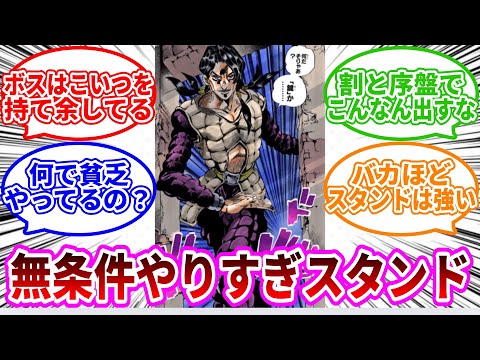
After 15 years of analyzing JoJo’s Bizarre Adventure, a deep dive into why Yoshikage Kira’s seemingly mundane Shining Diamond ability is widely considered final boss-level dangerous. The answer lies not in raw power, but in the terrifying combination of everyday normalcy and unpredictable lethality.
What Happened
Online anime communities have engaged in extensive debate about whether Yoshikage Kira, the primary antagonist of JoJo’s Part 4: Diamond is Unbreakable, possesses a final boss-level Stand ability. While his Shining Diamond (Shinyou Diamond) ability appears deceptively simple at first glance, fans and analysts have increasingly recognized its dangerous versatility and the existential threat it represents when wielded by someone as methodical and unpredictable as Kira himself.
Why It Matters
Yoshikage Kira represents a paradigm shift in how anime portrays villains and their abilities. Rather than relying on overwhelming supernatural power, Kira embodies a more insidious threat: a serial killer who blends seamlessly into everyday society while committing horrific crimes. This analysis reveals how character design, ability versatility, and psychological depth can create a more compelling antagonist than raw destructive capability. Understanding Kira’s appeal to audiences provides insight into modern anime storytelling and what makes certain villains resonate with viewers long after their stories conclude.
Background
Yoshikage Kira first appeared in JoJo’s Bizarre Adventure Part 4: Diamond is Unbreakable, which aired in 2008. Initially presented as a seemingly ordinary resident of the town of Morioh, Kira is gradually revealed to be a serial killer with a specific obsession: collecting women’s hands. His Stand ability, Shining Diamond, allows him to create explosive bubbles and disintegrate evidence of his crimes. Unlike the flashy, world-threatening powers of other JoJo villains, Kira’s ability is deliberately understated, reflecting his desire for a quiet, ordinary life—a desire he pursues through extraordinary violence.
The character was introduced during a period when deep anime analysis and fan discussion communities were flourishing online. Over the subsequent 15 years, Kira has become the subject of extensive fan theories, comparative analyses, and retrospective appreciation, with many viewers reassessing their initial judgment of his ability as merely “boring” to recognizing it as genuinely formidable.
Key Points
- Yoshikage Kira’s Shining Diamond ability appears deceptively simple but possesses multiple dangerous applications, including explosive attacks, evidence destruction, and body manipulation
- The true threat of Kira’s power lies not in its raw strength but in its versatility and his ability to operate undetected within normal society
- Online fan communities have increasingly reassessed Kira’s ability from “mundane” to “final boss-level,” reflecting deeper appreciation for subtle character design
- Kira’s psychological profile—seeking normalcy while committing serial murder—creates a uniquely terrifying antagonist that differs fundamentally from other JoJo villains
- Comparative analysis with other Stand users and anime villains reveals that threat level is determined by unpredictability and goal clarity, not pure destructive power
- The “everyday normalcy” of Kira’s existence in Morioh amplifies the danger of his ability, similar to how mundane objects become weapons in psychological thrillers
Timeline
- 2008: Diamond is Unbreakable anime airs; Yoshikage Kira introduced as primary antagonist
- 2008-2015: Initial fan perception of Kira’s ability as relatively weak compared to other Stand users
- 2015 onwards: Increased analytical discussion and reassessment of Kira’s ability as genuinely dangerous and versatile
- 2015-Present: Sustained online debate across YouTube, Twitter, and anime forums regarding Kira’s final boss-level status
Perspectives
The “Versatility” Perspective: Many fans argue that Kira’s ability deserves final boss classification because of its multiple applications. Unlike straightforward powers such as DIO’s The World (time stop) or Diavolo’s King Crimson (time erasure), Shining Diamond can be adapted to various situations—offense, defense, evidence concealment, and psychological warfare. This flexibility, combined with Kira’s intelligence, makes him unpredictable and dangerous.
The “Raw Power” Perspective: Critics contend that by pure destructive capability, Kira’s ability is inferior to other Stand powers. Compared to the reality-warping abilities of later villains or the overwhelming might of earlier antagonists, Shining Diamond is relatively modest. From this viewpoint, calling it “final boss-level” overstates its actual combat effectiveness.
The “Psychological Threat” Perspective: The most compelling analysis suggests that Kira’s danger lies not in his Stand’s power but in his character. His clear, unwavering goal—to live a quiet life while satisfying his murderous urges—combined with his ability to blend into society, makes him a uniquely terrifying villain. He represents the “threat next door,” a concept more psychologically disturbing than abstract supernatural power.
The “Narrative Function” Perspective: Some analysts note that Kira’s apparent weakness as a villain actually strengthens the narrative. The fact that he is not the ultimate antagonist of Part 4, despite being the primary threat for most of the arc, creates narrative tension and subverts expectations. This structural choice elevates his perceived threat level by making him feel more grounded and realistic.
Comparative Analysis with Other Villains
When examined alongside other major JoJo antagonists, Kira’s unique position becomes clearer. DIO’s The World offers overwhelming, undeniable power—time itself stops. Diavolo’s King Crimson erases time from existence. Enrico Pucci’s Made in Heaven accelerates the entire universe. These are cosmic-scale threats with immediate, obvious danger.
Kira’s threat operates on a different scale entirely. He doesn’t seek to reshape reality or conquer the world. He simply wants to live undetected while committing serial murder. This modest ambition, paradoxically, makes him more dangerous in practical terms. He doesn’t need to defeat an army; he only needs to avoid detection. His ability serves this goal perfectly, allowing him to eliminate evidence and dispose of bodies with minimal risk.
The comparison to villains from other anime is equally instructive. Light Yagami from Death Note uses a mundane notebook to reshape society—his power comes from the tool’s versatility and his strategic thinking. Makishima Shougo from Psycho-Pass operates within society while pursuing his own philosophy. Both share Kira’s characteristic of blending normalcy with danger, suggesting that this archetype resonates strongly with modern audiences precisely because it feels plausible.
Why Fans Reassess Kira’s Ability
The shift in online perception of Kira’s ability reflects several factors. First, as viewers mature and rewatch the series, they recognize that “boring” abilities can be more effective than flashy ones. Second, the rise of detailed analytical content on platforms like YouTube has encouraged deeper examination of character design and narrative function. Third, the anime community’s growing appreciation for psychological complexity in villains has elevated Kira’s status as a character study in murderous normalcy.
Fan comments consistently highlight the same realization: “Shining Diamond is mundane, but it’s actually terrifying.” This reassessment suggests that initial judgments based on visual spectacle were incomplete. The ability’s true danger emerges only through careful analysis of its applications and the psychology of its user.
Insights
The extended debate over Yoshikage Kira’s final boss status reveals fundamental truths about how modern audiences evaluate fictional threats. Power level, measured in raw destructive capability, is no longer the primary metric for determining a villain’s danger. Instead, versatility, unpredictability, and the clarity of purpose matter more.
Kira’s enduring appeal lies in his contradiction: he is simultaneously ordinary and monstrous. He lives in a normal town, holds a job, and seeks a quiet life—yet he is a serial killer driven by compulsions he cannot control. This duality makes him more unsettling than villains whose evil is obvious and external. He represents the possibility that danger can hide in plain sight, that the person next to you might harbor dark secrets.
From a narrative perspective, the fact that Kira is not the ultimate antagonist of Part 4 actually strengthens his characterization. He is a final boss-level threat not because he commands cosmic power, but because he represents a specific, grounded form of evil that feels disturbingly plausible. This approach to villain design—prioritizing psychological realism over supernatural spectacle—has influenced subsequent anime and manga, suggesting that Kira’s legacy extends beyond JoJo fandom into broader storytelling trends.
The 15-year reassessment of Kira’s ability also demonstrates how fan communities evolve in their analytical sophistication. What was initially dismissed as weak has been recognized as subtle. What appeared simple has been understood as versatile. This evolution in perception suggests that future anime may benefit from embracing understated power systems that reward careful analysis and reward viewers who engage deeply with character and narrative design.