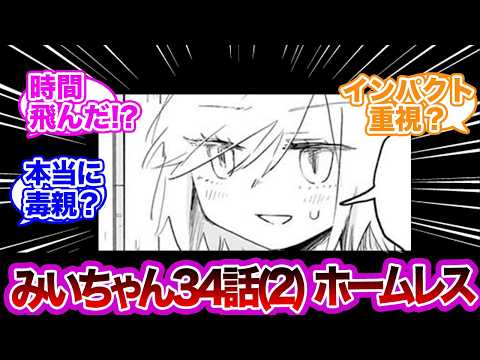
▶ Watch the original YouTube video
How ‘Miichan and Yamada’ Episode 34(2) Challenges Manga’s Approach to Social Issues
The latest episode of the MagaPocket series ‘Miichan and Yamada’ has sparked widespread debate by depicting homelessness without offering easy answers. Rather than providing a clear resolution, the episode presents multiple character perspectives on a complex social problem, marking a significant shift in how contemporary manga addresses real-world issues.
What Happened
Episode 34(2) of ‘Miichan and Yamada’ introduces a homeless character whose interaction with the main cast triggers diverse reactions from the ensemble. Unlike traditional narrative approaches, the episode deliberately avoids presenting a definitive solution or moral conclusion. Instead, it showcases how different characters respond differently to the same social situation, leaving viewers to grapple with the complexity themselves.
The episode has generated significant online discussion, with viewers expressing varied interpretations ranging from emotional responses to critical questioning about practical solutions to homelessness.
Why It Matters
This episode represents a notable evolution in how manga and anime address social problems. For decades, series tackling serious issues typically followed one of two patterns: either presenting an emotionally satisfying resolution where protagonists solve the problem, or using social issues as background worldbuilding while pursuing fantastical solutions. ‘Miichan and Yamada’ breaks from both conventions.
The episode’s refusal to provide simple answers reflects a broader shift in audience expectations. Contemporary viewers increasingly seek engagement with complexity rather than reassuring conclusions. This approach challenges creators to trust their audience’s capacity for critical thinking while maintaining narrative integrity.
Background
‘Miichan and Yamada’ is a serialized manga published on MagaPocket that extends beyond typical romantic comedy conventions. The series has gradually revealed itself as a work genuinely engaging with social realities and human complexity. Episode 34(2) continues this trajectory by introducing a social issue—homelessness—that forces both characters and viewers to confront uncomfortable questions without predetermined answers.
The episode’s approach contrasts sharply with earlier landmark series like ‘3-Gatsu no Lion’ and ‘Honey and Clover,’ which addressed social problems through protagonist-driven solutions and artistic transcendence respectively. These works, while acclaimed, ultimately provided narrative closure to social issues. ‘Miichan and Yamada’ deliberately withholds such closure.
Key Points
- Episode 34(2) presents homelessness through multiple character perspectives rather than a single narrative viewpoint
- The episode refuses to provide a definitive solution, instead positioning the problem as genuinely complex and unresolved
- Character reactions vary significantly, highlighting how individuals with different backgrounds and values respond differently to social issues
- Viewer responses demonstrate a split between those seeking emotional resolution and those appreciating the narrative complexity
- The episode exemplifies a broader industry trend toward depicting social realism without fantasy-based resolutions
- The work prioritizes prompting viewer reflection over delivering reassuring conclusions
Comparative Analysis: Evolution of Social Commentary in Manga
| Series | Social Theme | Resolution Approach | Core Message to Audience |
|---|---|---|---|
| 3-Gatsu no Lion | Poverty and Isolation | Protagonist growth and community support | The importance of compassion and human connection |
| Honey and Clover | Social inequality | Artistic achievement and personal transcendence | Faith in talent and perseverance |
| Miichan and Yamada | Homelessness | Deliberately unresolved | Engage critically with complexity; no simple answers exist |
Perspectives
The Emotional Response: Many viewers reported strong emotional reactions to the episode, with some expressing that specific scenes moved them deeply. This response aligns with traditional manga consumption patterns where emotional impact serves as a primary measure of quality.
The Critical Response: Other viewers questioned the practical utility of presenting problems without solutions, asking “What are we supposed to do about this?” This perspective values narrative closure and actionable takeaways.
The Analytical Response: A significant portion of online discussion focused on analyzing why each character reacted as they did, treating the episode as a text inviting interpretation rather than consumption. These viewers appreciated the multiple perspectives as a sophisticated narrative technique.
The Structural Perspective: From a craft standpoint, the episode’s refusal of easy answers represents a maturation of manga as a medium. Rather than relying on emotional manipulation or fantasy logic, the work trusts viewers to sit with discomfort and ambiguity.
Industry Context: The Rise of Social Realism in Contemporary Manga
Since 2020, major manga and anime properties have increasingly incorporated social realism into their narratives. ‘Attack on Titan’s’ final arc, ‘Jujutsu Kaisen’s’ institutional critique, and ‘Chainsaw Man’s’ class system depiction all demonstrate this trend. This shift represents a departure from the escapist fantasy orientation that dominated 2010s manga.
The underlying cause appears to be audience fatigue with pure escapism. Readers and viewers increasingly seek works that acknowledge and engage with contemporary reality rather than offering refuge from it. ‘Miichan and Yamada’ Episode 34(2) exemplifies this demand by refusing both escapism and false resolution.
Viewer Reception Patterns
Online reactions reveal a fundamental split in audience expectations. Twitter discussions show roughly equal numbers of viewers seeking emotional catharsis and viewers appreciating narrative complexity. Comments frequently highlight recognition of how different characters’ responses reflect their individual values and backgrounds—suggesting the episode successfully communicated its multi-perspective approach.
Notably, some viewers expressed frustration with the lack of clear answers, a reaction reminiscent of responses to ‘Neon Genesis Evangelion,’ another work that refused conventional narrative closure. This pattern suggests that refusing simple answers inevitably alienates some portion of the audience, a trade-off the creators appear willing to accept.
Insights
Episode 34(2) demonstrates that contemporary manga can address social issues with greater sophistication than previous generations. By presenting homelessness through multiple character lenses without imposing a single correct interpretation, the episode acknowledges a fundamental truth: real social problems lack simple solutions.
The episode’s approach represents a maturation of the medium’s relationship with serious subject matter. Rather than using social issues as emotional fuel for protagonist-centered narratives, ‘Miichan and Yamada’ treats them as genuinely complex phenomena worthy of sustained, uncomfortable engagement.
This strategy carries both risks and rewards. The risk is alienating viewers accustomed to narrative resolution. The reward is creating space for genuine critical thinking rather than managed emotional responses. The episode’s strong online engagement suggests that sufficient audience appetite exists for this approach.
The ultimate test of the series’ commitment will come in subsequent episodes. If the narrative eventually provides the “easy answers” it currently withholds, the episode’s impact will diminish. If the work maintains its refusal of simple solutions throughout, it may establish a new standard for how manga addresses social reality.
For viewers encountering this series, beginning with Episode 34(2) is not recommended. The episode’s power depends on understanding each character’s established personality, values, and history. Starting from the beginning allows viewers to recognize why each character responds as they do, deepening appreciation for the episode’s multi-perspective approach.
‘Miichan and Yamada’ Episode 34(2) ultimately asks not just about homelessness, but about what manga itself should be: a medium that provides comfortable answers, or one that challenges audiences to think more rigorously about the world they inhabit.